Conference Speakers
Keynote Speakers
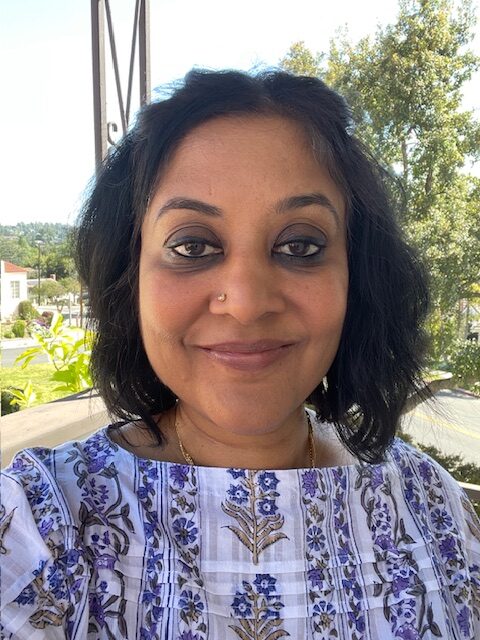
Leila Neti
Leila Neti is the Irma and Jay Price Professor of English at Occidental College in Los Angeles. She specializes in Victorian literature, postcolonial theory, and law and literature. Her book Colonial Law in India and the Victorian Imagination (Cambridge UP, 2021) explores the shared cultural logic of both colonial legal opinions and novels during the Victorian era. Currently, she is co-editing (with Marco Wan) The Cambridge Handbook of Law, Literature, and Postcolonialism and working on a monograph on the Indian Penal Code. Her published articles have appeared in differences: A Journal of Feminist Cultural Studies, Interventions: International Journal of Postcolonial Studies, Law and Literature, Law and Humanities, Pòlemos: Journal of Law, Literature and Culture, and in various edited collections.
She will be giving her keynote, “Postcolonial Futures?” on Thursday 14th, 09:30.
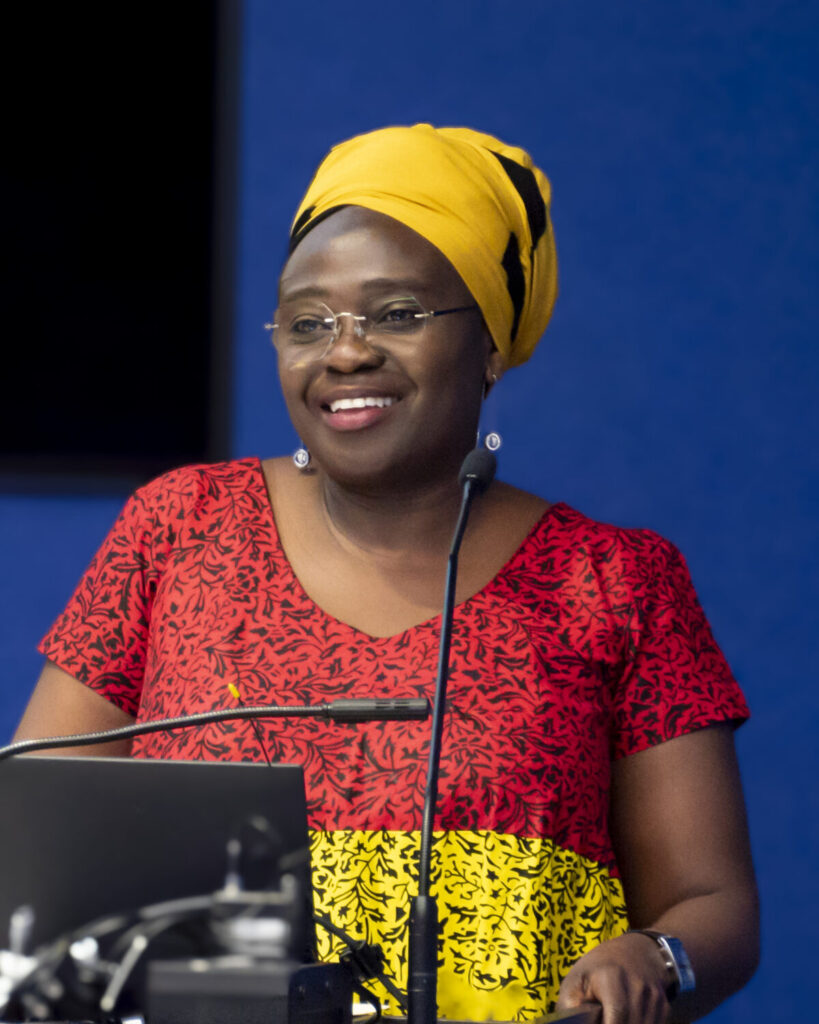
Jennifer Nansubuga Makumbi
Jennifer Nansubuga Makumbi is a fiction writer of The First Woman (2020), which won the Jhalak Prize 2021 and was shortlisted for The Diverse Book Award 2021, the Encore Prize 2021 and the James Tait Black Prize 2021. Her novel, Kintu (2014), won the Kwani? Manuscript Project 2013, the Prix Transfuge Du Meilluer Premier Roman Francais (2019) and was shortlisted for Edward Stanford Awards (2019). Her collection of short stories, Manchester Happened (2019), was shortlisted for The Big Book prize: Harper’s Bazaar 2019. A recipient of the prestigious Windham-Campbell Prize 2018, Writer-in-Residence at NIAS-KNAW in 2021, Artist-in-Berlin DAAD in 2022, and a Franke Fellow (Yale University) 2024-2025, Makumbi won the Global Commonwealth Short story prize 2014, has a PhD from Lancaster University and has taught in several universities in Britain.
She will be reading from her work on Thursday 14th, 18:30.

Chielozona Eze
Chielozona Eze is Professor and Director of Africana Studies at Carleton College. He previously served as the Bernard J. Brommel Distinguished Research Professor at Northeastern Illinois University in Chicago. His research centers on cosmopolitanism, empathy, human rights, and social justice. He has published thirty articles in peer-reviewed journals and is the author of Race, Decolonization, and Global Citizenship in South Africa (University of Rochester Press, 2018) and Justice and Human Rights in the African Imagination: We, Too, Are Humans (Routledge, 2021). His most recent book, Zora Neale Hurston and the Legacy of Black Feminism: Desire as Power, was published by Bloomsbury in December 2025. He is currently working on a monograph titled Goodwill as Politics.
He will be giving his keynote, the Geoffrey Davis Memorial Lecture, “Non-Rational Factors in the Postcolonial (Post-Conflict) Quest for Flourishing” on Friday 15th, 09:00.
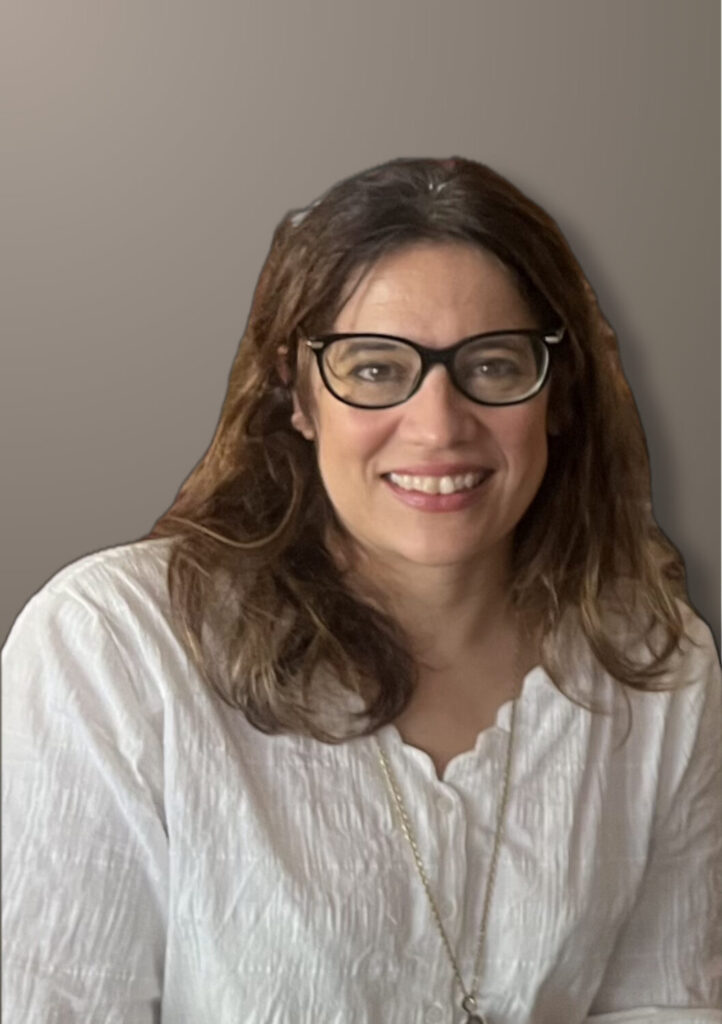
Neelam Srivastava
Neelam Srivastava is Professor of Postcolonial and World Literature at Newcastle University, United Kingdom. Her research interests include Italian colonialism, the editorial history of anticolonial thought, in particular Frantz Fanon, postcolonial print cultures, and South Asian literature. Her books include The Bloomsbury Handbook of Postcolonial Print Cultures, co-edited with Toral Gajarawala, Rajeswari Sunder Rajan, and Jack Webb (London: Bloomsbury, 2023), and The Form of Ideology and the Ideology of Form: Cold War, Decolonization and Third World Print Cultures, co-edited with Francesca Orsini and Laetitia Zecchini (Open Book Publishers, 2022). She is also the author of Italian Colonialism and Resistances to Empire, 1930–1970 (London: Palgrave, 2018) and co-editor, with Baidik Bhattacharya, of The Postcolonial Gramsci (London: Routledge 2012). She is a steering group member of the International Research Network in Postcolonial Print Cultures.
She will be giving her keynote, “Beyond Anglophone Postcolonial Studies: Italian Theory, Third-Worldism and Postwar Decolonization” on Saturday 16th, 11:15.
Conference Panelists
Merve Akçay
Merve Akçay is currently pursuing a PhD at the University of Munich on “The Family Myth in Contemporary Relational Life Writing: Remediations of the Odyssey Schema” as part of the DFG research training group “Family Matters: Figuren der Ent-Bindung.” Her research draws on transcultural memory studies, classical reception studies and life writing studies to investigate the ways in which family as a cultural narrative is performed, negotiated, reproduced and challenged. She holds a BA from Boğaziçi University (Istanbul) in Translation and Interpreting Studies, as well as an MA from the University of Frankfurt in Anglophone Literatures, Cultures and Media. She is a contributor to an edited volume titled Family Memory: Transmission, Negotiation and Exchange Across Generations, to be published in 2027.
Akçay will present “Exilic Families and Absent-Present Fathers: The Return as a Postcolonial Remediation of the Odyssey“ at the panel “Negotiating Identities and Belongings II” on Friday, 13:15
Abstract | Exilic Families and Absent-Present Fathers: The Return as a Postcolonial Remediation of the Odyssey
Katrin Althans
Katrin Althans studied English and German literature and language, communication studies, and law at the University of Münster and holds a PhD in English and American Literature and Culture from the University of Bonn. Her research is situated at the intersection of law and culture, with research interests in migration and refugee studies, law and literature, anglophone literary and cultural studies, Australian Studies, and Black British literature and culture with a strong commitment to transnational perspectives. After a brief stint as professor of English Literature and Culture at the University of Bremen, Katrin is now Academic Director of International Programmes at the Faculty of Law, Heinrich Heine University Düsseldorf, and currently finalising a second-book project on the legal frameworks and representations of flight and migration in contemporary British culture. She has published widely on migration, anglophone postcolonial literature, and Australian literature and film.
Althans will present “Indian-Ocean Storytelling as Strategy of Postcolonial Cartography” at the panel “Sea Crossings” on Friday, 13:15
Abstract | Indian-Ocean Storytelling as Strategy of Postcolonial Cartography
“It became necessary … to write about what was there, to retrieve the moments and thestories the people lived by and through which they understood themselves” writes Abdulrazak Gurnah (“Writing,” 6) in his Nobel Prize lecture about his urge to write. And what was there were stories of the Indian Ocean.
In acts of Indian-Ocean storytelling, Gurnah in his work weaves together those stories in a network of stories in the same way that goods travel the myriad trade routes of the Indian Ocean. Their meeting place is Zanzibar, where “the dominant narrative was the sea and the ocean beyond it” (Gurnah, “Indian Ocean Journeys,” 46). It is, however, not only the titular Indian-Ocean journeys, be they of stories, goods, or people, which are central to Indian-Ocean storytelling, but also the ways in which it engages with other dominant narratives of movement.
In this paper, I am interested in tracing the ways in which this decidedly postcolonial way of storytelling challenges European representational conventions of the Indian Ocean and its littoral spaces and reclaims the storytelling space taken from the colonial subject. By focusing on two distinct meeting places of storytelling in his work, i.e., Zanzibar and Europe, I will chart the narrative trajectory of movements as diverse as forced migration, trade, or tourism within Gurnah’s work. Be it goods like the ud-al-qamari or an ebony table in By the Sea, people like refugees, migrants, soldiers, or tourists in various of Gurnah’s novels (By the Sea, Admiring Silence, Afterlives, Theft…), or language, i.e., Kiswahili – Gurnah’s novels create a rich cartography of postcolonial engagement with the history and culture of the Indian Ocean and its littoral spaces vis-à-vis their former European colonial masters. When for Gurnah (“Indian Ocean Journeys,” 32) the Indian Ocean itself is a “paradigm for the interpenetrability of cultures,” I will argue that the technique of Indian-Ocean storytelling takes this position in his own work.
Ayman Almomani
Ayman Almomani is undertaking a PhD in the Department of British, Irish and American Literature at the University of Pécs, Hungary. He finished his MA in 2020, during which he developed a passion for dystopian literature. His research interests include forms in literary analysis; dystopia and utopia; diasporic fiction; transnational communities and comparative literature. His recent publications can be found in Archiv für das Studium der neueren Sprachen und Literaturen, Diaspora 2025 Revitalization, and in the edited volume, Transnational Postcolonial Studies in the Twenty-First Century: Infrastructures, Literatures, Applications.
Almomani will present “After Empire, Before Apocalypse: Arabic Dystopia as Postcolonial Genre Fiction” at the panel “Genre Fiction: Translating the Colonial and Postcolonial Imagination” on Thursday, 16:00
Abstract | After Empire, Before Apocalypse: Arabic Dystopia as Postcolonial Genre Fiction
Nuha Askar
Nuha Askar holds a PhD in English Literary Studies from Goethe University Frankfurt. Her doctoral research, DeformNation: Narrating Internal Dissent in Anglophone Middle Eastern Literature, examines resistance and internal dissent under dictatorships in modern Syrian and Iraqi novels. It introduces the concept of DeformNation and is forthcoming with Routledge. Her research interests include nationalism, postcolonial theory and studies, and Anglophone world literature from the Middle East and the Global South. Her next research project studies The Art of Reconciliation. She has published peer-reviewed scholarly articles in Arabic and English and is also a guest teacher, speaker, and writer of creative texts on exile, refugees, and migration.
Askar will present “Contested Transfers: Anglophone Middle Eastern Literature between Postcolonial Discourse and World Literature” at the panel “Rethinking Postcolonial Paradigms” on Thursday, 11:30
Abstract | Contested Transfers: Anglophone Middle Eastern Literature between Postcolonial Discourse and World Literature
Postcolonial theory has long offered frameworks for understanding power, resistance, and cultural production in formerly colonized contexts. Yet the transfer of these frameworks into Middle Eastern anglophone literature is neither seamless nor unproblematic. Unlike British colonial contexts, Middle Eastern societies experienced Ottoman rule for centuries and comparatively brief French or British colonial interventions. English is not a colonial lingua franca in the region, and literary production in English often emerges from diasporic contexts. As such, the straightforward application of postcolonial paradigms risks flattening complex local realities, reproducing a binary lens of West versus East while obscuring internal cleavages.
This paper examines how postcolonial discourses – particularly the “writing back” paradigm – are translated, transitioned, and transformed in anglophone Middle Eastern literature. Such transfers, while enabling critiques of Western dominance, can inadvertently naturalize victimhood and obscure multipolar struggles within Middle Eastern societies, including political, social, and ethnoreligious tensions. Drawing on recent insights from literary studies, the paper proposes a shift from bipolar to multipolar readings of power in Middle Eastern literary imaginaries. Anglophone diasporic authors have in the last two decades increasingly foregrounded internal dissent, structural injustice, and intra-national tensions rather than exclusively staging confrontations with Western hegemony. These literary transitions signal not a rejection of postcolonial critique, but its reworking within broader frameworks of Anglophone World Literature. Through a reading of Letters from a Kurd (2015) written by the British Kurdish novelist, Kae Bahar, along with a literary analysis of his novel, this paper traces how postcolonial vocabularies are contested: transformed to address internal injustices alongside external pressures.
The paper argues that these literary practices exemplify the complexities of postcolonial transfer. They demonstrate that anglophone Middle Eastern literature participates simultaneously in postcolonial critique and Anglophone World Literature, negotiating traditional discourses while creating new theoretical and aesthetic possibilities. By tracing these acts of transition and transformation, this study highlights the tensions and disjunctures inherent in transferring postcolonial thought across historical, cultural, and linguistic contexts. It contributes to ongoing debates about the mobility of theory, the politics of knowledge transfer, and the future scope of anglophone postcolonial studies.
Jenny Augustin
Jenny Augustin is a junior professor of Romance Literary and Cultural Studies (French & Spanish) at Osnabrück University. After studying Spanish and Cultural Studies in Bremen, Córdoba, and Cologne, she completed her doctorate in Düsseldorf with a dissertation on the contemporary Mexican novel and was awarded the Werner Krauss Prize for the best doctoral thesis by the German Hispanist’ Association. She is currently conducting research on behavioral ideals in Early Modern theater and treatises, as well as on social engagement within contemporary Latin American poetry.
Augustin will present “Between Honor and Jealousy: Affective and Social Transformations in Ibero-American Colonial Theater” at the panel “Juxtaposing Empires” on Thursday, 14:00
Abstract | Between Honor and Jealousy: Affective and Social Transformations in Ibero-American Colonial Theater
*Content note: This talk discusses colonialism, structural violence as well as sexualized violence.
Given that the concepts of ‘honor’ and ‘jealousy’ create a certain tension between emotions and their (politically necessary) control, they can be considered key terms in cultural research focused on the different ways of coexisting in Iberoamerican societies in the early modern period. Following this hypothesis, the paper analyzes how three 17th-century Ibero-American comedies use the terms ‘honor’ and ‘jealousy’ to portray different affective and social relationships: The three plays to be analyzed are Hay amigo para amigo (Manuel Botelho de Oliveira, 1663), Elegir al enemigo (Agustín de Salazar y Torres, 1664) and Los empeños de una casa (Sor Juana Inés de la Cruz, 1683).
I consider theatre to be the ideal medium for negotiating the affective side of social transformations (Goffman, Greenblatt, Fischer-Lichte), both at an individual and collective level (colonial society, gender roles, social strata). The comedia, which began in Spain in the 16th century, mixed the tragic with the comic and, in the so-called corral de comedias (open-air theater), brought together people from all social strata. By negotiating the norms and models of behavior prevalent at the time (honor, virtue, discretion), it became a global success. Maravall highlights the propagandistic function of the genre, Ibero-American theater however also displays a critical and subversive potential. While the colonial theater in Nueva España (colonial Mexico) was initially predominantly oriented towards the political elite, this nevertheless included a mixed, both Spanish and Creole audience. The paper will analyze the intradramatic consequences of these colonial relationships within the three mentioned plays.
Aadhi Avrina
அவ்ரீனா Avrina (1992, Tamil Nadu) is a trans poet and writer living in Berlin. They are many poets, spirits and voices sharing one body. They write places, beings and times. Obsessed with memories that pervade and evade, often of childhood, avrina’s writing is an ebb and flow characteristic of their desire for the sea. avrina’s story won the Short Fiction / University of Essex International Short Story Prize 2021 and works have been nominated, among others, for the Craft Short Fiction Prize, Indiana Review Fiction Prize, the Berlin Writing Prize, and the Desperate Literature Short Fiction Prize. A devoted bardic poet, avrina has read at Bangalore Literature Festival, Mathrubhumi International Festival of Letters Kerala, Prosanova Hildesheim, Academy of Arts Berlin, the LCB, Poesie Festival Berlin, etc. apart from being published in Prairie Schooner, Sinn und Form, The Bombay Literary Magazine, Stoff aus Luft, Kaalachuvadu, etc. avrina was a literature fellow of the city of Berlin in 2024.
Avrina will be giving a poetry performance on Saturday, 10:45
Extract | Trans Gaze (or) Prism Geometries
At the edge of a dying forest, the traveller sees a face in the bark of a tree.
At the edge of a dying forest where time fractures, the traveller seeks a name.
At the edge of a dying forest where eyes are stars of midnight, the traveller is a lonely seed.
At the edge of a dying forest is a shattered glass beam, the traveller gathers light.
At the edge of a dying forest is a body without bones, the traveller slips on.
Marine Berthiot
Marine Berthiot (BA, MA Paris-IV Sorbonne, DPhil Edinburgh) is an MSCA Postdoctoral Fellow researching Magdalene cultural production at the University of Galway. She examines the connections between Magdalene arts and restorative justice for Magdalene survivors in six countries: Ireland, the United Kingdom, Canada, the United States, Australia, and Aotearoa New Zealand. She has written two book chapters and one article on Aotearoa New Zealand Magdalene literature, one for Palgrave Macmillan, one for the University of French Polynesia Press, and the other for the Australasian Journal of Irish Studies (in press). Her monograph based on her doctoral thesis, Women Writing Girlhood Trauma in Aotearoa New Zealand, will be published by Lexington Books/Bloomsbury in 2026.
Berthiot will present “Testifying to the Magdalene Trauma of Tuam” at the panel “Negotiating Trauma” on Saturday, 9:00
Abstract | Testifying to the Magdalene Trauma of Tuam
*Content note: This paper deals with the Magdalene trauma of Tuam and can be distressing to audiences due to historical facts confirming institutional abuse on children and their mothers. The traumareading methodologies employed to address this trauma are culturally sensitive and highlight the interrelation between trauma-telling and literary genres.
Magdalenism is a structure which oppresses, represses, and censors femininity, women’s rights over their own bodies, and women’s access to the public sphere. It operated for more than two centuries in Ireland under different names, such as Magdalene Laundries, Mother and Baby “Homes”, country “homes”, workhouses, orphanages, industrial schools, and reformatory schools. Magdalenes could be secluded for months and sometimes years for various “motives” depending on the era and the institution, including ebriety, homelessness, joblessness, incest, paedophilia, rape, out of wedlock pregnancy, imagined promiscuity, mental and/or physical disabilities, multiethnicity, and beauty. More than 40,000 women and girls were abused in Magdalene institutions in Ireland from 1922 to 1996. When the Republic of Ireland was implemented, single mothers were especially stigmatised and systematically abused in the nascent postcolonial state to preserve “Irish purity”.
In 2014, local historian Catherine Corless published her research on the 796 disappeared children of the Bon Secours Mother and Baby “Home” in Tuam. Most of the children who were raised in this institution were the children of “penitents” who were incarcerated in Galway Magdalene Laundry. Forensic investigation has been conducted on site since July 2025 to excavate the remains of babies and toddlers after bodies were found in a septic tank. After many documentaries on the topic, a Hollywood movie produced by Liam Neeson, Lost Children of Tuam, is currently being shot on this infamous episode of Irish history. Tuam is now internationally known for its mass grave of Magdalene children, although other institutions including Bessborough near Cork also had a high rate of infant mortality.
This paper investigates the Magdalene trauma connected with the Tuam tragedy. The corpus is composed of three texts: the autobiography For the Love of My Mother by survivor J.P Rodgers (2017), the performance Nochtaithe by Miriam Haughton (2021), and the Bildungsroman Stolen Faith by James McVeigh (2022). Observing how three different literary genres convey the Magdalene trauma of Tuam, the paper highlights how both unmarried mothers and their babies were treated as “expendable”, how Magdalenism codified inmates’ every move while exploiting their pain, and how institutionalisation altered the survivors’ sense of self.
Katarzyna Bielińska
Katarzyna Bielińska, Ph.D., is an assistant professor at the Department of Ethics and researcher at the Center for Bioethics and Biolaw at the Faculty of Philosophy, University of Warsaw and president of the Warsaw Branch of the Polish Philosophical Society. Her research interests include global and environmental bioethics, social and political ethics, and social and political philosophy.
Bielińska is presenting “Decoloniality in Central Eastern Europe after 2022” at the panel “Between Universality and Particularity. Right-Wing and Conservative Postcoloniality and Decoloniality Discourses” on Friday, 10:45
Abstract | Decoloniality in Central Eastern Europe after 2022
The susceptibility of postcolonial and decolonial languages to right-wing and conservative usage has long been noted. Today it is more and more often observed that such usage is in accordance with the ideological discourse of Putin’s Russia, targeting „the collective West.” Additionally, some authors point to the conservative and even „colonial” content of the first school of decolonial theory (Walter D. Mignolo), stemming from the concept of dewesternization and its associatedness with the geopolitical concept of multipolarity. This became especially apparent in the context of Mignolo’s writings about Russia’s full-scale aggression against Ukraine, in which he uses the term “a special operation,” echoing Putin’s propaganda. (Mignolo & Gastheni, 2025, Mignolo, 2023).
Reception and rethinking of decolonial theory in Central Eastern Europe is entangled in this complex political context. As a result, decolonial discourses form a complex and ambiguous conceptual landscape. Within this landscape, four „ideal types” of approaches can be identified, in practice merged and intertwined:
(1) Following the original “first school” of decoloniality’s binary scheme, associating imperialism and coloniality only with “the West” opposed to the rest of the world.
(2) Refiguring the original “first school” of decoloniality framework to address the colonial domination of Russia as a “subordinate empire” within that binary scheme.
(3) Reconceptualizing decolonial theory to primarily address Russian coloniality in the region.
(4) Reconceptualizing decolonial theory to address Russian and German coloniality in the region.
In my presentation, I will discuss this complex conceptual landscape in Central Eastern Europe humanities and how it has transformed since 2022
Stanisław Bogdanowicz
Stanisław Bogdanowicz is a PhD candidate at the Doctoral School of Humanities at the University of Warsaw (working title of the thesis: “Hegel and Ecology”) and a student of the Bioethics Master’s degree. He is the secretary of the Warsaw Branch of the Polish Philosophical Association and completed his bachelor’s degrees in film production (National Film School in Łódź) and philosophy. He graduated with his master’s degrees in philosophy and Cognitive Science at the University of Warsaw and is a team member of the Center for Bioethics and Biolaw as a collaborator in the project titled “Ideas of progress and development in the context of climate crisis in peripheral philosophies in XXI century”, and of the Research Center for German Philosophy, engaged in the “Close Reading of Hegel’s Science of Logic” seminar. He runs monthly cinema discussion events held in the library at the Faculty of Philosophy at the University of Warsaw.
Bogdanowicz is presenting “The Question of Universality in Decolonial Theory and Hegel’s Philosophy” at the panel “Between Universality and Particularity. Right-Wing and Conservative Postcoloniality and Decoloniality Discourses” on Friday, 10:45
Abstract | The Question of Universality in Decolonial Theory and Hegel’s Philosophy
In the presentation, I will discuss the relevance of the notions of universality and particularity to the discourse of decoloniality in the light of their functioning and origin in Hegel’s philosophy. I begin with addressing the criticism of the concept of universality invoked as the means of departure from Western epistemology and condemnation of eurocentrism. In consequence of this criticism some authors transfer decolonial efforts to accounts of non-Western identities in terms of particularities such as ethnicities or pre-colonial realities, thereby constituting a binary opposition between oppressive universality and allegedly emancipatory particularity.
Drawing from Hegel’s philosophy, I argue that such an opposition cannot genuinely overcome epistemic injustice, but instead only represents stagnant counterpoints, and as a result offers a conservative position. What follows is that for a theory to pursue emancipatory politics it cannot abandon the concept of universality. Instead, emancipation calls for transformation of universality for it not to stand in opposition to particularity. In Hegel’s thought it is represented by the movement from abstract to concrete universality, which allows for consideration of decolonial struggles as expressions of the universal through the particular, marking contribution of Hegel’s dialectical logic to contemporary philosophy of emancipation. I support the argument by differentiating universality from universalism, with the former not implying the imposition of one’s domination over others.
Additionally, I give the concepts of universality and particularity in Hegel’s philosophy a historical materialist footing by demonstrating their origin in Hegel’s personal engagements and opinions on the political reforms of his time. Specifically, I refer to Hegel’s attitude towards the Napoleonic modernization of Bavaria and his contempt towards the “old Bavaria”, which he regarded as a particularistic reaction, but at the same time a consequence, to inadequate implementation of the reforms in an abstract way.
Sara Boulhaoua
Boulhaoua is presenting “Postcolonial Moroccan Literature as Counter-Narrative: Writing Back to Colonial Representations of the Moroccan Goumiers in Mohamed El Maâzouz’s Harb Al-goum“ at the panel “Under Construction” on Thursday, 11:30
Abstract | Postcolonial Moroccan Literature as Counter-Narrative: Writing Back to Colonial Representations of the Moroccan Goumiers in Mohamed El Maâzouz’s Harb Al-goum
This paper presents work in progress from my doctoral research on the translation and analytical study of Moroccan postcolonial literature as a decolonial intervention. It focuses on Mohamed El Maâzouz’s novel Harb Al-goum (The Goumiers’ War), which challenges dominant colonial narratives of the Moroccan Goumiers, soldiers conscripted by the French to fight against Germany during World War II. Colonial discourse often depicted the Goumiers as brutal and morally corrupt. In contrast, El Maâzouz foregrounds their ethical codes, resilience, personal dignity, and significant contribution to the French war effort.
Drawing on postcolonial theory and close literary analysis, this study considers the novel as an act of “writing back,” restoring humanity to a historically silenced group and intervening in the misrepresentation of Moroccan history. By analyzing key chapters, character interactions, and narrative strategies, the paper explores how El Maâzouz negotiates moral complexity, challenges Western colonial narratives, and invites readers to critically reconsider the conduct and legacy of Moroccan soldiers within colonial wartime contexts.
Framed within my ongoing PhD project, this paper also situates translation and literary production as decolonial practices that engage with ethical and historical memory. Presenting this work in the Under Construction section allows me to discuss preliminary findings, methodological approaches, and emerging analytical frameworks, as well as to receive feedback on refining the argument and situating it in broader postcolonial debates.
This research contributes to translation studies, postcolonial literary studies, and discussions of ethics in historical fiction, highlighting literature’s potential to revisit contested histories, restore marginalized voices, and promote historical justice.
Anna Busse
Abstract | Affective Care in Vuong and Anzaldúa: From Borderlands to Gaps in Knowledge
In my paper I argue that the affective strategies used in queer diasporic writing to perform literary care work can also be applied to current everyday discussions centering around cultural appropriation. First of all, I argue that queer diasporic writing can be understood as care work insofar as it functions as a counter-archive and actively subverts traditional, linear modes of narration rooted in Western logocentric traditions. Such traditions privilege rationality, coherence, and total visibility, producing literary subjects that are rendered legible through constant observation and explanation. In contrast, queer diasporic texts attend to gaps, silences, and affect without demanding their resolution or full comprehension.
To illustrate this argument, I compared Ocean Vuong’s On Earth We’re Briefly Gorgeous with Gloria Anzaldúa’s Borderlands/La Frontera: The New Mestiza. While the authors employ divergent narrative strategies, both resist conventional storytelling practices and the colonial impulse to logically master or contain meaning. Their texts prioritize affect over rationale, cultivating an intimate counter-public that operates outside Enlightenment epistemologies. Moreover, by resisting linearity and narrative closure, these works refuse to be rendered as static or “dead” matter. Instead, their unfinished, non-totalizable forms insist on the story’s ongoing vitality, denying the reader a detached, bird’s-eye perspective. In this way, queer diasporic writing emerges as a living practice of care: one that protects opacity, sustains relationality, and affirms narrative life beyond containment.
In the second part of my paper I apply these affective strategies to conversations that I have had with people in my life around cultural appropriation. I argue that in the time of misinformation, using affect over supposed ‘rationale’ can establish a different epistemological framework that not necessarily bridges gaps but makes them less scary for an audience that is not educated regarding the postcolonial discourse.
Nadia Butt
Butt will present “Transculturality as a Translational Process in Contemporary Postcolonial Novels” at the panel “Border Crossings” on Thursday, 11:30
Abstract | Transculturality as a Translational Process in Contemporary Postcolonial Novels
This paper proposes a theoretical reconfiguration of transculturality through the conceptual lens of translation. Building on key approaches to transculturality developed by Wolfgang Welsch, Mikhail Epstein, Diana Taylor, Arianne Dagnino, and Frank Schulze-Engler, it argues that transculturality itself can be understood as a form of cultural translation. Cultural translation, as emphasized by thinkers such as Walter Benjamin, Salman Rushdie, Susan Bassnett, Doris Bachmann-Medick, and James Clifford, is deeply entangled with processes of cultural transformation. Moving beyond static or nation-bound models of culture, the paper conceptualizes transculturality as an ongoing translational process that reshapes meanings, practices, and epistemologies. Translation is not treated merely as linguistic transfer, but as a broader heuristic for analysing how cultural forms move, are negotiated, and are reconstituted across contexts shaped by power asymmetries, historical entanglements, and unequal knowledge systems. Drawing on translation studies, cultural theory, and postcolonial thought, transcultural encounters are framed as “contact zones” (Pratt 1993), where difference is neither erased nor essentialized, but reworked within liminal and hybrid spaces (Bhabha 1994). By foregrounding processes of selection, interpretation, loss, and gain, translation reveals cultural meanings as contingent, mediated, and constantly rearticulated. The paper further highlights untranslatability, deterritorialization, and dislocation as constitutive dimensions of transcultural dynamics in global modernity. Framing transculturality as translation enables a critical engagement with questions of agency, power, resistance, and innovation, particularly in relation to marginalized perspectives that challenge dominant cultural narratives. The argument is illustrated through close readings of M. G. Vassanji’s The In-Between World of Vikram Lall (2003), Jhumpa Lahiri’s The Namesake (2003), and Kamila Shamsie’s Burnt Shadows (2009). Ultimately, the paper advances a processual, relational, and transformative model of transculturality, offering new analytical tools for examining hybridity, identity, and belonging across borders, as manifested in 21st- century postcolonial fiction.
Kerry Bystrom
Bystrom will present “Forced Transfer of Children from Ukraine: Colonial Logics, Cultural Genocide, International Solidarity” at the panel “Transition, Reckoning, Reconciliation” on Thursday, 16:00
Abstract | Forced Transfer of Children from Ukraine: Colonial Logics, Cultural Genocide, International Solidarity
This paper addresses human rights activism around the mass forced transfer of children from Ukraine to Russia since the 2022 full-scale invasion through the lens of a young adult trilogy “Kidnapped from Ukraine” (Under Attack, Standoff, and Still Alive, 2025-2026) written by the Canadian-Ukrainian children’s author Marsha Forchuk Skrypuch. Setting the trilogy in dialogue with the author’s previous texts focused on World War II and the final report of the Canadian Truth and Reconciliation commission on forced residential schooling of Indigenous peoples and its conclusions of genocide, and alongside a renewed interest in theories of coloniality, decoloniality and postcoloniality by young Ukrainian scholars in research projects (for instance via the Invisible University for Ukraine), it asks to what extent notions and models of (cultural) genocide responding to British and French colonial contexts vis a vs a Holocaust-oriented concept of genocide fit the Ukrainian case and what role and challenges the discourse of genocide has in generating international solidarity with children wrongfully abducted from Ukraine and their domestic advocates.
David Callahan
David Callahan is a member of the Popular Culture Studies research group at the University of Aveiro. His varied work has appeared in journals such as Interventions, Postcolonial Studies, Arizona Quarterly, English Studies in Africa and Game Studies, along with book chapters on subjects such as “American Postcolonial Shame, Fiction and Timothy Bewes,” or “Forms and Order: Making the World More Just Through Video Games?” Among this material are fourteen articles or book chapters dealing with the representation of Timor-Leste by outsiders, ranging from the Lonely Planet Guide to East Timor to popular fiction. His most recent publication is the edited collection Visual Storytelling in the 21st Century: The Age of the Long Fragment (PalgraveMacmillan, 2024).
Callahan will present “Ethical Transfer: Nicholas Jose’s The Idealist, Australia and Timor-Leste” at the panel “White Saviorism, White Victimhood, and Ethical Authority” on Thursday, 14:00
Abstract | Ethical Transfer: Nicholas Jose’s The Idealist, Australia and Timor-Leste
Australia has many dirty pasts, but in one of them those who suffered were not in Australia but in Timor-Leste, and Australia was one of the principal enablers of that suffering from the time of the invasion of Timor-Leste by Indonesia in 1975 and throughout Indonesia’s brutal twenty-four year occupation. When Timor-Leste finally got the chance to vote for independence in 1999, and became independent officially in 2002, it was imagined that the future relationship between Australia and Timor-Leste would at least partially rectify the damage occasioned by the ethical deficit evident in Australian realpolitik and arrogance. Time has however not underwritten this optimism, and Australian writer Nicholas Jose’s recent novel The Idealist (2023) reprises the scenario in a context in which there have been few recent Australian literary responses to its role in Timor-Leste.
In its reading of the interface between the two countries, The Idealist performs a transfer of ethical authority from Australia to Timor-Leste. The idealist’s home country, Australia, at first embodies the affective capital that home countries supposedly possess. As the novel goes on, the idealist, a spy working for the Australian government in 1998-99, undergoes a transition away from subscribing to belief in the ethical probity of Australia until he has transferred his commitment to the nation he has been tasked with undermining, Timor-Leste.
This paper will examine the novel’s attempted securing of ethical intelligibility via the idealist’s transformation, and consider whether the protagonist’s identificatory metamorphosis constitutes a useful repurposing of the shame of the legacy of the historical relationship between Australia and Timor-Leste (Fernandes, 2004; Collaery, 2020).
Sampayan Chakraborty
Sampayan Chakraborty is a PhD candidate in English and Translation Studies at the School of Humanities and Social Sciences, Indian Institute of Technology Mandi. He is currently working as a UGC Senior Research Fellow. His research focuses on translation networks and the circulation of literary and political texts between the Soviet Union and India, with a particular interest in how these translations shaped the construction of world literature and postcolonial identities. With expertise in Bengali literary studies and Soviet literature, he investigates the role of translators and publishing institutions in fostering cross-cultural dialogues within Cold War geopolitics. He was selected for the summer school of the Institute for World Literature, Harvard University, at the University of Cyprus, where he received a full tuition fee waiver to share his work.
Chakraborty will present “Friction in Relay Translation: Indo-Soviet Literary Transfers in Post-colonial Era (1950s-1960s)” at the panel “Acts of Translation” on Thursday, 16:00
Abstract | Friction in Relay Translation: Indo-Soviet Literary Transfers in Post-colonial Era (1950s-1960s)
In post-colonial period, India as a new formed nation signed friendship treaty with the Soviet Union on 12th February, 1960 which mentioned “encouraging translation, exchange of books and periodicals on educational, cultural, scientific and technological subjects as well as other kinds of books, publications and bibliographies on the subjects representing mutual interest” ((Ministry of External Affairs, Treaty: RU60B1384). Emerging as a “third-world country” (Alfred Sauvey: 1952), India chooses to culturally interact with the Soviet Union (“second-world country) is significant to understand the geo-politics happening during the post-colonial world during 1950s. Additionally, the Cold War as a global phenomenon started complicating the understanding of literary and cultural exchanges by putting political lenses to understand translation and the transfer of knowledge. The major publishing house of the Soviet government, named Foreign Languages Publishing House, started the dissemination of literature in four major Indian languages: Hindi, Urdu, Bengali, and Malayalam as a part of global outreach policies.
This paper examines the complications of translation and the literary transfer process while translators, having no knowledge of the Russian language, used English as an intermediary language. The anxiety of “relay translation” (Ringmar: 2012) was described by the Indian translators who worked at the Foreign Languages Publishing House in Moscow through their autobiographies. This paper examines the anxiety of using English as an intermediary language for translating Soviet literature into Indian languages during the post-colonial period through readings of Madanlal Madhu’s Yadon Ke Dhundhle Ujale Chere (Hindi), Bhishma Sahni’s Aaj Ke Ateet (Hindi), and Samar Sen’s Babubrittanto (Bengali). By situating the translator’s works into the received culture, this paper also examines how relay-translation caused the misinterpretation of texts in the received culture during 1950s India through reading selected Soviet translated texts published into Hindi and Bengali by Foreign Languages Publishing House between 1950 and 1960. Furthermore, this paper investigates the post-colonial transfer of knowledge through translation in the Indo-Soviet context, where bypassing English became necessary to avoid misinterpretation and create a parallel centre of world literature in Moscow, which operated separately beyond the anglosphere.
Antara Chatterjee
Dr. Antara Chatterjee is Associate Professor of English at the Department of Humanities and Social Sciences, Indian Institute of Science Education and Research (IISER), Bhopal. Her interests include South Asian literatures, Partition studies, trauma and memory studies, and environmental and medical humanities. She has published in Journal of Postcolonial Writing, South Asian Review, Contemporary South Asia, among others, and in edited collections by Routledge, Palgrave, Bloomsbury, and Springer. She has co-edited Pandemics and Epidemics in Cultural Representation (2022). She is currently co-editing two special issues for South Asian Review and Journal of Postcolonial Writing. She has been awarded/offered grants and fellowships from India and abroad, including the prestigious British Academy Visiting Fellowship.
Chatterjee will present “Postcolonial Transfer, Epistemic Disjuncture and (Mis)translation in Amitav Ghosh’s The Hungry Tide” at the panel “Epistemic (Mis)Translations: Health, Knowledge Systems, and Postcolonial Negotiations” on Thursday, 16:00
Abstract | Postcolonial Transfer, Epistemic Disjuncture and (Mis)translation in Amitav Ghosh’s The Hungry Tide
This paper will examine Amitav Ghosh’s novel The Hungry Tide (2003) from the vantage points offered by the conference theme: of postcolonial transfer, translation and transition. Ghosh’s novel, set in the intricately crisscrossing archipelago of rivers and islands in Bengal’s deltaic mangrove forests, the Sundarbans, reveals a range of exchanges and encounters–sites of transfer, transition, but also disruption and disjuncture–ushered in by region’s and the nation’s uneven and contested encounter(s) with modernity. These postcolonial encounters, marked by both transfer and dissonance, are set in motion by the legacies of the colonial enterprise which had led to the founding and later abandonment of Port Canning in the Sundarbans, later determined by the trajectories of postcolonial nation-making in dialogue with modes of being and belonging shaped by (post)colonial modernity and globalisation. At the heart of these encounters is the dialogue as well as disjuncture between the epistemological framework of Western scientific modernity, represented by the Indian-American cetologist Piya studying the Irrawaddy dolphin in the Sundarbans, and the local and situated ecological knowledge practices and agency of the fisherman Fokir, who becomes Piya’s unexpected ally in her quest for the dolphin. Fokir and Piya are unable to communicate in a shared language, suggestive of their larger epistemological and experiential dissonances. Yet they align in their shared, albeit different understandings and attention to the more-than-human lifeworld and agency of the Sundarbans.
This paper will focus on these aspects of linguistic, epistemological and subjective encounters, (mis)translations and disruptions in the novel in the context of planetary health, subaltern subjectivity and knowledge.
Rudrani D. Chaudhuri
Rudrani Dasgupta Chaudhuri (she/they) is a PhD scholar in the Department of Liberal Arts, Indian Institute of Technology Bhilai, working under supervision of Dr Anubhav Pradhan. Their doctoral thesis examines queer self-fashioning in digital media by lesbian and bisexual women and transmen in West Bengal. They are an Editorial Assistant in the journal South Asia Research.
Chaudhuri will present “Queering the Home: Intimate Spatial Solidarities in Babyji” at the panel “Architectures of Hope and Solidarity in South Asian Cities I” on Friday, 10:45
Abstract | Queering the Home: Intimate Spatial Solidarities in Babyji
The narrative of Indian nationalism is violently invested in controlling women’s sexuality and confining the boundaries of female space within the hetero-patriarchal home. However, as seen in seminal texts like Ismat Chughtai’s short story “Lihaaf” (1942) and Deepa Mehta’s film Fire (1996), the domestic space of the home can also become queered in ways which evade surveillance of the social panopticon and encourage transgression and destabilisation of the normative order through intimate solidarities between women. This paper analyses Abha Dawesar’s novel Babyji (2005) to argue that queer desire disorients the heteronormative organisation of domestic spaces to produce ephemeral and fragile sites of comfort and care where linear relations of age, class, and caste are complicated. The paper employs the theoretical frameworks of Sarah Ahmed’s queer phenomenology and José Esteban Muñoz’ s idea of queer futurity to examine possibilities and impossibilities in the queer body’s relationship with structures of power. Set against the backdrop of a changing India where aspirations of modernity and traditional systems of socio-economic hierarchies are engaged in violent negotiations, Babyji explores the coming-of-age journey of the protagonist Anamika, brilliant student, Head Girl, and only daughter of middle-class parents, who finds love, lust, comfort and hope in her relationships with a middle-class working woman and widow she calls India, the maid Rani whom she rescues from an abusive marriage, and her classmate Sheela. Even as Anamika’s firm belief in merit-based superiority and patriotism orients her along straight lines towards a future of upholding the bourgeoise social order, the disruption of this external order by violent protests in Delhi against the recommendations of the Mandal Commission enables Anamika’s disorientation from normative discourses of privilege, patriotism, and pleasure. This transforms the domestic spaces of her sexual adventures into potent sites of queer disordering: in other words, misalignments within the sanctified heteropatriarchal and nationalist ideal of the home in the novel queers the idea of the nation itself.
yashka Chavan
yashka Chavan is a PhD candidate at the Graduate School Practices of Literature and a former lecturer and research assistant at the Chair of English, Postcolonial, and Media Studies, University of Münster. Her research interests include decolonial and intersectional feminist theory and philosophy, critical theory, trans/gender studies, queer theory, postcolonial studies, and fashion anthropology. She is also an artist working primarily with text and textile-based installations, photography, collage, and performance art. yashka makes rhizomes and machinic assemblages of literature, academic research, embodied experience, emancipatory politics, experiential philosophy, art, and… (n-1) possibilities which subvert and question the dominant notions of knowledge production.
Chavan will present “Transition(ing) in the Academy: Decolonising Trans/Gender Studies” at the panel “Trans Transitions, Transfers, and Transformations” on Friday, 13:15
Abstract | Transition(ing) in the Academy: Decolonising Trans/Gender Studies
Western frameworks of transgender studies have dominated the academy since the field’s emergence, shaping not only its “objects” of inquiry but also the conditions under which knowledge is deemed legitimate. This paper seeks to destabilise these hegemonic formations by interrogating what it means to exist and produce knowledge as a non-white transfeminine subject within an academic milieu that routinely disavows embodied experience as insufficiently “objective.” I do not claim epistemic authority nor do I universalise my trans experience. Rather, I situate this work as an autotheoretical reflection on my ongoing process of decolonisation as a brown trans migrant womxn researcher in a predominantly white academy. I argue that the academy continues to uphold and gatekeep normative trans discourse via the primacy of binary gender frameworks, transmisogyny, medicalisation, and (neo)colonial epistemologies. These structures not only marginalise non-western and nonwhite trans (embodied) knowledges but actively erase alternative modes of trans/gender becomings. Drawing across history, philosophy, literature, photography, medicine, psychoanalysis, art, politics, fashion, and transnational migration, and engaging critically with contemporary debates surrounding the so-called “transgender issue,” this paper mobilises autotheory as both method and resistance. By reworking la paperson’s figure of the ‘scyborg’ for decolonial trans/gender becomings, I propose an epistemic mode that is kinda subversive kinda hegemonic. This paper thus narrates the brown queer body as a site of theory, philosophy, disruption, migration, and world-making. Ultimately, it calls for an academy in which nonwhite articulations of trans/gender corporealities can exist without the demand for legitimisation and without fear of epistemic or material violence.
Shu-ching Chen
Shu-ching Chen is Emeritus Professor in the Department of Foreign Languages and Literatures at National Chung Hsing University in Taiwan. She previously served as Dean of the College of Liberal Arts and Director of the Research Center for Humanities and Social Sciences. Her research focuses on Asian American literature, postcolonial literature, and Trans-Pacific studies, with recent work exploring the intersections of Environmental Humanities and postcolonial studies.
Her essays have appeared in journals including Concentric, Review of English and American Literature, EurAmerica, Chung-Wai Literary Quarterly, and Tamkang Review. She is the editor of the Chinese-language volume Asian American Environmental Humanities: Agriculture, Species, and Global Environmental Change (Taipei: Bookman, 2024) and is currently completing a monograph titled Others and the Anthropocene: Minority Literature in a Planetary Age.
Chen will present “Postcolonial Transfers Beyond the Human: Subalternity and Multispecies Living in Cereus Blooms at Night” at the panel “More-than-Human Transfers” on Thursday, 14:00
Abstract | Postcolonial Transfers Beyond the Human: Subalternity and Multispecies Living in Cereus Blooms at Night
Shani Mootoo’s Cereus Blooms at Night depicts an incestuous trauma within an Indian diasporic family on the imagined Caribbean island of Lantanacamara. While incest narratives often foreground haunting, psychic rupture, and failed recovery, this novel treats trauma as a point of transition where humanist narratives of development, social mobility, and racial uplift give way to multispecies forms of living. At moments when culture collapses under colonial violence, nonhuman life—plants, insects, animals, and environments—moves from the margins to the center of the narrative, unsettling anthropocentric assumptions about subjectivity, agency, and recovery.
This paper situates Cereus Blooms at Night at the intersection of postcolonial humanism and multispecies posthumanism, revisiting the question of subalternity through the lens of interspecies relationality. In postcolonial humanist discourse, the subaltern’s “inhuman” condition is often framed as animality to be overcome in the pursuit of full humanity, a logic that reproduces colonial exclusions by disavowing the nonhuman. Drawing on multispecies studies, this paper instead argues that Mootoo reconfigures the nonhuman as a site of ethical connection rather than abjection, enabling subaltern existence to persist beyond humanist norms of recognition.
Focusing on the family garden—a space shaped by plantation economies and Christian moral regimes yet teeming with insects, reptiles, birds, trees, and the nocturnal cereus bloom—this paper reads the garden as a liminal site of transfer between colonial dehumanization and multispecies cohabitation. Through a close reading of Mala’s embodied relations with nonhuman life, the paper examines how queer embodiment and trauma are reworked through trans-corporeal feminist and more-than-human frameworks. In doing so, it proposes multispecies living as a transformative mode of postcolonial transfer that expands the ethical and political horizons of subaltern studies.
Priyam Goswami Choudhury
Priyam Goswami Choudhury is a postdoctoral researcher currently working on the cultural narratives of tea plantations in Assam. She teaches at the Institute for English and American Studies at the University of Potsdam. Her research broadly covers circuits and networks of culture postcolonial literatures.
Choudhury will present “The Invention of the Tea Frontier” at the panel “Ecology, Extraction, and Environmental Justice” on Friday, 10:45
Abstract | The Invention of the Tea Frontier
Since the Wasteland Rules Act of 1838 was put in place by the British Parliament, thousands of acres of land were transformed into “wastelands” to attract planters and create tea plantations in Assam in the 19th century. Since there was a lack of legal infrastructure in the remote area of the empire, this act also became the basis for the colonial administration to let the plantation managers have penal contracts for indentured labourers that allowed them to arrest, fine, and punish any indentured labourer who could “escape” the plantation without honouring their work contract. Writing about this decades later, Sir Henry Cotton—then superintendent of police—would remark that he was aware of the unjust punishments that the planters meted out to the workers but “it would have been impossible for a young man in my position to have deliberately isolated himself and shut himself off from communication with his countrymen.”
Cotton’s remark highlights how Assam’s location as the frontier was at the centre of such an entanglement; that violence on the plantation was allowed not only because of the legality bestowed upon it but also due to the social relations between colonial governance and colonial capital. In my paper, I argue that the invention of the frontier—transforming land into a cultural and material resource in the frontier mode of capitalism—was a necessity for such a plantation system to exist. In doing so, the frontier could be made into the habitus of the “jungle” where “primitives” lived; a narrative that could be, then, used for subjugation through legal and cultural means. By reading legal literature and memoirs from that era, this paper argues that such a transformation of land made the frontier both the exotic periphery that could be domesticated and the site for self-fashioning for the empire.
Srijanee Roy Chowdhury
Srijanee Roy Chowdhury is a PhD student in the School of English at the University of Leeds, UK. Her doctoral research focuses on representations of disability and community in postcolonial Indian English and Bengali literature. This work is funded by the UK’s Arts & Humanities Research Council through the White Rose College of the Arts & Humanities. She completed her BA (Hons.) and MA in English at Jadavpur University, Kolkata, India – receiving University Medals for standing first in both degrees. Her work has been published in Doris Lessing Studies, where she was also the winner of the Doris Lessing Society’s Graduate Student Essay Contest in 2022. She has also presented her research at conferences organised by the University of Heidelberg, the Doris Lessing Society of South Asia and Jadavpur University.
Chowdhury will present “Bodies in Flux: Leprosy and Social Transformation in Samaresh Basu’s Shamba” at the panel “Resistance and Transformation” on Saturday, 9:00
Abstract | Bodies in Flux: Leprosy and Social Transformation in Samaresh Basu’s Shamba
Written during the tumultuous decade of the 1970s in India, Samaresh Basu’s Shamba (1978) is a tale rooted in an ancient Puranic myth but mediated by a distinctively postcolonial perspective. The titular protagonist’s experience with leprosy prompts a transformative journey of self-realisation that ends with the foundation of a revolutionary and inclusive form of community that heralds a transition from the exclusionary social organisations of both mythical and modern India. The author’s strong political consciousness and investment in social realism filters into this seemingly fantastical narrative – enabling Basu to present an alternative vision of postcolonial futurity through a mythical surrogate.
Integral to the narrative is leprosy, with the physical transformation of Shamba’s leprosy-afflicted characters acting as a prerequisite for and representative of a larger social transformation. Employing disability studies and postcolonial theory, I reveal how the physical, geographic and temporal transitions in Shamba act as a means of realising a radically inclusive and non-hegemonic form of postcolonial statehood and society. I primarily draw on ideas of crip community and postnationalism to reveal how this alternative society contends with the exclusionary and homogenising tendencies of ancient and contemporary India.
This paper reveals the multiple levels of transfer, translation and transformation operating in this novel, which is itself a Bengali retelling of a Sanskrit legend. Its concerns are both material and existential – depicting a society on the threshold of a transition in polity and social organisation mediated by ancient Indian ideas of divinity and dynastic kingship and modern Eurocentric notions of democracy and nationhood. Placing this mythical backdrop alongside colonial and postcolonial histories of leprosy and the ideal of the ‘healthy’ national body, I reveal the revolutionary suggestions of Shamba’s fictional vision of community and its ruptures and contentions with reality.
Yaren Demirdoğan
Yaren Demirdoğan is a researcher who is currently pursuing graduate studies in American studies at Humboldt University of Berlin. Having a Philosophy degree from Boğaziçi University, Istanbul, her research focuses on diaspora, the intersections of language, identity, and power. She is particularly interested in how migration and globalization shape experiences of belonging, marginality, and cultural hybridity, and how they manifest themselves in creative processes.
Demirdoğan will present “Impossible Transfers: Intimacy, Documentation, and Trans Precarity in Lingua Franca (2019)” at the panel “Trans Transitions, Transfers, and Transformations” on Friday, 13:15
Abstract | Impossible Transfers: Intimacy, Documentation, and Trans Precarity in Lingua Franca (2019)
Written, edited, directed by, and starring Isabel Sandoval, Lingua Franca (2019) follows Olivia, a trans Filipina immigrant in New York whose everyday life is divided between care labor, intimacy, and the threat of deportation. Working as a live-in caregiver to an elderly woman with Alzheimer’s, Olivia is surrounded by a web of unequal emotional, economic, and bureaucratic transfers as she sends remittances to her mother in the Philippines while attempting to secure legal residency through a staged marriage. However, the film does not frame these transfers as passages to a stability or (mutual) recognition. Instead, it shows how care, intimacy, and desire circulate asymmetrically under colonial everyday violence, failing to translate Olivia’s vulnerability as a trans immigrant into protection or autonomy.
By situating trans intimacy within the mundane infrastructures of documentation, domestic labor, and immigration control, the film exposes the limits of liberal narratives that imagine intimacy as a site of empathy, rescue, or belonging. Drawing on Gayatri Gopinath’s theory of “impossible desires,” as well as critiques of administrative and affective violence, this paper reads Lingua Franca as a critique of postcolonial intimacy structured by racialized immigration regimes and trans embodiment. It exposes how recognition is mediated through state archives and bureaucratic violence. Areas of intimacy like romantic attachment, caregiving, and staged marital performance become sites where vulnerability is accessible throughn dependence and compliance instead of personal autonomy or love/emphaty.
This paper argues that Lingua Franca reframes postcolonial transfer not as incomplete movement across borders, but as a process structurally inhibited and selectively refused, experienced in everyday life and bureaucratic apparatuses. It challenges liberal narratives of rescue and belonging, showing survival as a constant negotiation between immigration, labor, and intimate relationships. Through these asymmetries, the reading contributes to postcolonial and queer diaspora scholarship, demonstrating how intimacy and desire themselves are sites where transfers are blocked or refused.
Marijke Denger
Marijke Denger is a Scientific Employee at the Department of English at the University of Bern. She majored in English at Leiden University, Trinity College Dublin and Bern and has pursued research at the University of Kent, the Royal Netherlands Institute of Southeast Asian and Caribbean Studies, and the University of Oxford. Her monograph Caring for Community: Towards a New Ethics of Responsibility in Contemporary Postcolonial Novels was published by Routledge in 2019. In 2025, Marijke completed her ‘Habilitation’, for which she received funding from the Swiss National Science Foundation, at the University of Bern with a study entitled From Colonial Rivalry to Imperial Awareness: Literature on British Malaya and the Dutch East Indies, c. 1800–1930. Her research interests include Anglophone and Dutch colonial literatures, postcolonial literature and theory, comparative imperialisms, and concepts of identity and community. She is an editor at the journals Indische Letteren and Neophilologus.
Denger will present “From Colonial Occupation to Postcolonial Translation: Indian Ocean Transfers in the Work of Mirandi Riwoe” at the panel “Sea Crossings” on Friday, 13:15
Abstract | From Colonial Occupation to Postcolonial Translation: Indian Ocean Transfers in the Work of Mirandi Riwoe
In recent years, the writing of Australian-Indonesian author Mirandi Riwoe has garnered much critical acclaim. In this paper, I focus on Riwoe’s novels The Fish Girl (2017), which won the Seizure Viva la Novella Prize, and Sunbirds (2023), shortlisted for the Barbara Jefferis Award. The Fish Girl is a rewriting of William Somerset Maugham’s short story “The Four Dutchmen” (1928) and takes place across the Malay Archipelago; Sunbirds is set in the Dutch East Indies on the eve of the Japanese invasion. Both novels explore the relations between Europeans, Australians, Indonesians and Indo-Europeans against the backdrop of the colonial occupations that shaped the region for centuries. Furthermore, in both texts, the Indian Ocean, connecting different parts of the Malay Archipelago and Australia, is of significance. Drawing on key concepts from littoral studies, a field that foregrounds how areas “claimed both by land and sea” (Richter and Kluwick 2) allow for the transcendence of “territorial or ethnic exclusivism” (Rajbhandari 1), I argue that The Fish Girl and Sunbirds invest in what I term ‘Indian Ocean transfers’. By this I mean a mode of writing that represents the disjunctures and disruptions occurring when people and their cultural forms (forcedly) move across “a complicating sea” (Hofmeyr 590), but draws on these to envisage new approaches to inherited, often inhibiting, epistemological and aesthetic frameworks. Ultimately, I aim to show that Riwoe’s work not only writes back to colonialist modes of literary and historical representation. It provides room for different forms of postcolonial translation: between the English, Dutch and Malay languages, between different forms of subjugation and resistance, and between violent events of the past and the promise of a more humane future.
Deepanwita Dey
Deepanwita Dey is a doctoral scholar at the Department of Liberal Arts, Indian Institute of Technology Bhilai. Having pursued her graduation and post-graduation from Miranda House, University of Delhi, she is now pursuing research on Madness and the Everyday in Contemporary Indian Literature. Her research interests include trauma studies, madness in literature and culture, gender and sexuality studies, and literary urban studies. She has published in South Asian Popular Culture, South Asia Research, and other journals, and is currently involved in several ongoing research projects.
Dey will present “Chronotopes of Madness and Trauma in Arundhati Roy’s The God of Small Things” at the panel “Negotiating Trauma” on Saturday, 9:00
Abstract | Chronotopes of Madness and Trauma in Arundhati Roy’s The God of Small Things
Set in the small town of Ayemenem, Kerala, Arundhati Roy’s The God of Small Things (1997) functions as a political allegory that exposes the workings of the hegemonic structures of gender, caste and class hierarchies as they are transferred into and reproduced within the intimate spaces of everyday life. The novel explores the themes of love, loss, and grief while tracing how historically sedimented prejudices and social oppressions are unevenly transmitted across generations and contexts, infiltrating the quotidian lives of its characters. Violence and trauma are transmitted intergenerationally as seemingly insignificant things of the mundane evolve into harrowing experiences that scar the lives of all its characters. The non-linear narrative structure of the text, shifting perspectives, and memory lapses generate a sense of instability and incoherence that mirrors the fractured and traumatic lives it represents. Notably, Roy repeatedly employs the term madness to describe the chaotic and frenzied mood of the novel. As the narrator observes, “There was madness there that morning … They had seen its work before” (Roy 235). Madness thus appears to be a contaminating, corporeal, and ubiquitous phenomenon, marking a failed transition between the colonial past and the postcolonial present, afflicting the entire culture, community, and characters in the text.
This paper examines how the text mobilises the discourse of madness as a chronotopic condition produced by the violent entanglements of caste, gender, colonial history, and the failures of nationalist politics in post-independent India. Drawing on Mikhail Bakhtin’s theorisation of the chronotope in The Dialogic Imagination (1981), the paper analyses the distorted spatial and temporal configurations of the text as sites where historical violence is translated into narrative form—particularly through places such as the Ayemenem House, the History House, the Meenachal River, and the fragmented narrative structure—to demonstrate how madness functions as a spatial-temporal register of historical trauma mediating the transfer of unresolved violence into the postcolonial present.
Despite an extensive body of postcolonial criticism on the text, comparatively little attention has been paid to its spatial imaginaries and the interlinked discourse of madness, as well as its chronotopic configurations. Through close textual analysis, the paper addresses this gap and argues that madness operates as a chronotope of disintegration, in which individual subjectivities remain arrested in a state of temporal suspension, unable to move beyond unresolved historical violence that persists in the postcolonial present. In doing so, the novel structurally enacts the psychic consequences of everyday social oppression, revealing how violence and trauma are spatially inscribed and continuously transferred, reproduced, and transformed within the fabric of everyday life, implicating not only individual characters but the community and the nation at large.
Sarah Fekadu-Uthoff
Sarah Fekadu-Uthoff is an Associate Professor in English and Comparative Literature at LMU Munich. Her research is situated in Global Anglophone Studies and focuses on Black Atlantic literatures, African literatures, Ethiopianism, modernism, diaspora and migration, and the cultural afterlives of colonialism in literature and material culture. She is the author of Music in Literature and the Poetics of Modernism (2013) and has finished a book manuscript titled Ethiopianism: Discourse and Desire in the Old and New World, 1750 to Today which will be published in 2026.
Fekadu-Uthoff will present “Storied Objects: Museums, Poetics, and Affect in Contemporary African and Asian British Poetry” at the panel “Material Transfers and Animated Artefacts” on Thursday, 11:30
Abstract | Storied Objects: Museums, Poetics, and Affect in Contemporary African and Asian British Poetry
This talk explores how contemporary Black British poets animate and contest museum objects and colonial collections through poetic form. I examine how national museums as institutions – such as the British museum – perpetuate colonial ideologies by putting looted objects on display, but how they can also become sites of fresh alliances, visibilities, and transformative meanings through cultural critique and the affective work of poetry. Drawing on theories of material culture, affect studies, and Black British cultural criticism, the talk takes up the example of Asian-British writer Daljit Nagra and of Tanzanian historian and poet Alma Simba to show how poetry can reconfigure the museum space in a way that revoices silenced artefacts, imagines alternative archival practices, and allows for a fluid and transitionary conception of culture. Through reflecting their own role as “poets in residency” and cultural workers, their poems create affective spaces in which memory, loss, and diasporic belonging are renegotiated beyond the constraints of the museum. Ultimately, the talk shows that contemporary poetry offers not only aesthetic but also epistemological and political interventions, thus contributing to a rethinking of representational power, colonial legacies, the future of museum collections, and the role that literature can play in this.
Paloma Fresno-Calleja
Paloma Fresno-Calleja is Professor of English at the University of the Balearic Islands (Spain). Her research focuses on New Zealand and Pacific literatures.
Fresno-Calleja will present “‘Colonialism 101 for Kids’: Postcolonial Knowledge Transfer and Decolonial Pedagogy in Selina Tusitala Marsh’s Mophead and Mophead Tu” at the panel “Knowledge Transfer” on Thursday, 14:00
Abstract | “Colonialism 101 for Kids”: Postcolonial Knowledge Transfer and Decolonial Pedagogy in Selina Tusitala Marsh’s Mophead and Mophead Tu
Drawing on recent scholarly analyses of postcolonial graphic narratives (Knowles 2015; Heinen 2019) as “particularly well suited both to representing postcolonial issues and to generating provocation” (Knowles, Peacock & Earle 2016, 380), my paper explores Mophead (2019) and Mophead Tu (2020), two graphic memoirs for children written and illustrated by Pasifika poet-scholar Selina Tusitala Marsh, as an example of postcolonial knowledge transfer and decolonial pedagogy. I argue that the graphic memoir format allows Marsh to mobilise the key concerns that have so far defined her poetic oeuvre and her scholarly work in alternative but complementary ways and that these memoirs should be read in dialogue with the rest of her production. The award-winning Mophead, subtitled How Your Difference Makes a Difference, employs the graphic mode to translate into an accessible format Marsh’s autobiographical experiences of bullying and racism while growing up as an afasaki child (of mixed descent) and goes on to trace her trailblazing career as a pioneer Pasifika author. The second volume, Mophead Tu. The Queen’s Poem, which the author defines as “colonialism 101 for kids”, narrates Marsh’s professional and personal journey after she became the first Pacific Commonwealth Poet and was commissioned to write and perform a poem for Queen Elizabeth II as part of Commonwealth Observance Day. Mophead Tu narrates Marsh’s attempts at connecting the divide between her official commitments and the ongoing colonial legacies which still define her life, as well as those of her young readers in contemporary Aotearoa New Zealand.
Charlie Geitlinger
After studying North American Studies, English and Performing Arts (Lehramt) at Leibniz Universität Hannover, Charlie Anton Geitlinger joined the English Department at Universität Trier, where they are currently working on their PhD thesis postcolonial creative/fiction writing and performance with a focus on disruptions of pervasive (neo-)colonial narratives under the supervision of JProf. Jennifer Leetsch and teaching undergraduate courses on postcolonial poetry, fan studies, and contemporary anglophone African literature. Their research interests include postcolonial and decolonial literatures and theories, queer, trans* and gender studies, fan studies, as well as science fiction.
Geitlinger will present “Bless Our Blue Bodies”: Haunting as Transformation in Warsan Shire’s Poetry” at the panel “Negotiating Trauma” on Saturday, 9:00
Abstract | “Bless Our Blue Bodies”: Haunting as Transformation in Warsan Shire’s Poetry
Throughout Somali British poet Warsan Shire’s poetry collection Bless the Daughter Raised by a Voice in Her Head (2022), colonial and diasporic experiences are transported across time and space as forms of haunting. These hauntings, along with Shire’s reiterative returns to the body as/and the house, constitute a transformation of the (after-)effects of colonialism and racism on Black (femme) bodies and subjectivity into a sense of hopeful melancholy, of violence, dread and love which combines to make affectively legible these effects.
Drawing on Lisa Blackman’s work on affect and embodiment (2007), I understand haunting as a psychosocial phenomenon – something that exceeds the individual and takes shape through the body, memory, and social structures. Haunting, then, is a lived, affective experience that sticks to the body, shaped by histories of violence and displacement, and transformative of their legacies.
Maisha L. Wester argues that while trauma may be renegotiated with each generation, the insistence that it remain the foundation of collective identity can ultimately be damaging (2012, 156). Shire’s poetry, in this light, participates in that renegotiation, reworking the language of haunting and inheritance to transform the burden of transgenerational trauma. But this raises the question of whether such repetition reaffirms a cycle of suffering, or whether her work carves a space for reimagining Black femme subjectivity beyond trauma as its defining origin.
Haunting, here, is the reaction that poetry elicits from its audience, is the sense of hopeful melancholy, violence, dread and love combined that makes legible affectively what her work means to its author – these poems are “why [she is] still alive” (Shire 2021). In attending to´haunting as possibility, I suggest that Shire’s poetry transforms inherited, personal, and structural racial and colonial violences into an affective register that allows new modes of Black femme subjectivity to emerge without disavowing past and present pain.
Tirthankar Ghosh
Dr Tirthankar Ghosh has been working as an Assistant Professor in History at the Department of History, Kazi Nazrul University, India since 2014. He is also one of the Co-Coordinators of the Centre for Critical Social Inquiry (CCSI) at the Kazi Nazrul University. His areas of interest are – environmental humanities, social history of natural disasters, history of science and knowledge, disaster and nationalism, intellectual history, colonialism and vulnerability, and social and political movements of colonial and postcolonial India. He has received PhD from the University of North Bengal, India in History in 2019.
Ghosh will present “Translating Disaster, Transforming Politics: Gandhi, Untouchability, and Hindutva in the Aftermath of an Earthquake” at the panel “Environmental Transfers” on Friday, 13:15
Abstract | Translating Disaster, Transforming Politics: Gandhi, Untouchability, and Hindutva in the Aftermath of an Earthquake
The Bihar-Nepal earthquake of 1934 occurred during a period of transition in Indian politics when the second phase of the Civil Disobedience Movement was about to end without yielding any results and when the Communal Award of 1932 had generated new hope for the dalits to emerge as a deciding political counter-force by securing colonial patronage and separate electorates in the legislative assembly against the socalled caste-Hindu-led Congress. Gandhi who was then campaigning an antiuntouchability programme in South India had designated the Bihar-earthquake as a ‘divine chastisement’ against untouchability practiced by the caste-Hindus. In this context, the proposed paper investigates how an earthquake, primarily a natural event, had been transferred into the arena of nationalist struggle which was marked by caste and religious contestations between different socio-political groups, and had been translated into a new politico-ideological discourse for transforming the prevailing notion of communal politics vis-à-vis the anticolonial movements during the 1930s. Focusing beyond the provocative binaries between ‘superstition’ and ‘science’ emanating from the post-earthquake ambivalence which triggered fierce intellectual debate between Gandhi and Tagore (Paranjape 2011, Marcussen 2017), I would explore how the earthquake-induced death and devastations were being merged with moral and emotional vulnerabilities of untouchability for securing political support of the dalits, and thereby resisting fragmentation of Hindu social-order against the colonial politics of Communal Award. Hence, the objective of the present paper is twofold – firstly, to analyse how the 1934 earthquake had been transferred into the domain of politics in order to ‘provincialize’ the idea of nationalism – a ‘derivative’ discourse that travelled from the West; and secondly, to investigate how far Hinduization of the earthquake by Gandhi had translated the disaster into a ‘tool’ for his anti-untouchability campaign and thereby expanding the sphere of political protest by inclusion of dalits in the anticolonial resistance.
Wojciech Gruszkiewicz
Wojciech (Bert) Gruszkiewicz is a graduate of the University of Warsaw, where he studied History, and of the University of Gdańsk, where he completed studies in English Translation. He is currently preparing a doctoral dissertation devoted to the representation of history and identity in selected postcolonial works of magical realism by Salman Rushdie, Nick Joaquin, and Shashi Tharoor.
Gruszkiewicz will present “Transformations of Historical Memory in Chosen Short Stories of Salman Rushdie” at the panel “Hauntings and Histories” on Friday, 10:45
Abstract | Transformations of Historical Memory in Chosen Short Stories of Salman Rushdie
Salman Rushdie, a perceptive and incisive commentator on history, rarely engages directly with historical problematics in his short fiction, preferring the novel as his primary form. Nevertheless, in several stories from the collection East, West (e.g. “Free Radio” and “Christopher Columbus and Queen Isabella of Spain Consummate Their Relationship (Santa Fé, AD 1492)”), as well as in the more recent The Eleventh Hour (“Late”), one can discern attempts not only at rewriting postcolonial history but also at a more profound analysis of approaches to the construction of a culture of remembrance, including the formation of hybrid modes of remembrance.
This proposed article will examine Rushdie’s constructions of history and historical memory in these stories, situating them within the frameworks of postcolonial theory, including Homi K. Bhabha’s concepts of hybridity and the “third space”, as well as theories of magical realism (W. Faris, U. Kluwick). The analysis is grounded in theories of historical and cultural memory (P. Nora, J. Assmann).
Particular attention is devoted to the short story “Late”, which may be regarded as an especially compelling representation of the transformation of historical memory. The story encapsulates fictionalised biographies of Alan Turing and E. M. Forster. Written in the mode of magical realism, it incorporates elements of pseudo-autobiography while simultaneously celebrating and constructing an Erinnerungskultur for these two luminaries, with the aim of restoring their reputations in opposition to damnatio memoriae. This short story aligns closely with Jan Assmann’s theory of communicative memory and, more broadly, with Rushdie’s wider strategy of negotiating the canon of Western and global historical memory by focusing on events and figures that may be regarded as both historically and iconically significant, as well as vitally symbolic.
Sofia Guimarães
Sofia Guimarães is a PhD Candidate in the Research Training Group “Empires: Dynamic Change, Temporality and Post-Imperial Orders.” She did her Master Degree in “English Literature and Literary Theory” at the Albert Ludwigs University of Freiburg. Her first Bachelor was in “Theater — Acting” at ESMAE (Superior School of Music and Performative Arts) in Porto; and her second Bachelor was in “Languages, Literature and Cultures — English and German” at the Faculty of Philology at the Porto University, with an ERASMUS year in the Ruprecht Karl University in Heidelberg. Currently, she is conducting research on magical realism in postcolonial literature, particularly focusing on the representation of empires and temporality in contemporary Anglophone fiction. She remains activily involved in theater projects: presently, she is assistant director for the play “The War,” within the DERIVATE Project, which explores retellings of female characters of the Trojan War.
Guimarães will present “From Reckoning to Restitution: Transforming History in Elif Shafak’s There Are Rivers in the Sky (2024) and Violet Kupersmith’s Build Your House Around My Body (2021)” at the panel “Transition, Reckoning, Reconciliation” on Thursday, 16:00
Abstract | From Reckoning to Restitution: Transforming History in Elif Shafak’s There Are Rivers in the Sky (2024) and Violet Kupersmith’s Build Your House Around My Body (2021)
The postcolonial condition is defined by connectedness across space, and crucially, across time. By examining Elif Shafak’s There Are Rivers in the Sky (2024) and Violet Kupersmith’s Build Your House Around My Body (2021), I analyze how magic functions as a site of transformation, intertwining the different temporalities of the pre-colonial, colonial and post-colonial that shape individual identity in our globalized world.
Elif Shafak’s There Are Rivers in the Sky plays with the idea of memory magically tied to water, as a single droplet unites the lives of four different characters, entangling stories and histories from Ancient Mesopotamia to 21st-century London, around the translation of the Epic of Gilgamesh. Conversely, Violet Kupersmith’s Build Your House Around My Body also employes a non-linear narrative to weave together the colonial past and the transnational present, where Winnie, a Vietnamese-American, moves to Vietnam to teach English, a journey that results in her assistance to a ghost seeking revenge.
This paper compares these magical temporalities, focusing on the role of time as a narrative device and a thematic lens to understand postcolonial hybridity. Analysing how magic is used in magical realism to approach historical wounds, I will juxtapose two different approaches to transforming and disrupting history: while There Are Rivers in the Sky focuses on memory and healing, Build Your House Around My Body is a revenge narrative, seeking peace through´restitution. As both novels feature characters in transnational contexts, as well as thematise complicated histories of movement, my comparison highlights how magical time acts as a narrative device to navigate the frictions of diaspora, language, and the enduring ghosts of the (pre)colonial past.
Kata Gyuris
Kata Gyuris earned her PhD in African Literature from Eötvös Loránd University (Budapest, Hungary), where she is currently a senior lecturer at the Department of English. She teaches and researches contemporary Anglophone and Francophone African fiction with a keen interest in spaces and representations of human rights atrocities. She is currently working on her first monograph with the provisional title “Cruel Geographies: Writing Violence in Contemporary African Fiction”. She is co-founder of the Narratives of Culture and Identity Research Group. More: https://des.elte.hu/en/gyuris
Gyuris will present “Epistemic Violence and Disjointed Environmental Knowledge in Imbolo Mbue’s How Beautiful We Were (2021)” at the panel “Ecology, Extraction, and Environmental Justice” on Friday, 10:45
Abstract | Epistemic Violence and Disjointed Environmental Knowledge in Imbolo Mbue’s How Beautiful We Were (2021)
Cameroonian-American author Imbolo Mbue’s second novel, How Beautiful We Were (2021), is set in the fictional West African village of Kosawa, where an American oil company starts extracting oil. The novel follows the lives of the villagers as they experience a serious oil spill and subsequently attempt to battle the American corporation. Largely inspired by petroleum extraction in the Niger Delta, Mbue’s novel is widely read as petrofiction and through the lens of Rob Nixon’s concept of slow violence. Nixon defines slow violence as a phenomenon that “occurs gradually and out of sight, […] dispersed across time and space, […] typically not viewed as violence at all” (Slow Violence and the Environmentalism of the Poor, 2011, 2−3). In this sense, How Beautiful We Were lends itself to an ecocritical reading with a focus on natural environments and indigenous communities ruined over an extended period of time as a result of imperial legacies. On the other hand, what seems to be lacking in interpretations of the novel so far is an examination of how slow violence operates as part of a larger-scale epistemic violence that legitimizes the asymmetric and dispossessive transfer of natural resources from the Global South to the Global North. During this coerced transfer, it is not only nature and people that become violently disrupted but also knowledge systems, including ecological and communal connections. Drawing on Walter Mignolo’s and Aníbal Quijano’s accounts of the epistemic dimension of the coloniality of power, I will argue that in the postcolonial encounter between the oil company and the village, indigenous environmental knowledge becomes inextricably disjointed and marginalized, while heavily extractivist Eurocentric ways of conceptualizing nature emerge as both dominant and normative.
Gavin Herbertson
Dr Gavin Herbertson completed his DPhil in Postcolonial Literature at Oxford in 2022 and currently hold positions as Assistant Professor in Literature and Cultural Studies at SWPS University in Warsaw, Early Career Research Fellow at the Institute of English Studies (University of London) and Visiting Research Fellow at King’s College London. His research spans postcolonial literature and theory, with recent work forthcoming in Modernist Cultures and New West Indian Guide.
Herbertson will present “Polycoloniality: Envisioning Plurality for a Second-Wave Postcolonialism” at the panel “Rethinking Postcolonial Paradigms” on Thursday, 11:30
Abstract | Polycoloniality: Envisioning Plurality for a Second-Wave Postcolonialism
This paper introduces Polycoloniality, a forthcoming monograph that re-examines what we mean by “colonialism” by focusing on how the concept has travelled across historical and cultural contexts. It outlines the book’s conceptual architecture and invites discussion of its implications for the future of postcolonial studies.
Polycoloniality proposes that, like feminism, the evolution of postcolonial thought can be read as unfolding in successive waves, each shaped by distinct analytic concerns and ethical aims. Where second-wave feminism recognised that political enfranchisement had not dismantled the cultural structures restricting womanhood, first-wave postcolonial theory similarly exposed how formal independence left intact the psychic and institutional residues of colonial domination within newly sovereign states. In challenging the essentialism of earlier waves, third-wave feminism articulated a plurality of subject positions, foregrounding the experiences of women of colour, lesbians, and others excluded by dominant paradigms. Polycoloniality extends this logic by analogously expanding the category of the “colonialism”, releasing it from the Eurocentric enclosure that has made some of the most marginalised forms of domination conceptually invisible.
In broadening the scope of postcolonial theory, the study consciously builds on established critiques of Eurocentrism within the field, notably Étienne Balibar’s conception of “Europe as Borderland” (2009) and Dipesh Chakrabarty’s call to provincialise Europe (Provincializing Europe, 2000). Methodologically, it draws on case studies from across the world – the Omani slave trade in East Africa, the Indonesian occupation of East Timor, the Qing conquest of Taiwan, and Chilean settler-colonialism on Rapa Nui (Easter Island) – to explore how non-canonical colonial formations have translated and repurposed inherited techniques of control. Ultimately, it makes the case for a second-wave postcolonialism that acknowledges European empire as unparalleled in scope and violence while recognising that the logics of colonial power have long travelled beyond its borders.
Matthias Himstedt
Matthias Himstedt is studying the M.A. English Studies at the University of Oldenburg, and is currently writing his master’s thesis on Vietnamese American diaspora literature. He is interested in the intersection of fiction and history, cultural memory and narrativity.
Himstedt will present “The Corpse Still Burns: Cultural Memory in Vietnamese American Diaspora Narratives” at the panel “Under Construction” on Thursday, 11:30
Abstract | The Corpse Still Burns: Cultural Memory in Vietnamese American Diaspora Narratives
The last decade has seen a rise in Vietnamese American diaspora literatures (fiction and non-fiction) and the emergence of Vietnamese American studies as an academic (sub-)discipline. The re-tellings of experiences of Vietnam and the War by the 1.5 and second generations are intertwined with the struggles of growing up in America, often shaped by trauma and poverty, family histories and intergenerational conflicts, thus mediating between different cultural realms and perspectives (cf. Tam in N. Nguyen 293). “[W]riting against dominant historiographies of the war from the diasporic margin” (ibid.), these texts are at the forefront of the identity transformations of the Vietnamese American diaspora at the intersection of literary and cultural studies, history and cultural memory. Central novels that demonstrate these transformations in an increasingly transnational world are Viet Thanh Nguyen’s The Sympathizer and The Committed, Eric Nguyen’s Things We Lost To The Water, and Ocean Vung’s On Earth We’re Briefly Gorgeous. I argue based on these novels that the Vietnamese American diaspora literature genre exists at the nexus of diasporic, postcolonial, and historiographic metafiction, combining themes and topoi – diasporic haunting, trauma, and transnational subjectivities are mixed with postcolonial hybridity, mimicry, race, and class, and entangled with metafictional multiperspectivity and unreliable narrators – while simultaneously subverting genre expectations, hegemonic and non-hegemonic narratives and sites of cultural memory of the Vietnam War and the Vietnamese diaspora. I further argue that through this subversion and the refusal to conform to genre boundaries and the expectations of hegemonic cultural narratives, 1.5 and second generation Vietnamese American diaspora literature attempts to reclaim narrative control and the means of memory making through the subversion of American master narratives, the establishment of affectionate, alternative sites of memory, and the highlighting of marginalized, disenfranchised and muted voices while simultaneously attacking the systems that marginalized, disenfranchised and muted them in the first place.
Buhle Hlatshwayo
Buhle Hlatshwayo is a prospective PhD student and currently serves as a Junior Lecturer at the University of the Free State, South Africa. She presents courses in early modern to contemporary world literatures, engaging a range of critical theories to guide students through diverse textual and cultural contexts. Her research focuses on postcoloniality and decoloniality, particularly in relation to migration, mobility, and migrant identities. Her work centres on migrants from East Africa in the Global North, examining how histories of displacement, colonial legacies, and transnational movement shape experiences of identity and belonging. In her research, Buhle adopts an interdisciplinary approach, drawing on literary analysis and critical theory to explore how power structures inform contemporary migrant narratives.
Hlatshwayo will present “Migrating while African and Muslim in The Last Gift” at the panel “Border Crossings” on Thursday, 11:30
Abstract | Migrating while African and Muslim in The Last Gift
Migration has been an area of interest within economic, political, social and literary studies. Abdulrazak Gurnah’s The Last Gift (2011) can be categorised as a fictional postcolonial migration text that narrates the lived experiences of an aging man who migrates to England. The novel engages with questions of identity, revealing how concerns about who and where one is really from, shape and inform the characters’ migrant experiences. This paper critically examines how Muslim migrants from East Africa negotiate identity in Western spaces that perpetuate coloniality as depicted in the novel. Secondly, I explore how Gurnah portrays ways in which Muslim migrants from East Africa confront Islamophobia and other quasi-colonial attitudes and stereotypes about Muslims/Islam in the Global North. In exploring the above, I utilise key postcolonial concepts such as ‘cultural identity’, ‘the other’, ‘hybridity’ and ‘in-betweenness. I draw on Stuart Hall’s cultural identity where he acknowledges the implication of diaspora and displacement on the migrant’s cultural identity. Additionally, I deploy Homi Bhabha’s (1994) concept of hybridity that refers to the blending together of two cultures, especially, between the colonizer and the colonized. Hybridity is one of the most important concepts in cultural criticism. In this case, I argue that hybridity or hybrid identities occur due to migration. I suggest that it can be used to describe the lived experience of the migrant because they find themselves stuck in-between two cultures—confusion on whether to embrace their native culture or the new culture in the host country. In a broader perspective, the paper utilises the concept of ‘the other’, coined by postcolonial critic, Edward Said to expose the realities of Islamophobia and religious clashes in a globalised world and as portrayed in the novel where African Muslims experience prejudice based on their religion.
Asma Hussein
Asma Hussein is an assistant professor at the University of Jordan. She was an Assistant Professor at Jerash University/Jordan (October 2025-February 2026) and at Al-Ahliyya Amman University/Jordan (October 2024-September 2025). She was a lecturer at Georg August University, Göttingen, Germany (2021-2023) where she taught courses on the MA program and a teaching assistant at Ada und Theodor Lessing Vhs Hannover, Germany (2018-2020). She received her Ph.D. in English Language and Literature in 2017 from Masaryk University (Czech), where she was a teaching assistant at the department of English and American studies (2012-2017). Her most recent publications include “The Limits of the Postcolonial Theory in the Caribbean Context: ‘Nearing Forty’ as a Case Study” in International Journal of Arabic-English Studies (2025) and “Refaat Alareer’s ‘If I Must Die’: The Death of the Author, the Afterlife of the Tale” in Arab Studies Quarterly (2025). She also contributed annotated translations to Ghassan Kanafani: Selected Political Writings (2024), ed. Louis Brehony and Tahrir Hamdi.
Hussein will present “Beyond Erasure: Storytelling as Postcolonial Transfer Across Death in Refaat Alareer’s Late Style Poem ‘If I Must Die'” at the panel “Resistance and Transformation” on Saturday, 9:00
Abstract | Beyond Erasure: Storytelling as Postcolonial Transfer Across Death in Refaat Alareer’s Late Style poem “If I Must Die”
The paper examines how the late Palestinian writer-activist Refaat Alareer’s poem “If I Must Die” exemplifies the transformative power of storytelling as a mode of postcolonial transfer that transcends physical destruction while preserving collective memory. Drawing on Edward Said’s concept of “late style” and theories of narrative resistance, the paper traces how Alareer’s evolving conceptualization of storytelling – from personal imperative to collective resistance- culminates in a poem that transforms anticipated death into perpetual narrative life.
The analysis demonstrates how “If I Must Die” engages in complex processes of translation and transformation across multiple registers. First, through intertextual dialogue with Claude McKay’s “If We Must Die” (1919), Alareer translates the African American resistance tradition into the Palestinian context, transforming McKay’s call for dignified death into an assertion of narrative immortality. Second, the poem effects a crucial transition from metaphorical to literal resistance, embodying Alareer’s theoretical evolution from instrumentalizing storytelling to embracing Fanonian “weaponization” of narrative. Finally, the poem’s formal innovations epitomized in its breathless enjambment, loosened meter, and transformation of the burial shroud into a kite, all enact a joyous defiance that characterizes Palestinian late style.
By anchoring these transformations in Gaza’s specific geography while enabling global circulation through its English-language origin, Alareer’s poem demonstrates how postcolonial discourse transfers across temporal, linguistic, and ideological borders. The poem’s unprecedented global reception of over 33 million views and over 70 translations, immediately following Alareer’s death in December 2023, exemplifies how Palestinian storytelling resists colonial erasure through narrative transfer, ensuring that tales outlive their tellers and that cultural memory persists despite systematic attempts at silencing.
Tamara Dima Imboden
Tamara Dima Imboden is a doctoral researcher at the chair of North American and General Literature at the University of Basel, Switzerland. Her dissertation, titled “Counterfeit Cultures, Dissonant Selves: Cultural Authenticity and Recognition in Contemporary Migration Fiction,” focuses on depictions of and engagement with cultural authenticity in novels published since 2020, drawing together her interests in postcolonial theory, migration narratives and identity theory. She is a member of the GAPS advisory board and a founding board member of the Swiss Literary PhD Network (DocNetCH). In May 2025, she was awarded a 12-month research grant by the competitive SNSF Doc.Mobility program: as of August 2025, Imboden is a visiting scholar at the University of Auckland, New Zealand, and she will begin her second 6-month research visit to the University of Vienna, Austria, in February 2026.
Imboden will present “The Frictions of Authenticity: De-Essentialising and Re-Affirming Authenticity in Transcendent Kingdom, The Island of Missing Trees, and Chai Time at Cinnamon Gardens” at the panel “Negotiating Identities and Belongings II” on Friday, 13:15
Abstract | The Frictions of Authenticity: De-essentialising and Re-affirming Authenticity in Transcendent Kingdom, The Island of Missing Trees, and Chai Time at Cinnamon Gardens
Despite the consensus that ‘cultural authenticity’ refers to a non-existent and problematic cultural essence – as Doreen Massey put it, “[t]here is no simple authenticity – [no] unique eternal truth of the place” (119) – the concept still has a concrete impact on lived experience: cultural authenticity, following Nadine Naber, provides an important “meaning system” for diasporic subjects to empower themselves in a new culture, while simultaneously enforcing restrictive, normative ideals upon individuals (Naber 66). These ‘frictions’ of authenticity underlie numerous contemporary diasporic texts today.
Through the lens of Yaa Gyasi’s Transcendent Kingdom (2020), Elif Shafak’s The Island of Missing Trees (2021) and Shankari Chandran’s Chai Time at Cinnamon Gardens (2022), this paper explores how contemporary texts navigate these polarising tensions. The analysis takes to heart Sabine Nunius’s claim that cultural authenticity may not exclusively serve the purpose of signalling proximity to a particular country (see 212) and highlights how it may be driven by factors unrelated to ‘being culturally authentic’ – such as, but not limited to, social expectations, family relationships, grief and self-aspirations. As such, the paper speaks to the conference’s call for discussions of transfer and translation by paying attention to both the intergenerational rupture caused by the ideal of authenticity and to the continued assertion of the ideal by these texts. Reading articulations of authenticity as “rhetorically arranged” (Scully 97) and performatively constituted (see Nunius), the paper ultimately shows how novels negotiate authenticity by both de-essentialising it as an ideal with no referent, while simultaneously re-asserting its importance in the construction of cultural identity and inter-personal relations. The analysis is part of a wider dissertation project titled “Counterfeit Cultures, Dissonant Selves: Cultural Authenticity and Recognition in Contemporary Migration Fiction” that considers the discursive construction of cultural authenticity in migration novels since 2020.
Roslyn Joy Irving
Roslyn Joy Irving is a postdoctoral researcher and lecturer at Johannes Gutenberg University Mainz, Germany. Roslyn’s research interests include the Gothic, form, and prospect. She completed her BA and MA at the University of Exeter in Anthropology. Her MA research focussed on archival materials of British citizens living and working in India in the early twentieth century. She completed her PhD at the University of Liverpool in English, with research on literary historiography in the novels of Ann Radcliffe. Her recent publications can be found in ANQ, Litteraria Pragensia, Archiv für das Studium der neueren Sprachen und Literaturen, and the Nordic Journal of English Studies. She is co-editor with Rachael Sumner of the Routledge volume Transnational Postcolonial Studies in the Twenty-First Century: Infrastructures, Literatures, Applications.
Irving will present “Oriental Tales and Early Genre Fiction: Fleeting Constructions of Türkiye in Penelope Aubin’s Novellas” at the panel “Genre Fiction: Translating the Colonial and Postcolonial Imagination” on Thursday, 16:00
Abstract | Oriental Tales and Early Genre Fiction: Fleeting Constructions of Türkiye in Penelope Aubin’s Novellas
*Content note: The presentation will not depict violence through images, but will touch upon themes related to racism, Islamophobia, and bodily violence (such as rape) through text. I will only quote where necessary and for the purposes of criticism.
Edward Said’s seminal Orientalism (1978) provided a rigorous critical basis for understanding the relationship between East and West, Orient and Occident, in which the latter comes to define the characteristics of the former. The construction of Türkiye, its peoples and its capital, Constantinople, in Penelope Aubin’s The Strange Adventures of the Count de Vinevil (1721) and The Life and Amorous Adventures of Lucinda (1722) provide case studies in the intersections of genre and orientalist thought written in the earliest periods of the British Empire and as they relate to the long-established Ottoman Empire. Aubin’s tales complicate Said’s compelling account of the politics of the imperial imagination. This is because nascent orientalist impulses, that is, to describe the East as inherently threatening, lawless, profitable, and seductive and so on and so forth, are met with a historical reality in which the Ottoman Empire was a politically dominant force.
Isabel Jacobs
Isabel Jacobs is a doctoral candidate within the research training group “Family Matters”at Ludwig-Maximilians University in Munich, where she focuses on kinship, belonging and temporalities in contemporary Anglophone African diasporic fiction. She holds a B.A. in German Studies and Philosophy from Jena University, an M.A. in Philosophy of Science, as well as an M.A. in Advanced Anglophone Studies from Hanover University, and has worked as a civic educator specialising in intersectional critique.
Jacobs will present “Material Echoes: Loss, Inheritance, and More-than-human Memory in Irenosen Okojie’s Butterfly Fish (2015)” at the panel “Material Transfers and Animated Artefacts” on Thursday, 11:30
Abstract | Material Echoes: Loss, Inheritance, and More-than-human Memory in Irenosen Okojie’s Butterfly Fish (2015)
At the beginning of Irenosen Okojie’s novel, a green palm-wine bottle washes up on a London doorstep, carrying smells and sounds from nineteenth-century Benin until a drunk teenager shatters it and the images inside spill out “like ancient film reel”. From this first scene, the novel is haunted by strange nonhuman witnesses and material objects that are uncannily alive: memory-eating ants, crime-hindering doorframes, an insistent camera, and, above all, a cursed Benin brass head travelling through time and connecting a broken family history to Benin’s royal court shortly before the 1897 British invasion.
This talk traces these material agencies in the prize-winning yet little-discussed novel and brings them into conversation with current debates surrounding the delayed opening of MOWAA, the recently completed Museum of West African Art in Benin City and intended future home for restituted Benin bronzes. Against the bronzes’ fraught return, I resituate Okojie’s nonhuman agents within a dense web of human and nonhuman relations and read them as sentient memory objects that complicate narratives of restitution as closure, even though the brass head does eventually return to Benin City in the novel. The talk shows how Okojie’s poetics destabilise distinctions between animate and inanimate, metaphor and matter, hallucination and spiritual presence, and imagine alternatives to anthropocentric heritage and archival mastery, while also carrying the wounds of the past that complicate repair. Here, the question of where objects are housed cannot be separated from the more-than-human lines of connection that reframe restitution as an open-ended reconfiguration of relations and a reassessment of who, or what, is authorised to ‘hold’ the past.
Suman Jha
Suman Jha is a doctoral researcher in British Cultural Studies at the University of Passau, specializing in Bollywood cinema, cultural memory, and international reception. Her PhD research examines how biographical films shape Indian identity domestically and internationally, with particular focus on affective strategies and embodied spectatorship. Prior to her doctoral studies, she worked as an International Relations Officer, gaining expertise in cross-cultural communication and global education partnerships. She holds an MA in English and Comparative Literature from Pondicherry University, India. Her research interests include film phenomenology, postcolonial media studies, and the role of popular cinema in collective memory formation across transnational contexts.
Jha will present “Methods That Don’t Travel: Crime Fiction, Colonial Calcutta, and the Failure of Resolution” at the panel “Genre Fiction: Translating the Colonial and Postcolonial Imagination” on Thursday, 16:00
Abstract | Methods That Don’t Travel: Crime Fiction, Colonial Calcutta, and the Failure of Resolution
Crime fiction is a colonial genre. Its norms- the deduction, scientific evidence, judicial conclusion, emerged from and reinforced the capitalist system of urban Europe. Franco Moretti has demonstrated how the form functions ideologically, showing that the detective reinstates the status quo following a violation, thereby neutralising chaos. This restores the authority of the existing social structures. But what tensions arise when this corrective mechanism gets carried over to the colonies, where “order” means oppression and the legal system is itself unjust. This paper explores Abir Mukherjee’s Sam Wyndham series, set in 1920s British India, as a site where metropolitan narrative rules encounter the realities they were not originally designed for. Drawing on Edward Said’s idea of travelling theory, I propose that detective fiction undergoes substantial strain when uprooted from London to Calcutta. Wyndham, a british detective, moving through colonial India, can solve crimes in the formal sense. But justice stays inaccessible. The systems intended to provide it are the same ones imposing imperial power. The genre’s conventional trajectory toward closure weakens here. Mukherjee doesn’t merely position detective fiction in India; he stages its collapse. The paper maps how this friction reveals the underlying framework of crime fiction, something that becomes visible precisely when it stops working. Rather than a seamless transfer, we get a mismatch, a disconnect. We see norms breaking under the pressure of circumstances they cannot accommodate.
Shobha Elizabeth John
Shobha Elizabeth John is a doctoral scholar at the Department of Humanities and Social Sciences, Indian Institute of Science Education and Research (IISER), Bhopal, India. Her doctoral work studies questions of urban exclusion and isolation in contemporary Indian literature. She has published in reputed journals and presented at international conferences on her research interests which include literary urban studies, post-colonial literature, and medical humanities.
John will present “Biomedical Discourse, Embodied Experience, and Disruptive Language: A Critical Analysis of Jerry Pinto’s Em and the Big Hoom” at the panel “Epistemic (Mis)Translations: Health, Knowledge Systems, and Postcolonial Negotiations” on Thursday, 16:00
Abstract | Biomedical Discourse, Embodied Experience, and Disruptive Language: A Critical Analysis of Jerry Pinto’s Em and the Big Hoom
This paper focuses on the Indian-English novel Em and the Big Hoom (2012) by Jerry Pinto to examine how the medium of the literary text traverses the gaps that emerge between biomedical discourse and subjective experience in the context of mental illness. The novel follows the life of Imelda, a mother who suffers from what appears to be bipolar disorder although the text refuses to give a definitive diagnosis. Written in the first person voice of her son who is haunted by the fear of inheriting his mother’s illness, the novel traces the amorphous contours of mental illness, not only as a medical concern but as a shared experience that transforms social relations beyond the patient. This is important against the backdrop of a significantly deficient medical system in the country where many laws on mental health care still draw on colonial era-legislation such as the Indian Penal Code of 1860.
The paper explores the novel’s interrogation of institutionalised medical discourses through its centering the patient’s voice as it relates to mental illness, raising questions about the disjuncture between diagnosis and everyday experience, and the conversion of patient bodies into docile bodies (Foucault 1978; Mishler 2001). The paper argues that the novel written in anecdotes and recollections is an attempt to translate the experience of mental illness without resorting to biomedical language while simultaneously reflecting on its untranslatability in language. It foregrounds how the text employs language itself as a site of disruption, such as through Em’s non-sequiturs or the grandmother’s use of English that borders on non-sense. It contends that disrupting the lexical and syntactical integrity of the given language, as in post-colonial oeuvres, paves way for an alternative epistemological lens that prioritises the individual’s embodied experience rather than imposed biomedical understandings.
Manali Karmakar
Dr. Manali Karmakar is a senior-grade Assistant Professor at the Vellore Institute of Technology, Chennai. She is the recipient of the 2025 Alexander von Humboldt Fellowship for Experienced Researchers, Germany. Karmakar has earned her PhD from IIT Guwahati, specializing in the field of Critical Medical Humanities. She is the principal investigator of the ICSSR project on Reproductive Justice, Decision-Making, and Motherhood. Karmakar’s research publications employ a narrative and phenomenological approach to analyze issues related to sexual and reproductive health and rights, posthumanism, and disability studies.
Karmakar will present “Guruprasād Kāginele’s Hijab (2020): Disjunctures in Healthcare, Medical Coloniality, and Epistemic Violence” at the panel “Epistemic (Mis)Translations: Health, Knowledge Systems, and Postcolonial Negotiations” on Thursday, 16:00
Abstract | Guruprasād Kāginele’s Hijab (2020): Disjunctures in Healthcare, Medical Coloniality, and Epistemic Violence
This paper discusses Guruprasād Kāginele’s Hijab (2020) to foreground how the literary narrative reflects on the ethical challenges of the continued presence of medical coloniality in healthcare settings. Translated from Kannada (Indian regional language) to English by Pavan N. Rao, Hijab brings to light the challenges of the Sanghaali African Muslim immigrant birthing mothers who approach the only rural hospital in Amoka (a fictional American small town in Minnesota) run by the Indian-origin immigrant doctors to address their pregnancy and birth-related complications. The American rural hospital turns into a volatile arena for the Indian-origin doctors when they are laid bare to the violence and resistance from the immigrant patients who are against a normative biomedical procedure, such as C-section. The Indian doctors trained in biomedicine epistemologically fail to rationalize the reproductive choice and decision-making of the immigrant patients. Kaginele’s Hijab captures the fraught doctor-patient relationship between Indian immigrant doctors and African Muslim Immigrant birthing mothers.
Arjun Appadurai (1990) aptly argues that the present global cultural economy has given birth to new orders of disjuncture and disruption, as it is impossible to fall back on previously known binaries such as centre-peripheries to analyse the contemporary lived realities. This paper, drawing on Appadurai’s explanation of global cultural economy, disjuncture, and disruption, aims to examine why the issues of intolerance, distrust, and inhibition exist between non-white immigrants both as caregivers and care recipients. The paper also draws on Spivak’s epistemic violence and subalternity to examine how the reproductive phenomenologies of the birthing mothers are subjected to a series of misinterpretation and misrepresentation by the Indian immigrant doctors who translate the silence, inhibition, and the obstinate opposition of the Sanghaali mothers to C-section as a marker of barbarism and monstrosity.
Özge Kepenek
Özge Kepenek is a Berlin-based artist and researcher with a professional background extending across design, film, and independent artistic practice. Holding a Bachelor’s degree in American Studies from Istanbul University and a Master of Arts in Visual Arts from Sabancı University, Istanbul, she is currently pursuing graduate studies in American Studies at Humboldt-Universität zu Berlin. Her research and artistic practice meet at the intersection of migration, structural inequality and the afterlives of colonial formations. At the heart of her work is an inquiry into the exophonic cultural production of diasporic communities, studying how displacement, linguistic estrangement and transnational experience create distinct aesthetic and epistemic forms.
Kepenek will present “Haunted by the Empire: Epistemological Rupture in His House (2020)” at the panel “Hauntings and Histories” on Friday, 10:45
Abstract | Haunted by the Empire: Epistemological Rupture in His House (2020)
Remi Weekes’ 2020 film His House is a take on the haunted house genre to explore how colonial violence is mistranslated within the liberal asylum regimes. Rial and Bol, Sudanese war refugees, are granted asylum and placed in government housing, in which they must reside through their asylum status. The house turns out to be haunted by a creature named the Apeth, which Rial and Bol interpret as the moral retribution for the lost life of their daughter, Nyagak. This initial storyline locates violence within cultural belief and pathologization, resonating with the dominant epistemologies that frame violence as rooted in the migrant cultures rather than structurally produced through colonialism.
Drawing on Avery Gordon’s conception of haunting as a crisis of knowledge, this paper argues that His House is a narrative of epistemological rupture in which the source of haunting is reassigned from cultural transgressions and moral sentiments to colonial violence (Gordon 3). This rupture is enabled by the protagonists’ symbolic return to the subjugated forms of knowledge: Bol confronts Apeth, whom he had previously dismissed as folklore, while Rial faces the truth about Nyagak through a conversation with the women of her community in a dream sequence.
Following the rupture, the metaphor of the house is also transformed in the film. Drawing on Homi Bhabha’s concept of unhomely, the asylum house is reconstructed as a space where boundaries of private and public are confused: although described as home by the social workers, it manifests as a site of constant surveillance, conditional belonging, and colonial interference (Bhabha 141). Only after the Apeth, revealed as the corporeal presentation of the empire, is confronted and killed does the house become habitable. Repairing and staying in the house is not marked as assimilation, but a politically conscious inhabitation of the hostile space; one that acknowledges the unresolved anxieties of the colonial histories while refusing the internalization of cultural guilt.
Karolina Kmita
Karolina Kmita is a PhD student at the University of Silesia in Katowice, Poland. She is also the recipient of a Preludium research grant from the National Science Centre in Poland for the project “Beyond the Flesh: Representations of Corporeality in Anglophone Nigerian Novels of the 21st Century.” Her research interests include postcolonial literature, queer studies, and gender discourses.
Kmita will present “Transforming the Human: Ogbanje Ontology, Epistemic Ruptures and Pluriversality of Being in Akwaeke Emezi’s Freshwater (2018)” at the panel “Trans Transitions, Transfers, and Transformations” on Friday, 13:15
Abstract | Transforming the Human: Ogbanje Ontology, Epistemic Ruptures and Pluriversality of Being in Akwaeke Emezi’s Freshwater (2018)
The purpose of this presentation is to analyse how, in their semi-autobiographical novel Freshwater (2018), Nigerian non-binary author, Akwaeke Emezi, problematises the translation of African spiritualities to Eurocentric contexts by using the indigenous conceptualisation of the ogbanje. With an emphasis on self-naming practices, the novel deliberately eschews Western identity-based categories not only to dismantle the social constructivism of identities, but also to legitimise alternative ways of being and inhabiting the world. As such, the novel challenges the ways in which regimes of modernity disrupt the “cosmological frame of reference” (Topper 4). Seen in this light, the ogbanje ontology—understood not as metaphor or a medical condition but as a lived multiplicity of overlapping realities—resists a seamless transfer into Eurocentric contexts. By portraying the main protagonist, the Ada, as an embodied spirit “with one foot on the other side,” the narrative centers what Walter D. Mignolo conceptualises as the “border gnosis” (Mignolo, Local Histories 11), that is, the ways of sensing and knowing obtained through residing in colonial borderlands. Illustrating the Ada’s body as a site for contestation of multiple selves, Emezi utilises ọgbanje as a conceptual framework to transcend male/female, human/spirit, mind/body, sanity/madness, life/death binarisms, while simultaneously shedding light on the limitations of Western ideals such as secularism, rationality, and whiteness. Positioning the Ada as a trans-human, trans-gender and trans-temporal “abomination of the fleshly” (Emezi 4), the author engages in an “epistemic disobedience” (Mignolo, “Epistemic Disobedience” 178) rooted in a decolonial praxis, and offers a transformative reconfiguration of the human through epistemic ruptures that fracture Western regimes of knowledge-making practices, making space for pluriversal modes of being.
Angela Kölling
Angela Kölling is a Professor of Anglophone Studies at the University of Mainz. Her research and teaching focuses on translation and translating as catalysts for societal transformation, such as decolonisation and environmental crisis adaptation. Recent publications include “Witi Ihimaera as Translator: Reading The Whale Rider as Indigenous-led Translation” (transcript), “‘Upload ertrinkender Staaten aus der Polykrise?’ Cryptos (2020) von Ursula Poznanski und die Förderung kritischen Lesens als Beitrag zur Bildung für nachhaltige Entwicklung.” (with J. Sander and A. Vogel; J. B. Metzler).
Kölling will present “Disruptive Didactics: Reconfiguring Translation Theory Through Experiential Translation Studies Teaching” at the panel “Knowledge Transfer” on Thursday, 14:00
Abstract | Disruptive Didactics: Reconfiguring Translation Theory Through Experiential Translation Studies Teaching
Traditionally, Translation Studies considers language preservation and protection in terms of verbal semiotics. In the wake of emancipating itself from Literary Studies and Linguistics, the discipline continuously expands outwards into sociology, psychology, technology, economics and many more. The most recent opening towards embodied knowledge interweaves Western physics with Indigenous cosmology and offers new avenues for the reconfiguration of revitalising, preserving, and protecting languages and language practices. This paper discusses the motivation for and insights from a short project course that was designed to activate and reflect upon non-verbal translation skills by way of tasking an “artefact-to-artefact” translation as an introduction to Anglophone Translation Studies. During a very lively week of discussions, postcolonial translation theory was read against the practical workspace realities of translators and interpreters. My core argument is that the notion of experiential translating is a prerequisite for thriving languages, language-practices and spaces, in the sense that it “views translation as a holistic, co‑creative process of discovery and renewal in a dynamic ecological context where Western anthropocentric discourse is displaced by a pluriverse of local and global, analogue and digital, (dis)embodied voices.” (Vidal and Campbell 2024: 3)
Sophie U. Kriegel
S. U. Kriegel is a visiting lecturer at different departments of English Studies in Germany. She has taught a variety of classes on anglophone and South African culture, media, and the history of the British Empire and has published on mobility in South African fiction. Other research interests include petromasculinity, gendered spaces, and postcolonial mobilities.
Kriegel will present “Dis/Continuities of Transition in Postcolonial West African Petrofiction” at the panel “Environmental Transfers” on Friday, 13:15
Abstract | Dis/Continuities of Transition in Postcolonial West African Petrofiction
*Content note: The primary sources I work with include representations of rape and gun violence. However, these are not the focus point of my analysis and will not be discussed at length.
The proposed paper will take the perspective of the long durée to explore African petrofiction narratives (Ghosh 1992, 2014) in their representations of entangled histories of political, social, and ecological transitions. The novels How Beautiful We Were (2021), by Cameroon-American author Imbolo Mbue, and Oil on Water (2010), by Nigerian novelist Helon Habila, will be set into conversation with Edward Burtynsky’s (2024) aerial photographs of oil extraction to trace the dis/continuities of these transitions. The topic will be approached through a combination of postcolonial literary as well as visual studies, and the field of energy humanities.
The two petrofiction novels (Ghosh 1992, 2014) explore the omnipresence and cultural dis/continuities that oil creates to rework, resist, and reimagine discourses on modernity, nation, gender, and nature. The two novels construct several spatial, temporal, and thematic (disrupted) circularities that are tied together through embodied mobilities, non/human relationships, and the pervasiveness of oil. The petrofiction novels present these transformative circularities from a transgenerational narrative perspective thus opening a long durée perspective on processes of transition. I argue that the petrofiction novels present West African post/colonial transitions as a multitude of intersecting histories which show that supposed continuations are often tied to oil as its omnipresence creates cultural continuities (LeMenager 2014). However, considering embodied mobilities and the formation of non/human relationships brings into view points of rupture caused by the slow violence (Nixon 2011) of extractivism. Burtynsky’s photographs complementarily visualise, through their alienating abstraction, the entanglement of disruption and continuation. To set Burtynsky, Mbue, and Habila’s work into conversation allows to trace the dis/continuities of past colonial transformations rooted in oil extraction and to tentatively reimagine alternative, postcolonial futures.
C. Yamini Krishna
C. Yamini Krishna works on film history, urban history, and Deccan history. She is the author of Film City Urbanism in India: Hyderabad, from Princely City to Global City, 1890-2000 (2025), and co-editor of Claims on the City: Situated Narratives of the Urban (2023). She has co-curated an intermedial exhibition Chitramahal: Princely encounters with photography and film, and a neighbourhood film festival, The Black Box Film Festival. She has also curated the digital archive of the Deccani intellectual Dr Syed Mohiuddin Qadri Zore and made the film Ilm ka shehar / City of Knowledge. She currently teaches at FLAME University, Pune, India.
Krishna will present “Rekindling Fraternity through Heritage and History: Yom-e-Quli and Hyderabad” at the panel “Architectures of Hope, Solidarity and Refuge in South Asian Cities II” on Friday, 13:15
Abstract | Rekindling Fraternity through Heritage and History: Yom-e-Quli and Hyderabad
Marked as they were by communalism and nation-state formation, the tumultuous 1940s in the South Asian context are often remembered and discussed with reference to the regions of north or east India, like Punjab, Kashmir, and Bengal. However, in the south of India, Hyderabad city and the eponymous state went through a deep churning in this decade. Hyderabad, which was under the rule of the Nizam, a Muslim ruler ruling over a non-Muslim population, was annexed into the Indian union in 1948 through what is popularly termed as Police Action. A city which until the 1930s had never seen much communal violence became deeply fractured thereafter with incidence of communal violence against Muslims.
In this backdrop, Dr Syed Mohiuddin Qadri Zore started Yom-e-Quli in 1958, a celebration of the birthday of Mohammed Quli Qutb Shah, the founder of the city, as a literary and cultural festival. He used the historical figure of Mohammed Quli—whose rule was marked by religious intermingling and tolerance—as a symbol to rebuild fractured fraternal bonds in Hyderabad. This figure of a ruler, who was a poet in Urdu and Telugu and had published the first diwan in Urdu, was used to give hope (hosla) to disenfranchised Muslims in the city. Yom-e-Quli had state officials, litterateurs, artists, bureaucrats marching together in the historic part of the city, invoking its syncretic past towards building an amicable present and future. Dr Zore also used this occasion to rejuvenate the historical monuments associated with the Qutb Shahi Dynasty, what is today termed as the Qutb Shahi Tombs. This paper uses the rich Urdu archive of Dr Syed Mohiuddin Qadri Zore, a Deccani intellectual also known as Baba-e-Deccan, to foreground the manner in which literature, history, and heritage mingled in Yom-e-Quli to bring about reconciliation and peace for the fractured urban consciousness of Hyderabad and the Deccan.
Akshay Kumar
Dr. Akshay Kumar is a Postdoctoral Researcher at the Indian Council of Social Science Research (ICSSR), New Delhi, India. He was awarded a PhD in 2023-24 from the Centre for Comparative Politics and Political Theory at Jawaharlal Nehru University for his dissertation titled Marginality and Resistance: An Exploration of the ‘Culture’ of the Musahars in Bihar.
He has been a long-standing member of GAPS. His research interests focus on exploring the intersections of caste, class, and gender within subaltern studies, emphasising their interconnectedness in shaping culture and political economy. He critically engages with postcolonial and subaltern studies, addressing their limitations in overlooking these dynamics, which are crucial for understanding institutionalised exploitation.
Kumar will present “Story, Memory, and Resistance: Cultural Narratives of the Indian Subaltern” at the panel “Resistance and Transformation” on Saturday, 9:00
Abstract | Story, Memory, and Resistance: Cultural Narratives of the Indian Subaltern
The paper undertakes a critical examination of the nexus between colonial and Brahmanical influences, shedding light on how this nexus operates in the history and culture of the marginalized community of India. Therefore, postcolonial studies in the 1960s revisited and integrated the “perspective from below,” which not only exposes that nexus but also, through recollecting subaltern historiography, shows that it is deeply rooted in cultural narratives, encompassing stories, folklore, and the agency held within them. These narratives contain concealed truths that necessitate thorough exploration to unveil. The act of reconstructing cultural narratives is inherently subversive as it challenges established knowledge and historiography (Deliege 1993; Narayan 2013).
This paper embraces Gramsci’s idea of “integral history” as a powerful method to uncover the historical expressions of marginalised groups. It explores how these communities articulate their experiences, transcending their subaltern status through their unique language: folklore, popular religiosity, so-called “superstitions,” stories, myths, proverbs, folk songs, performance arts, symbols, and what Boninelli (2007 cited in Liguori 2023) poetically calls “Gramscian paths.” Gramsci Folklore, closely intertwined with common sense, is not merely a residue of the past but also includes interpretations of everyday experiences by subordinate groups. These groups may lack access to the same resources and tools as dominant ones, but they construct their own unique frameworks for comprehending their world (Gencarella 2010; Crehan 2011).
According to Brahma Prakash Singh (2019) the folk performance is a form of cultural labour that is crucial to understanding the lived experiences of marginalised communities in India. Further he suggested that folk performance is not simply an expression of cultural identity, but a means of resisting dominant cultural and political forces. Singh notes that folk performance has long been a tool of resistance for marginalized communities in India, expressing discontent with oppression and fostering collective identity and cultural belonging (Singh 2019).
Therefore, this study incorporates the folklore of marginalized communities into postcolonial studies to foreground subaltern modes of expression and to challenge dominant epistemological frameworks that have historically excluded them.
Satyam Kumar
Satyam Kumar is a third-year doctoral candidate at the Centre of German Studies, Jawaharlal Nehru University (JNU), New Delhi, where he also completed his Bachelors and Masters education. His current doctoral research centres on the concept of Germanness and explores the intricate entanglements of memory, migration, and belonging in contemporary Afro- German literature. He is scheduled to present his research at the Memory Studies Association (MSA) conference in Argentina and the GIG conference in Bangkok. His academic excellence has been recognized through prestigious awards, including the Baden-Württemberg Scholarship at the University of Konstanz, Germany, the Saarland University Summer School Research Scholarship, and the Erasmus+ International Mobility Scholarship for a Research stay at the University of Konstanz. Kumar’s broader research interests encompass transcultural memory studies, focusing on entangled memories and connected histories in 21st-century German literature.
Kumar will present “Between Languages and Memories: Multilingual Aesthetics and the Politics of Memory in Contemporary Black German Literature” at the panel “Translation, Multilingualism, and Mediation” on Saturday, 9:00
Abstract | Between Languages and Memories: Multilingual Aesthetics and the Politics of Memory in Contemporary Black German Literature
Contemporary Black German literature has emerged as a key postcolonial site in which language, memory, and belonging are renegotiated through aesthetic practices of transfer and transformation. This paper argues that Black German writing mobilizes creolizing multilingualism and palimpsestic multilayering as decolonial strategies that disrupt linear temporalities, challenge monolingual national imaginaries, and reconfigure Germanness beyond monolingual, linear, and ethnically exclusive frameworks. Drawing on postcolonial memory studies and literary criticism—particularly Max Silverman’s concept of Palimpsestic memory, Michael Rothberg’s Multidirectional Memory, Yasemin Yildiz’s Critical Multilingualism, Uli Linke’s analysis of Linguistic Nationalism, and Sarah Colvin’s notion of Transtemporality—the paper examines how literary aesthetics function as modes of memory work and symbolic resistance in Sharon Dodua Otoo’s Adas Raum and Theodor Wonja Michael’s Deutsch sein und schwarz dazu.
The paper further conceptualizes multilingualism and palimpsestic multilayering not as stylistic plurality but as aesthetic practices of postcolonial transfer and epistemic translation, through which languages, memories, and temporalities are reassembled to contest monolingual and nationalist constructions of Germanness. In Adas Raum, creolizing multilingualism operates as a decolonial aesthetic that destabilizes linear temporality, centralized memory, and singular narrative authority, producing an Afropean literary space that reconfigures language, memory, and belonging beyond colonial frameworks. In a distinct yet complementary register, Deutsch sein und schwarz dazu develops a palimpsestic practice of memory through layered autobiographical and bureaucratic inscriptions that embed Afro-German experiences within German cultural memory while exposing the exclusions of official remembrance cultures. The paper thus positions contemporary Black German literary aesthetics as a decolonial intervention into the politics of memory, foregrounding literature as a site of transitional justice that renegotiates Germanness through shared pain, responsibility, solidarity, and futurity.
Jennifer Leetsch
Jennifer Leetsch is Junior Professor of Anglophone Literatures and Cultures at University of Trier. She received her PhD in English Literature from the JMU Würzburg and has recently held fellowships and guest lectureships at the University of Melbourne, the University of Glasgow and Jawaharlal Nehru University Delhi. Her first book on contemporary African Diasporic feminist and queer writing appeared with Palgrave in 2021; her second book on Black Atlantic ecologies is forthcoming with Edinburgh University Press. Recent publications include an edited volume on Ecological Interdependencies: Strong Asymmetrical Relations and More-than-Human Worlds (2025) and a special issue on (In)Dependent Selves: Interdisciplinary Perspectives on Life Writing, Slavery and Dependency (2025).
Leetsch will present “Of Fractures and Faultlines: Nat Raha’s Dissolution of Language” at the panel “Language Politics” on Friday, 10:45
Abstract | Of Fractures and Faultlines: Nat Raha’s Dissolution of Language
In the work of poet and trans/queer activist Nat Raha, language becomes a battlefield – offering a contentious space which attends to questions of (un)belonging in a post-Brexit Britain and the fraught potential of Brown and Black communities as relational and reparative sites of transfer and translation.
On the page, her pamphlets and poems turn into disconcerting fragments, broken down so that they haunt grammatical rules and rupture syntactical logic (words and punctuation marks are crossed out, cut up or turned upside-down); her spoken word performances are interspersed by pauses, labyrinthine feed-back loops or non-verbal sound such as sharp inhales or guttural coughs.
Forever aware of her and other’s lived material realities that are precarious and under surveillance, Raha’s works speak of a deep-seated desire to radically reconfigure our means of communication and dialogue: entering into a space of the communal and compassionate, by way of an English language that has been broken and then put together in new and surprising ways.
Ultimately, the autofictional collaborative testimonies provided in Raha’s poetry, pamphlets and performances not only create communities through their inherently relational character but also open themselves up to the reader/listener, providing access to traumatic PoC and trans histories and to the possibility of an ethical engagement across cultures.
Yulin Li
Li Yulin is a PhD candidate in English Literary Studies at The Chinese University of Hong Kong. Her research works across political philosophy, literary theory, testimony, fictionality, and postcolonial studies. Her doctoral project, Narrative Spaces of Exception: Fictionality, Sovereign Violence, and the State of Exception in Testimony and Historical Fiction, examines how literary form bears truth under exceptional regimes of law and violence, with a primary focus on apartheid South Africa and its afterlives in contemporary regimes of security and exclusion.
Li will present “Apartheid as Exception-Template: Literary Form and Postcolonial Transfers” at the panel “White Saviorism, White Victimhood, and Ethical Authority” on Thursday, 14:00
Abstract | Apartheid as Exception-Template: Literary Form and Postcolonial Transfers
*Content note: Racialized state violence, surveillance, detention, incarceration.
Agamben’s state of exception is a transferable grammar of colonial and postcolonial power: law operates, but is subordinated to sovereign aims and thus functions as both instrument and alibi. This paper reads apartheid South Africa as a modern nation-state where colonial techniques are transferred inward, translated into routine governance, and transformed into sovereign administration. Apartheid becomes an exception-template that reveals the colonial shadow within modern sovereignty, especially as international decolonization and the Cold War intensify securitization, stretch legal categories, and blur the boundary between norm and exception.
The project asks how apartheid-era white dissident writing can register this inward transfer without reinstalling white victimhood as interpretive privilege. Fictionality—narrative form rather than fabricated content—marks the site where legal and carceral techniques are reworked as literary procedures. In these texts, confession, trial logic, and prison threat function less as themes than as constraints that organize disclosure, enforce ellipsis, and render complicity legible as structure.
Close readings juxtapose André Brink’s Looking on Darkness (LOD) and Breyten Breytenbach’s The Tr ue Confessions of an Albino Terrorist (TCAT). TCAT turns autobiography into a dossier-like confession whose fourteen-part design with inserts makes prison a formal hinge: surveillance, elastic time, and racial naming warp testimony, while the punishment-only prison—ordered by graded bloodlines—condenses exception into sovereign violence. LOD ventriloquizes a Coloured confession to stage white anxiety over legal and racial legibility; meant to be destroyed yet surviving as published fiction, it opens a vanishing-archive/surviving-fiction gap that sharpens a colonial boomerang logic.
Apartheid thus serves as a model of modern nation-state biopolitics, showing sovereignty and exception cohabiting with colonialism as latent potential and routinized practice, and literature as the medium that tracks their translation, transition, and transformation across law, space, and time.
Sankha Maji
Maji will present “Stories Under Watch: Necropolitical Spectacle and the Alegropolitical Transfer of Memory in Kashmir” at the panel “Resistance in Transfer and Translation” on Thursday, 14:00
Abstract | Stories Under Watch: Necropolitical Spectacle and the Alegropolitical Transfer of Memory in Kashmir
The postcolonial state is often defined by the “transfer” of colonial infrastructures—legal, military, and digital—into the service of new national imaginaries, a process that in Kashmir has resulted in a “garrisoned present” where sovereignty is exercised through necropolitical control. This paper investigates the critical frictions between two competing modes of movement: the spectacular narration of the state and the vernacular transfer of the occupied. Drawing on Amrita Ghosh’s Kashmir’s Necropolis: Literary, Cultural and Visual Texts (2023), this paper argues that mainstream visual culture functions as a “visual biopolitics” through which the state translates blood-stained histories into a “populist unconscious.” In this regime, the transformation of lived reality into spectacle becomes a tool of national possession that aestheticizes suffering to neutralize political accountability. Conversely, this paper utilizes Ipsita Chakravarty’s Dapaan: Tales from Kashmir’s Conflict (2025) to theorize a counter-practice of oral transfer that complicates and resists state legibility. Under the conditions of haalaat (the atmospheric pressure of conflict), Kashmiri communities utilize dapaan (“it is said”), satirical inversion, and mourning songs (wanwun) to ferry memory across borders of surveillance without inviting exposure. Crucially, this paper integrates Ananya Jahanara Kabir’s concept of alegropolitics to show that these transfers are not merely reactive to trauma; through “polyphonic testimonies,” alegropolitics facilitates affective bridges across communal fractures, transferring residues of longing and shared rhythm that resist sectarian closure. By placing these regimes in dialogue, this paper reframes postcolonial “translation” not as a search for clarity, but as a strategy of survival. It concludes that resistance is found in the “jumbled luggage” of rumors, joyful residues, and spectral returns that travel beneath the radar of the state’s watch—a deliberate opacity that ensures memory persists even when the speaker refuses to be “translated” into the state’s vision.
Rita Maricocchi
Rita Maricocchi is a researcher and lecturer for English, Postcolonial, and Media Studies at the University of Münster, where she is completing a PhD thesis on representations and translations of German colonial memory in contemporary anglophone texts. She co-organized the 2023 Postcolonial Narrations Forum “Queering Postcolonial Worlds,” an international graduate student conference at the University of Bremen. Her work has been published in Atlantic Studies: Global Currents, Kairos: A Journal of Critical Symposium, and the edited collection Ruptured Commons (John Benjamins, 2024). She is co-editor of Queering Postcolonial Worlds (special issue of gender forum, 2024, with Dorit Neumann, Oluwadunni O. Talabi, and Corina Wieser-Cox) and Envisioning Queer Racialized Self-Representations in the Americas (special issue of AmLit – American Literatures, forthcoming in 2026, with Corina Wieser-Cox, Oluwadunni O. Talabi, and Dorit Neumann).
Maricocchi will present “Transatlantic Translations: Multilingual Provocations to the Cultural Memory of German Colonialism” at the panel “Translation, Multilingualism, and Mediation” on Saturday, 9:00
Abstract | Transatlantic Translations: Multilingual Provocations to the Cultural Memory of German Colonialism
Germany, according to Lora Wildenthal (2003), has a “stubbornly non-postcolonial postcolonial […] identity” (147). With this description, she emphasizes how the historiography of German colonialism “has stressed its insignificance, left out people of color, and turned it into a domestic political affair” (147–8). By extending this assertion to cultural memory, particularly the “media, institutions, and practices” (Erll 2008, 5) through which memories of German colonialism are stored and performed, I note how German cultural memory work has predominantly remained within a stubbornly peripheral, white-washed, and methodologically national framework. Seeking to trace alternatives to this conceptualization of German cultural memory, I turn to translation as a critical tool with which to study linguistic and conceptual transfers between anglophone and germanophone postcolonial memory discourses.
In this paper, I offer a close reading of the translation and reception histories of 1) the anthology Farbe bekennen (1986) edited by May Ayim, Katharina Oguntoye, and Dagmar Schultz and translated into English in 1992 and 2) the monograph Multidirectional Memory (2009) written by Michael Rothberg and translated into German in 2021. In the first case, I analyze how Farbe bekennen is conspicuously absent in prominent surveys of German postcolonial studies while its reception and early translation in the United States situated the anthology as a paradigmatic text for Black German studies, a field which merits further integration into German cultural memory discourses. In the second, I show how the belated translation of Rothberg’s monograph reveals a resistance within such discourses to acknowledge the comparative, transnational, and multilingual memory work that the concept of multidirectional memory seeks to study. Bringing these theoretical impulses together, I argue that the translation of postcolonial memory discourses between German and English productively provokes critical engagement with the German colonial past and offers alternative ways of framing the cultural memory of German colonialism.
Maria Menzel
Maria Menzel holds a B.A. in English and American Studies from the University of Bamberg and an M.A. in Literary Studies from the University of Amsterdam. Currently, she is a doctoral candidate and a member of the research training group “Family Matters” at the Ludwig-Maximilians University in Munich. She is writing her dissertation on the form and politics of the postcolonial family epic.
Menzel will present “The Voice from the Crate: Revenants and Return in Mati Diop’s Dahomey (2024)” at the panel “Material Transfers and Animated Artefacts” on Thursday, 11:30
Abstract | The Voice from the Crate: Revenants and Return in Mati Diop’s Dahomey (2024)
Mati Diop’s Dahomey (2024) stages the restitution of twenty-six royal objects from Franceto Benin not as a seamless act of historical repair, but as a contested transfer across temporal
and affective registers. Although framed as a documentary, the film deploys fabulation to imagine what cannot be recovered from the colonial archive. This paper argues that Dahomey mobilizes Saidiya Hartman’s method of critical fabulation to animate the returned objects, crucially granting one object (number 26) a speculative, non-human voice. Emerging from a submerged, futurist soundscape, this voice exposes the silences of the archive and the unresolved violences of colonial extraction, while forging a connection between displaced objects of the past and their role in imagining possible futures.
By allowing an artefact to narrate its own displacement and return, the film refuses positivist narratives of restitution as historical closure. Instead, it foregrounds the ambivalences and unresolved violences that accompany material transfer, in part by staging a debate among students of Abomey-Calavi University (the next generation and future) and through giving voice to the statue. Situating Dahomey within postcolonial debates on restitution and memory, the paper reads Diop’s aesthetic strategy of giving a speculative voice to the objects as a form of epistemological translation. The film thus complicates contemporary demands for restitution by insisting that return does not undo colonial rupture. As such, this talk will engage with debates surrounding restitution, institutional archives and the Western institution of the museum, a critique which Diop presents most crucially through visual means: the camera in Dahomey takes on the perspective of the statue 26, allowing the statue to “look back” at the surveillance cameras in the museum and allows us to imagine a reciprocal relation of seeing between museum visitors and looted objects.
Through critical fabulation, Dahomey negotiates the limits of restitution by reframing return as an ongoing process of metamorphosis rather than a completed act of repair. The film’s closing gesture of statue 26 declaring “I walk. I won’t ever stop.” thus figures restitution not as a passive being “given back” nor as a simple arrival, but as remaining in motion, remaining uncertainty, and an unfinished future.
Swathi Mohan
Swathi Mohan is a final-year doctoral scholar, working in the research areas of Literary Studies (Birth Narratives), Critical Medical Humanities, and Reproductive Trauma. She has published in reputed journals including Feminist Media Studies and Cogent Arts and Humanities. She is the research assistant for the projects: “Warblers: Network of Reproductive Pain Studies from Southern India” (funded by The Northern Network of Medical Humanities (Durham University)); and “Labour, Birth, and Agentic Crises in Maternity Ward in the Urban Setting: Pluralistic Qualitative Mixed Method Research” (funded by SpoRIC (VIT, Chennai Campus)).
Mohan will present “Epistemic Transfers, Medico-Legal Coloniality, and Disjunctive Bodies: A Critical Enquiry into the Women’s Reproductive Rights in Postcolonial India” at the panel “Epistemic (Mis)Translations: Health, Knowledge Systems, and Postcolonial Negotiations” on Thursday, 16:00
Abstract | Epistemic Transfers, Medico-Legal Coloniality, and Disjunctive Bodies: A Critical Enquiry into the Women’s Reproductive Rights in Postcolonial India
Closely replicating her former colonizer’s medical termination of pregnancy law, India passed The Medical Termination of Pregnancy Act, 1971 (The MTP Act, 1971). Although it has been amended twice since, this law fails to address the consequences of the male child preference—sex-selective abortions—in Indian societies. Set in a contemporary Indian city, Deepanjana Pal’s Hush A Bye Baby (2018) explores the ethical and medico-legal tensions concerning the MTP Act, 1971. Similarly, Manjula Padmanabhan’s Island of Lost Girls (2017) conceptualizes totalitarian regimes that utilize advanced biotechnologies to enforce their rigid ideologies regarding women’s reproduction. Both authors problematize the imposing role of government (laws) and medicine in female reproduction and rights. Utilizing the theoretical lens of postcoloniality, this study combines fiction with Indian reproductive laws to critically analyze the epistemic disruptions within the Indian medico-legal systems due to ‘colonial hangover’ and its consequent implications within the healthcare system. This paper interrogates how the influence of Western ideologies on legal structures and development-driven technological discourses, along with the patriarchal structures rooted in Indian societies, collectively shape narratives of female biology, thereby rendering these women disjunct from their reproductive journey in the postcolonial context. Correspondingly, this study examines how biotechnologies and surveillance render the female body as the site of colonial and cultural power, violence, and resistance. This study draws on Aníbal Quijano’s conception of coloniality of power and Ramón Grosfoguel’s entangled heterarchy (2002; 2007) and epistemic decolonial turn (2007). Nevertheless, Veeran Naicker (2024) cautions against decolonial theory for creating yet another binary of Western versus non-Western epistemologies. Therefore, this paper concludes with a critical synthesis of these epistemologies and their transfers based on Douglas Robinson’s (2017) inter-epistemic translation to ensure women’s reproductive rights.
Robert Moyo
Robert Moyo is a Postdoctoral Fellow and Assistant Lecturer in the Department of English, University of Pretoria, South Africa. He has also lectured at the University of the Free State. His research interests include African literature, postcolonialism, migration narratives, popular culture and gender studies.
Moyo will present “Coloniality, Citizenship, and Islamophobia after 9/11: A Decolonial Reading of Aisha Abdel Gawad’s Between Two Moons” at the panel “Border Crossings” on Thursday, 11:30
Abstract | Coloniality, Citizenship, and Islamophobia after 9/11: A Decolonial Reading of Aisha Abdel Gawad’s Between Two Moons
The terrorist attacks of 11 September 2001 intensified the United States’ reliance on racialised surveillance, intelligence, and security policies under the banner of the “war on terror,” reinvigorating long-standing colonial discourses that construct Arabs and Muslims as civilisational threats. Aisha Abdel Gawad, an American author of Egyptian heritage, aptly captures the continuities of colonial legacies while also disrupting them in her novel, Between Two Moons (2023). Her novel offers fresh perspectives on the politics of identity construction in the aftermath of 9/11 attacks, where Arab/Muslim immigrants find themselves traversing a panoptical American society. By reading Gawad’s novel through a decolonial lens, this article explores how her novel interrogates the coloniality of U.S. citizenship and belonging in the aftermath of 9/11. The novel not only portrays Islamophobia as a mere reaction to 9/11, but as part of a broader colonial technology of power that dictates national belonging through ‘whiteness”, while also racialising Arab/Muslim immigrants as incompatible with Western modernity. Drawing from critiques of Orientalism and decolonial theory, this article further examines how Gawad’s immigrant characters negotiate their identities and belonging in American spaces characterised by imperial suspicion and exclusion. Gawad’s novel suggests that the racialisation and othering of Arabs/Muslims is a political strategy deployed by the American state to reconfigure “Americanness” in ways that exclude “others”, while sustaining imperial authority. Ultimately, Between Two Moons is read as a decolonial counter-narrative preoccupied with epistemic resistance, challenging tenacious and conditional forms of belonging awarded to Arab/Muslim immigrants.
Martina Muci
Martina Muci is a PhD candidate in World Literature and Postcolonial Studies at the Department of Political Science, Univeristy of Bari Aldo Moro. Her research interests hinge on contemporary literature as an interdiscursive practice which can make narratives take on the role of new cultural tropes. Her first peer-reviewed article, published in issue 7/2025 “Intelligenze Alternative. Forme e Pratiche delle Risorgenze Indigene Globali” appeared in the interdisciplinary journal ECHO. She contributes to various literary magazines, Coreografie di un lessico caro (Giovane Holden Edizioni 2025) is her debut poetry collection.
Muci will present “Indigenous Discursive Activism against Epistemic Erasure: Transmedia Storytelling as Theory-Practice Framework for Decolonial Transformation” at the panel “Translation, Multilingualism, and Mediation” on Saturday, 9:00
Abstract | Indigenous Discursive Activism against Epistemic Erasure: Transmedia Storytelling as Theory-Practice Framework for Decolonial Transformation
This proposal starts from the assumption that Indigenous transmedia storytelling constitutes both a critical site and an analytical lens for interrogating decolonial processes of epistemic transfer and translation. The paper examines how Nishnaabeg narratives operate as conduits for the contested transfer of local-cultural knowledges across transliterary tropes. These transfers foreground frictions that problematise neocolonial scopic regimes for the purposes of a re-politicisation of Nishnaabeg epistemologies. Relying on Nishnaabeg intellectualism, this paper situates radical resurgence as an ongoing process of epistemic transition and transformation rather than as a violent act (Simpson 2017). While this notion of resurgence may appear redundant within Nishnaabeg knowledge systems – where political, cultural, spiritual, and artistic spheres are inseparable – this redundancy is necessary as Western contexts compartmentalise these domains undermining Indigenous claims of dispossession and erasure also as political issues. Therefore, drawing on the theoretical framework of decoloniality (Mignolo 2009; Martineau & Ritskes 2014; Smith 2012; Tuck & Yang 2012), this contribution conceptualises Nishnaabeg transmedia narratives as a form of counter-transfer that resists colonial modes of translation. The analysis is grounded in the work of Nishnaabeg scholar and artist from Canada Leanne Betasamosake Simpson, examining the genre-blending novel Noopiming: The Cure for White Ladies (2020) and its reciprocal relationship with the digital album Noopiming Sessions and the video-poem How to Steal a Canoe (2016). Read together, these works exemplify how Indigenous content circulates through transmedia assemblages that privilege remixability, non-dichotomous epistemologies, and what Coulthard (2014) terms ‘grounded normativity’, i.e., land-based ethical frameworks that structure non-exploitative relations to the world. This paper argues that Indigenous narratives do not simply transfer into globalised postcolonial discourse but actively transform its epistemic paradigms. Acting as ‘cultural activators’ (Jenkins 2008), Anishinaabe storytelling therefore fosters self-representational practices of discursive activism that reconfigure decolonial theory through processes of radical resurgence, sociopolitical transition, and eco-aesthetic transformation.
Linda Muloh Munki
Linda Muloh Munki is a Senior Lecturer in the Department of English at the University of Yaoundé I, Cameroon. She holds a PhD in British Literature, with research interests in postcolonial and Black British literature, gender and intersectionality, and ecocriticism. Her work has been published in peer-reviewed journals and focuses particularly on intersectionality, imperial afterlives, identity, and contemporary literary formations. She is a member of the Gesellschaft für Anglophone und Postkoloniale Studien (GAPS).
Munki will present “Reparative Ecologies: Environmental Justice and the Afterlives of Empire between Africa and Britain” at the panel “Ecology, Extraction, and Environmental Justice” on Friday, 10:45
Abstract | Reparative Ecologies: Environmental Justice and the Afterlives of Empire between Africa and Britain
The afterlives of empire linger not only in the cultural and political formations of formerly colonized societies but also in the ecological systems through which life itself is sustained, exploited, or rendered disposable. This paper examines how contemporary African and Black British writers render these environmental afterlives visible and imagine the possibility of repair. Focusing on works by Helon Habila and Bernardine Evaristo, the paper traces the uneven transnational circulation of environmental harm between Africa and Britain, and explores how literary form mediates the possibilities of ecological and ethical transformation.
Reading Helon Habila’s Oil on Water (2010) and Bernardine Evaristo’s Lara (1997), I argue that these texts elaborate what I term reparative ecologies: literary practices that translate colonial histories of extraction into aesthetic frameworks oriented toward environmental justice. Writing from liminal positions between Africa and the diaspora, history and futurity, these authors conceptualize the ecological as inseparable from racialized labour regimes, imperial epistemologies, and forms of social precarity. Environmental degradation in these works emerges not as an abstract global condition but as the material residue of imperial transfers of resources, labour, and epistemologies.
Situated within postcolonial ecocriticism, the paper demonstrates how these texts resist the smooth circulation of both imperial and neoliberal discourses of sustainability that obscure historical responsibility. Instead, they foreground ruptures and frictions that mark any true transfer of justice. By framing literature as a mode of cultural translation capable of transforming extractive histories into relational ethics, the paper proposes reparative ecologies as a critical model for rethinking postcolonial environmental thought, one grounded in the acknowledgment of imperial afterlives.
Judith Neder
Judith Neder is Research Associate in British Cultural Studies at Dresden University of Technology, where she studies contemporary British Chinese narratives of childhood and coming of age for her PhD. From 2022–2024, she was a member of the research network Complicity: Enfoldings and Unfoldings funded by the German Research Foundation (DFG) and is the co-editor of the forthcoming volumes Interdisciplinary Approaches to British Chinese Culture: Identities, Belongings, Plurality and Anglo-East Asian Exchanges in Literature, Culture, and Media (both with Eva-Maria Windberger; Palgrave Macmillan).
Neder will present “Diasporicising the Bildungsroman through British Chinese Takeaway Memoirs” at the panel “Consumption and Commodities” on Saturday, 9:00
Diasporicising the Bildungsroman through British Chinese Takeaway Memoirs
The Bildungsroman is conventionally regarded as a conservative genre teleologically aimed towards the social integration of the usually middle-class, often male, and usually white protagonist. It therefore begs the question how a genre defined by such a privileged linear progression can adequately capture the blurred temporalities and experiences of marginalisation that constitute diasporic coming of age. Applying Ricardo Quintano-Vallejo’s (2020) concept of the ‘Diasporic Coming of Age Novel’, Sarah Ahmed’s (2006) ‘queer phenomenology’, and Miri Song’s (1999) concept of the ‘takeaway as a way of life’, this talk analyses the two recent British Chinese memoirs, Chinglish (2019) and Takeaway (2022) that both recount coming of age in the takeaway restaurant.
I argue that both texts, although considerably different in style and target audience, translate, and thereby complicate, the Bildungsroman to encapsulate the experience of growing up as British Chinese in a particularly racialised environment. While both memoirs, on the surface, seem to align their plot with the conventions of the Bildungsroman by telling a ‘success story’ of upward mobility and social integration through the protagonist’s departure from the takeaway; they simultaneously reveal the cracks, fissures, and ambiguities of trying to transpose a narrative of marginalisation onto the privileged narrative of the Bildungsroman. This ostensibly ‘unsuccessful’ act of generic translation, I argue, represents a powerful critique of growing up as part of a racialised ethnic minority in a particularly racialised space in 1990s and 2000s’ Britain.
Nidhi
Nidhi is a Doctoral Scholar in the Department of Liberal Arts at Indian Institute of Technology Bhilai. Her research area is women’s life writing on the Partition of India. Her areas of interest also include women’s studies, auto/biographical studies, and Indian English literature, among others. She has co-organised a national conference and is currently working towards an edited volume on women’s writing as a co-editor.
Nidhi will present “Narrating Womanhood: Life Writing, Violence, and National Identity in South Asia” at the panel “Negotiating Identities and Belongings I” on Thursday, 11:30 and “Towards a Literary Cartography of Hope” with Anubhav Pradhan at the panel “Architectures of Hope and Solidarity in South Asian Cities I” on Friday, 10:45
Abstract | Narrating Womanhood: Life Writing, Violence, and National Identity in South Asia
This paper, which is a part of an ongoing theoretical chapter from my PhD thesis, examines the intersections of womanhood, agency, and selfhood in South Asia within the overlapping frameworks of nationalism, modernity, and communal violence. It explores how women came to symbolise land, community, and national identity in the early twentieth century, and juxtaposes these symbolic constructions with historical chronologies of abduction, rape, and state-led repatriation, particularly during and after the Partition.
Engaging with feminist debates on patriarchy, modernity, and selfhood drawing upon the rooted analyses undertaken by Geraldine Forbes, Anne Hardgrove, Debali Mookerjea-Leonard, Urvashi Butalia, Rachna Mehra, Kumkum Sangari, Dinesh Kumar Singh, Sanghamitra Sadhu, and K. Satchidanandan, among others, the paper argues that while nationalist discourse positioned women as repositories of honour, tradition, and cultural continuity, women’s lived experiences reveal complex negotiations with these roles. Women’s agency is examined not only through overt acts of resistance but also through socially structured and often constrained forms of indirect agency, which enabled expressions of consent, refusal, and survival within patriarchal and communal frameworks. These modes of negotiation complicate dominant feminist and nationalist readings that equate agency solely with autonomy or public dissent. This paper examines the limitations of theoretical models that overlook historically situated forms of women’s action by foregrounding select twentieth-century life writing as a crucial feminist and decolonial archive. It argues that the act of self-narration enables the circulation of a nuanced, relational notion of the self, shaped by trauma, political rupture, and ethical choice. By tracing these continuities across historical and contemporary contexts, the paper demonstrates how womanhood in South Asia remains a contested and evolving category, continually reconstructed at the intersections of nationalism, gender, and modernity.
Abstract | Towards a Literary Cartography of Hope
From the communal riots of 1947 to the anti-Sikh pogrom of 1984 and, more recently, the communal riots of 2020, the social history of modern Delhi is often remembered through these as well as other instances of disharmony and discord which precipitated structural realignments of the city’s demography as well as its economy and governance. Memories of these events, and their long and painful afterlives, often pivot on acts of calculated violence, displacement, and betrayal of trust between communities, neighbours, and friends.
Within these narratives of violence, however, are embedded insistent memories of solidarity and hope: often small and sometimes big acts of kindness which saved lives or defused social tensions, reaffirming the persistence of friendship, understanding, and care in the most dire of situations. Literary texts such as Amitav Ghosh’s “The Ghost of Mrs Gandhi” (1995) and Shonali Bose’s Amu (2004) present just such instances of kindness and succour, reminding us of times when both neighbours and strangers have come together in defence of each other. Referring to literary texts such as these as well as to state and media archives, we aim to foreground and highlight the everydayness of solidarity in the midst of intense social crises in modern Delhi, creating empowering ways of belonging, living, and claiming citizenship that resist and subvert exclusionary ideas. We wish to treat this paper as a testbed for what will hopefully become a larger and more comprehensive counter archive and literary cartography of hope, layering and spatialising these memories of kindness and solidarity onto the tangible and intangible contours of the city.
Oduor Obura
Oduor Obura is a Kenyan and is a lecturer of Literary and Cultural Studies at the Technical University of Kenya in Nairobi. He holds a PhD from the University of Potsdam, Germany. His research interest includes; anglophone modernities and the cultures and literatures of eastern Africa, cosmopolitanisms and decolonial themes in Eastern Africa. Some of his publications include; Decolonising Childhoods in Eastern Africa: Literary and Cultural Representations (Routledge, London, 2022) and Emerging Trends in Eastern African Literatures and Cultures (Galda Verlag, Berlin, 2020). He is also interested in critical approaches to archives in eastern Africa and does a lot of independent research on an intersection between archives and indigenous knowledge systems in eastern Africa. In his free time, he writes plays, short stories and poetry (not yet published).
Obura will present “New Bales: Postcolonial Re-tailoring of “Mitumba” Second-hand Clothes in Eastern Africa” at the panel “Consumption and Commodities” on Saturday, 9:00
Abstract | New Bales: Postcolonial Re-tailoring of “Mitumba” Second-hand Clothes in Eastern Africa
The pervasive materials and intrusive nature of second-hand clothes (mitumba) in eastern Africa are implicated in global transfers of political, capital and cultural asymmetries. They constitute visible belts which invisibly frame and gird imperial orders. What is inadequately critiqued is the use of second hand clothes as a site of reproduction of imperial and colonial imperatives and importantly as a place to unveil the notions of such hierarchies. This article proposes the notion of vesticolonialism as a way of thinking with and through clothes as sites of colonial experiences and anticolonial resistances. It is a critical mode of stitching together the genealogy and inherent transformations within second hand clothes culture in eastern Africa. My conceptualisation of vesticolonialism is a postcolonial posture appropriated from Stoler’s notion of formation. Vesticolonialism is situated in a historiographic analysis of colonial hierarchies and argues that through second-hand clothes the fabric of racialised power imbalance is present and is still being actively threaded. Simultaneously I argue that through these mitumba clothes culture there are strands of insurgence against the veils of colonialism. I propose to delve into archives of encounters between the colonial travellers and their imposition of western sartorial modernity in eastern Africa, instigated during the colonial period. Subsequently, I will explore both the debris and persistence of colonial fashion and the manifestations of power asymetries in second-hand clothes culture and infrastructures, after the attainment of political self-determination in eastern Africa. This paper uses an interdisciplinary textual strategy to examine the [re]presentation of mitumba clothes in eastern Africa, ranging from early colonial travel writings to current social media texts.
Eriko Ogihara-Schuck
Ogihara-Schuck will present “Decolonizing the Swordfish: Postcolonial Transfer of Singaporean Folklore in Ng Yi-Sheng’s Lion City and Twisted Temasek” at the panel “Acts of Translation” on Thursday, 16:00
Abstract | Decolonizing the Swordfish: Postcolonial Transfer of Singaporean Folklore in Ng Yi-Sheng’s Lion City and Twisted Temasek
“Attack of the Swordfish,” a legendary tale set in fourteenth-century Singapura, recounts the tragedy of a boy who falls victim to his own wisdom. In this tale, Singapura is under siege by relentless attacks from swordfish that surge from the sea to assault its residents. As the Raja (king) is unable to devise an effective strategy to protect his kingdom, a young boy offers a solution that works perfectly. The Raja, however, ultimately orders his vassals to kill the boy out of fear that the boy’s wisdom would one day threaten his rule.
Curiously, this folklore, which over the past two decades has inspired various renditions in Singapore’s literary, theatrical, and educational spheres, promoting cultural reconnection with the precolonial past, was originally disseminated through the hands of British colonizers. As part of the classic Malay text Sejarah Melayu (Malay Annals), the swordfish tale was first translated into English in the nineteenth century by John Leyden, a scholar and friend of Sir Stamford Raffles, the founder of colonial Singapore. Subsequently, up to the mid-twentieth century and through the decades of decolonization, Sejarah Melayu continued to be edited and retranslated by British scholars. During this period, the swordfish tale further permeated both English-speaking and non-English-speaking communities in Singapore, serving as a cultural tool to justify British colonization of the Malay Peninsula.
By examining Singaporean author Ng Yi-Sheng’s twenty-first-century renditions in juxtaposition with these colonial versions, this presentation offers a case study of the postcolonial transfer of colonial translation. It ultimately illuminates the contested nature of discourse surrounding Singapore’s swordfish tale and positions this discourse as emblematic of ambiguous decolonization.
Hassan Ouhssata
Hassan Ouhssata is a Professor of English at the Faculty of Languages, Letters, and Arts, Ibn Tofail University in Kenitra, Morocco. With over 20 years of experience in language teaching, he focuses his research on postcolonial literature, multilingual writing, and translation studies. His work particularly examines the intersections between language, culture, and power in Maghrebi texts, with a special interest in the writings of Assia Djebar. He has published on issues related to cultural translation, linguistic hybridity, and discourse analysis. In addition to his academic research, he is actively engaged in developing pedagogical materials for English-language teaching and has recently authored a booklet titled Secrets to Learning English Naturally Like a Native.
Ouhssata will present “Subversive Multilingual Writing as a Form of Resistance in Assia Djebar’s Quartet” at the panel “Resistance in Transfer and Translation” on Thursday, 14:00
Abstract | Subversive Multilingual Writing as a Form of Resistance in Assia Djebar's Quartet
This research paper explores how multilingual words and expressions serve as a form of linguistic subversion and political resistance in Assia Djebar’s Algerian Quartet. It is situated within the broader contexts of postcolonial Maghrebi literature and translation studies. The study argues that Djebar’s multilingual narrative challenges both colonial and postcolonial language hierarchies, especially by using Arabic, Amazigh, and cultural terms in the writing language, French. To understand the broader social and ideological effects of Djebar’s use of language, the research adopts Norman Fairclough’s Critical Discourse Analysis (CDA) framework (1992; 2010). The analysis is centred on Multilingual Culture-Specific Items (MCSIs), which are items seen as sites where two or more languages intersect and as sites of translation-like techniques. The findings indicate that Djebar’s use of multilingualism subverts the language of writing to the extent that it assumes political and ideological orientations. Djebar’s multilingual expressions are used as tools of cultural expression that resist assimilation into the dominant language. These MCSIs are incorporated into the text through some translation strategies, particularly borrowing and calque, compelling readers to recognise that communication is not merely the process of exchanging information, but also one of power and resistance. These strategies challenge monolingual Western readers, establish the right of the marginalised to voice their opinions, and emphasise the subversive role of language. It is such a strong reclaim of linguistic and cultural identity!
Krutika Patri
Krutika Patri is a doctoral researcher at the University of Bremen under the supervision of Prof. Kerstin Knopf. Previously a member of the Fiction Meets Science research group, her research interests include the depiction of scientists on screen, postcolonial studies, and contemporary Indian novels. Recently, she joined the editorial team of COPAS (Current Objectives of Postgraduate American Studies), an open-access journal that showcases the work of early-career scholars in the field of American studies.
Patri will present “‘Fifty-Fifty Species’: Linguistic Hybridity and Critical Irrealism in Postcolonial Anglo-Indian Literature” at the panel “Resistance in Transfer and Translation” on Thursday, 14:00
Abstract | “Fifty-Fifty Species”: Linguistic Hybridity and Critical Irrealism in Postcolonial Anglo-Indian Literature
Two critical texts of postcolonial Anglo-Indian literature, All About H. Hatterr (1948) by G. V. Desani and The Trotter-Nama (1988) by Irwin Allan Sealy, take readers through a linguistic and aesthetic mishmash in which colonial language and culture are dismantled through a parody of genre. Hatterr, a mock-bildungsroman, and The Trotter-Nama, a mock-epic, challenge British canonical hegemony by engaging in carnivalesque heteroglossia, imitation, and hybridization. In Hatterr, the protagonist, Hindustaaniwalla Hatterr, an Anglo-Malay man raised in India, embarks on a journey to gain wisdom and enlightenment, encountering impostor sages across the country, as he tries to situate his hybrid self in the many folds of Indian society. The Trotter-Nama, a chronicle of the Anglo-Indian Trotter family spanning generations, is narrated by the seventh Trotter, Eugene, a miniaturist and forger, who presents this nama (a chronicle) as a superior form of history, since to him, historical accounts are otherwise ideologically tainted. Eugene’s family’s chronicle is representative of the challenges posed by hybrid identities and the slow marginalization of his community in colonial and postcolonial India. Informed by Homi Bhabha’s concepts of hybridity and mimicry, the presentation attends to how the novels strip “the high ideals of the colonial imagination to its low mimetic literary effects” (Bhabha 122) and magnify slippages. The novels also engage in critical irrealism – an aesthetic form “whose fundamental logic is not that of “fidelity to real life”, but rather “a logic of the imagination, of the marvelous, of the mystery or the dream.” (Löwy 194) – by subverting traditional genres (in this case, the bildungsroman and the epic). Furthermore, the novels resist the domination of British idioms by documenting the historical effects on the language and culture of Anglo-Indian communities. Finally, I argue that the hyphenated hybrid identities of Anglo-Indian communities require a mixed, non-realist form that counters the linguistic purity of the colonial language and the objective truth claims of colonial history.
Marek Pawlicki
Marek Pawlicki is an assistant professor at the Institute of Literary Studies at the University of Silesia in Katowice. He is the author of the books Between Illusionism and Anti-Illusionism: Self-Reflexivity in the Chosen Novels of JM Coetzee (2013) and “Enactments of Life”: The Short Stories of Nadine Gordimer (2023), as well as articles on the works of J.M. Coetzee, Nadine Gordimer, Damon Galgut, and Henrietta Rose-Innes. His research interests include South African literature, postcolonial studies, and affect studies.
Abstract | Gaps, Silences, and Discontinuities in the Narrative of the South African Transition: A Reading of Zoë Wicomb’s David’s Story
In the socio-political and cultural context of South Africa, the notion of transition refers to the passage from white minority rule under apartheid to democracy following the 1994 general elections. Initially viewed with optimism, transition has become closely connected with a sense of confusion and disappointment, pithily described by Leon de Kock as “plot loss.” In the years that followed, South African writers, including Zoë Wicomb, exposed the cracks in the optimistic vision of social and gender equality that was supposed to characterize the post-apartheid dispensation. One of the most notable novels to undertake this task is David’s Story by Wicomb. First published in 2000, David’s Story is set in 1991, after Nelson Mandela’s release from prison. While Wicomb’s novel conveys some of the optimism felt by people in the early stages of South Africa’s transition to democracy, it also anticipates disruptions in this optimistic vision of socio-political progress by showing the persistent complexity of racial and gender issues. My paper offers a close reading of David’s Story, focusing on how the democratic transformations of the early 1990s shaped individual and collective identities. It analyzes the gaps and discontinuities in how the novel’s main protagonist, former anti-apartheid activist David Dirkse, perceives himself and other people involved in the struggle against racial discrimination. I will argue that David’s story is based on the suppression of unwelcome truths about how the anti-apartheid movement treated its female members. Those gaps and disjunctures in David’s narrative are where he conveys his shame, often in a covert, indirect manner. My goal is to explore the dynamics of shame in David’s Story to demonstrate the nuanced ways in which Wicomb skeptically interrogates the overarching narrative of socio-political progress that prevailed in the late 1990s.
Anubhav Pradhan
Anubhav Pradhan is Assistant Professor at the Department of Liberal Arts, Indian Institute of Technology Bhilai. He is also Associate Head of the department as well as of the Centre for Studies on Culture, Language, and Traditions at the institute. His scholarship straddles urban and Victorian studies, with overlaps in planning, heritage, and writing. He is Editor of South Asia Research and Board Member of the Association for Literary Urban Studies, and was Council Member of the Committee on Publication Ethics from 2021 to 2025. His major publications include Articulating Urbanity: Writing the South Asian City (forthcoming), Literature, Language, and the Classroom: Essays for Promodini Varma (2021), and Kipling and Yeats at 150: Retrospectives/Perspectives (2019).
Pradhan will present “Towards a Literary Cartography of Hope” with Nidhi at the panel “Architectures of Hope and Solidarity in South Asian Cities I” on Friday, 10:45
Abstract | Towards a Literary Cartography of Hope
From the communal riots of 1947 to the anti-Sikh pogrom of 1984 and, more recently, the communal riots of 2020, the social history of modern Delhi is often remembered through these as well as other instances of disharmony and discord which precipitated structural realignments of the city’s demography as well as its economy and governance. Memories of these events, and their long and painful afterlives, often pivot on acts of calculated violence, displacement, and betrayal of trust between communities, neighbours, and friends.
Within these narratives of violence, however, are embedded insistent memories of solidarity and hope: often small and sometimes big acts of kindness which saved lives or defused social tensions, reaffirming the persistence of friendship, understanding, and care in the most dire of situations. Literary texts such as Amitav Ghosh’s “The Ghost of Mrs Gandhi” (1995) and Shonali Bose’s Amu (2004) present just such instances of kindness and succour, reminding us of times when both neighbours and strangers have come together in defence of each other. Referring to literary texts such as these as well as to state and media archives, we aim to foreground and highlight the everydayness of solidarity in the midst of intense social crises in modern Delhi, creating empowering ways of belonging, living, and claiming citizenship that resist and subvert exclusionary ideas. We wish to treat this paper as a testbed for what will hopefully become a larger and more comprehensive counter archive and literary cartography of hope, layering and spatialising these memories of kindness and solidarity onto the tangible and intangible contours of the city.
Ronja D. Quast
Ronja D. Quast is a junior lecturer at the department of English and American Studies at University of Koblenz and a PhD student with a project on Gothic imaginations in contemporary postcolonial fiction. She holds an M.A. in European Literatures from Humboldt-University of Berlin with a thesis on the poetics of fragmentation in the writings of Jamaican American feminist writer Michelle Cliff. Her research focusses on anglophone postcolonial literature and theory, gender and queer studies and film studies.
Abstract | Creolised Hauntings: Hybridity, Transformation and Caribbean Gothic Writing
*Content note: This presentation touches on topics of enslavement and violence, and deals with works of gothic/horror fiction.
This paper argues that Caribbean Gothic aesthetics do not simply emerge from the transfer of traditional European Gothic forms – associated with tales of the supernatural and the uncanny, with dark, mysterious atmospheres, and complex psychological themes – to the ‘colonial periphery’, but that the Caribbean itself is a central and influential site of producing Gothic imaginations. With its fragmented histories and cultures, brought about by the forced migration of the transatlantic slave trade and indentured labour, characterised by extreme violence, cruelty, and the constant presence of death, the Caribbean came to represent a space of Otherness – both colonial and Gothic – in relation to European ideals of rationality. However, contemporary authors of the Caribbean and its diasporas reverse this imperial gaze, reconfiguring notions of monstrosity, terror and fear from perspectives of the colonised ‘Others’. While reworking typical Gothic tropes such as the haunted house, which is transformed here to the haunted plantation, they do not merely borrow European forms but draw from their own creolised cultures. For instance, the Caribbean is densely populated by hybrid folkloric creatures, such as the duppy (a term of African origin for a ghost or spirit), the soucouyant (a vampire-like shapeshifter especially from Trinidad and Tobago), the lagahoo (a creature comparable to the European werewolf) and, of course, the Haitian zombie. In my paper I investigate the Gothic potential of writings by anglophone authors such as David Chariandy, Marlon James, Kevin Jared Hosein or Shani Mootoo and outline a Caribbean Gothic tradition that occupies its own position in discourses of uncanniness, monstrosity or haunting. I show Caribbean Gothic writing not as a product of a one-sided, asymmetric Western import, but as an aesthetics of multifaceted cultural transfers and combinations of Caribbean Indigenous, African, European, and South Asian traditions.
Arunima Ray
Arunima Ray is a Professor at the Department of English, Lady Shri Ram College for Women, University of Delhi. Her Ph.D. dissertation focused on the politics of caste-and-gender relationship in a number of contemporary Indian texts. Her recent focus has been Dalit Women and the Urban Space along with Marginality Studies in general. She has co-edited a book called Unveiling Identities: Exploring Indian Writing in English, published by Worldview Publishers, New Delhi, December 2024. She is co-editing two more books called Marginalities in South Asian Literature: Text and Context to be published by Routledge, UK, 2026 and another titled The Politics of Identity and Marginality: Reading Media as a Text, to be published by Peter Lang International in 2026. She is also the Guest Editor for the Special Issue on Dalit Studies in India: Interrogating Epistemological Injuries and Silences for the journal Global South Literary Studies, Routledge, Taylor and Francis online, to be published in 2026.
Ray will present “Caste, Gender and the Dalit Diaspora: Reading The Past is Never Dead by Ujjal Dosanjh” at the panel “Negotiating Identities and Belongings I” on Thursday, 11:30
Abstract | Caste, Gender, and the Dalit Diaspora: Reading The Past is Never Dead by Ujjal Dosanjh
Geoff Rodoreda
Geoff Rodoreda is a lecturer in the Department of English Literatures and Cultures at the University of Stuttgart, Germany. He is the author of The Mabo Turn in Australian Fiction (Peter Lang, 2018), George Orwell in Stuttgart, Nürnberg, Köln: Kriegsreporter im Zeichen von 1984 (8grad, 2025), and the co-editor of Mabo’s Cultural Legacy: History, Literature, Film and Cultural Practice in Contemporary Australia (Anthem, 2021).
Rodoreda will present “Transforming ‘River’ Into Bily and Bila: Indigenous Waterways as Agentive, Embodied Beings” at the panel “More-than-Human Transfers” on Thursday, 14:00
Abstract | Transforming ‘River’ Into Bily and Bila: Indigenous Waterways as Agentive, Embodied Beings
Bily or bilya, explains Australian First Nations author Kim Scott, is a Noongar word for “river” but it is also the word for “navel” or “umbilical cord.” What is thought of in English as a purely geographical feature in landscape is, for Noongar in south-west Western Australia, also a part of one’s body. A body of water on land is also, always, a body’s own lifeline. This entanglement of body/land, of embodiedness in Country, has ecological consequences: caring for bily is to care for oneself. Imagine destroying bily? It would be to denourish self and to poison place. Three thousand kilometres away, in south-eastern Australia, the Wiradjuri word for river is bila – almost exactly the same as the Noongar word – and here, too, bila encompasses much more than just freshwater-resource. In Wiradjuri fiction and poetry bila-galang (‘rivers’) are embodied beings in the land, with their own personality and agency. This paper focuses on the transfers of meaning and the reimagining of ecological spaces that might occur in re-thinking rivers through Australian and North American Indigenous imaginaries of water.
Sushree Routray
Sushree Routray completed her PhD in December 2025 from the Department of Humanities and Social Sciences at the Indian Institute of Technology Roorkee, with the thesis titled Maternal Ambivalence and Patriarchal Motherhood: A Matricentric Reading of Select Contemporary South Asian Maternal Fiction. Her research focuses on contemporary South Asian literature and cinema, examining motherhood, gender, and queer representation through feminist, queer, and necropolitical frameworks. Her work has appeared in Asian Studies Review, Women’s Studies International Forum, Cambridge Scholars Publishing, Demeter Press, and Palgrave Macmillan, among others.
Routray will present “Maternal Memory and Postcolonial Reconciliation in Geetanjali Shree’s Tomb of Sand” at the panel “Transition, Reckoning, Reconciliation” on Thursday, 16:00
Abstract | Maternal Memory and Postcolonial Reconciliation in Geetanjali Shree’s Tomb of Sand
Geetanjali Shree’s Tomb of Sand positions maternal subjectivity at the centre of postcolonial processes of memory making transitional justice and reconciliation. The novel follows Ma an elderly mother who after her husband’s death undertakes a journey that reopens personal and historical wounds linked to the Partition of India. Her late life movement across borders becomes an act of remembering and reimagining that challenges the silences imposed by nationalist narratives. By returning to Pakistan she inhabits the fractured terrain of loss violence and dislocation that shaped her youth transforming private grief into a collective reckoning. This paper reads Ma through matricentric feminism and feminist phenomenology to demonstrate how the maternal becomes a powerful site through which historical trauma can be faced and renegotiated. Ma’s re-entry into the past foregrounds the embodied nature of postcolonial memory revealing how unresolved violence continues to shape intimate lives across generations. Her encounters with the transgender community and her refusal of fixed familial roles expand the ethical landscape of reconciliation by centering relationality vulnerability and shared precarity rather than state sanctioned narratives of closure. Tomb of Sand conceptualises reconciliation not as the restoration of an imagined harmony but as an ongoing practice of listening attending and opening oneself to the pain of others. The novel employs linguistic play porous narrative structures and shifting temporalities to expose the instability of historical truth and the need for continuous reinterpretation. Through Ma’s journey the text positions the maternal as a conduit for healing and accountability showing how postcolonial literature can stage the difficult work of remembering while offering possibilities for renewed forms of coexistence across borders.
Alexander Rüter
Alexander Rüter is a doctoral researcher at the University of Cologne’s centre for Multidisciplinary Environmental Studies in the Humanities (MESH). There, his research focusses on transpacific ecologies in Asian American literature, especially in the work of Karen Tei Yamashita. For his doctoral project, he combines readings of transpacific texts with philosophical works on ontological pluralism, especially the late writings of Bruno Latour. Libertarian ideologies and fictions, especially as they circulate in Silicon Valley, are currently his other major area of interest. His scholarship has previously appeared in Current Objectives of Postgraduate American Studies, Ecozon@ European Journal of Literature, Culture and Environment, and is forthcoming in Amerikastudien.
Rüter will present “Nikkei Transformations: Notes on a Transpacific Figure” at the panel “Rethinking Postcolonial Paradigms” on Thursday, 11:30
Abstract | Nikkei Transformations: Notes on a Transpacific Figure
This paper will argue that the Japanese-American writer Karen Tei Yamashita develops, across her texts Brazil-Maru and Circle K Cycles, the nikkei (one of Japanese descent not living in Japan) as a conceptual figure for adequately understanding a specific postcolonial context: that of Japanese migration to Brazil and Japanese-Brazilian return migration across the Pacific. As the point of departure for this process, Yamashita extends the field of transpacific circulation and transformation beyond the global north: where Brazil-Maru chronicles the history of a fictional Japanese settlement in Brazil over the course of the 20th century, Circle K Cycles blends fictional and journalistic material in documenting the return migration of Japanese-Brazilian laborers to Japan. It is from this constellation of multidirectional migration that Yamashita develops the nikkei as an ambivalent figure: both colonizer of Brazil and prosecuted ethnic minority, both transnationally mobile subject and exploited laborer embedded in Japan’s national phantasms of ethnic purity. Emerging from and transformed by such different contexts, the nikkei figure is not easily re-assimilated into existing postcolonial frameworks. Through Yamashita’s writing it instead becomes a blueprint for an ethics of productive estrangement from all contexts, always following the maxim “immigrate into your own country” (Circle 114). In doing so, it at the same time reframes questions of military and economic imperialism by including Japan as imperial agent before, during, and after the Second World War, both in Asia and in the Americas, thus extending the field of postcolonial consideration across the Pacific. The aim of this paper is, first, to give a concise account of the nikkei figure in Yamashita’s writing and to subsequently highlight its potential as a site-specific ethics for postcolonial studies.
Cecile Sandten
Cecile Sandten holds the Chair of English Literatures at Chemnitz University of Technology, Germany. Her research interests are in Postcolonial Theory and Literatures, Literary Urban Studies, Postcolonial Children’s Literature and Literature for Young Adults (including film), Indian English Literature, Black and Asian British Writing, Shakespeare in comparative perspectives, as well as Narratives of Flight and Asylum. She is currently engaged in two major research projects: “Postcolonialism in the Metropolis”, part of the TU Chemnitz research initiative “Palimpsestic Spaces,” of which she has functioned as the spokesperson, and “Narrating Flight and Asylum.” She previously served as President of the Association for Anglophone Postcolonial Studies (GAPS) and has been president of the Association for Literary Urban Studies (ALUS) since 2024.
Abstract | Architectures of the Everyday: Postcolonial Palimpsestic Space, Autofiction, and Urban Solidarity in Amit Chaudhuri's Friend of My Youth
Postcolonial cities are often approached through dominant narratives of rupture, violence, and large-scale transformation, foregrounding, on the one hand, accelerated metropolitan growth and, on the other, massive expansion of poverty manifested in informal housing and precarious urban infrastructures. This paper proposes an alternative perspective by reading Amit Chaudhuri’s autofictional novel Friend of My Youth (2017) as a literary exploration of everyday architectures of hope and solidarity in the South Asian city. Set primarily in Bombay/Mumbai, the novel foregrounds ordinary encounters, fragile friendships, and minor gestures of care that unfold within a postcolonial urban space marked by migration, memory, and displacement.
Drawing on the concept of palimpsestic spaces as sites shaped by erased, re-invented, layered architectures, histories, uneven transfers, and contested forms of belonging (Nebelin, Sandten 2024), the paper situates Chaudhuri’s Bombay as a city constituted through both presence and absence: of friends who have left, of lives interrupted by addiction, and of memories that resist coherent narration. Engaging Michel de Certeau’s theorisation of everyday spatial practices, the paper shows how walking, waiting, listening, and remembering in a contested urban space function as micro-practices of transition through which urban solidarity is intermittently enacted rather than institutionally secured.
Formally, the paper argues that Chaudhuri’s modernist, “miniature” aesthetic and his self-reflexive use of autofiction as a mode of narrative transfer bring into effect a poetics of transition and transfer. The unstable relation between author and narrator, memory and fiction, Bombay and the diasporic elsewhere undermines dominant realist expectations and foregrounds the limits of narrative perspective. In this sense, Friend of My Youth resists monumental accounts of the postcolonial metropolis and articulates a quiet ethics of attention, in which hope emerges not through political resolution but through shared vulnerability and affective proximity. By focusing on everyday urban life, autofictional form, and minor solidarities, the paper will contribute to current debates on postcolonial transfer, demonstrating how cultural memory, friendship, and belonging circulate unevenly across palimpsestic urban and diasporic spaces in contemporary South Asia.
Barsha Santra
Barsha Santra is a doctoral scholar at the Indian Institute of Technology Bhilai, working under the supervision of Dr Anubhav Pradhan. Her thesis examines blue ecocriticism, decoloniality and nonhuman agency in contemporary South Asian littoral writing. She has published and presented widely on narrating oceanic disasters and the non-human agency of oceanic processes. She has co-organised a panel, a conference, and a workshop in her domain, nationally and internationally. She is also working towards a special issue on riparian governmentalities and an edited volume on blue urbanism in the South Asian context.
Santra will present “Hope, Solidarity, and ‘Staying with the Trouble’: Negotiating Ecological Transformations through Translation in Writings from the Sundarbans“ at the panel “Environmental Transfers” on Friday, 13:15
Abstract | Hope, Solidarity, and “Staying with the Trouble”: Negotiating Ecological Transformations through Translation in Writings from the Sundarbans
Environmental displacement in the Sundarbans is frequently narrated through the language and frame of crises. This only reflects the ground realities, considering that Sundarbans constitutes one of the world’s most ecologically fragile zones experiencing an annual increase of sea level by 3.14 mm (Raha et al. 1292) and coastal erosion further increasing the likelihood of land submersion (Ahmed and Suphachalasai 4). To counter this, resilience of littoral communities and efforts at capacity building to withstand the ensuing crises are often celebrated within the governance paradigms. However, such emphasis rearticulates a technocratic, developmentalist, and futuristic model of solution that borders on naïve optimism, erasing the colonial and capitalist legacies that caused and augmented the vulnerabilities in the first place. Thereby, these crises mired in neoliberal governing system faced by an already exposed populace dealing with extreme socio-economic marginalization, resists either apocalyptic escapism or neocolonial fantasies of aid and rescue.
The paper intervenes at this crossroads by arguing that Sundarbans’ vernacular narratives figure displacement as slow violence and articulate hope and community solidarity as everyday practices through which littoral communities negotiate ecological transformations. Focusing on Writings from the Sundarbans (2023), edited by Indranil Acharya and Sayantan Dasgupta, a translated anthology authored by writers from the deltaic mangrove region, it examines how subaltern voices narrate endurance, care, and resistance amidst intersecting pressures of climate change, extractivist development, and colonial afterlives. The paper reads the anthology as a site of postcolonial transition, that challenges dominant representational paradigms by adopting strategies such as polyvocal storytelling, restoration of local myths of Bonbibi, alongside dialect registers such as jongla bhasha retaining linguistic and cultural specificities that resist epistemic erasure. Drawing on Teresa Shewry’s account of ecological hope, Rebecca Solnit’s analysis of emergent community camaraderie in the wake of disaster, and Donna Haraway’s call to stay with the trouble, the paper argues that in Writings from the Sundarbans, hope and solidarity emerges as an alternative paradigm grounded in kinship and situated co-survival through everyday practices of care, reciprocity, and shared responsibilities to grapple with unprecedented environmental transformations at postcolonial Sundarbans.
Chandrani Sanyal
Chandrani Sanyal is a fourth-year PhD scholar at the Indian Institute of Technology Bhilai. Her research lies at the intersection of Partition Studies and memory studies, with a particular focus on mnemonic practices in literary and cultural representations of the Partition of 1947 in contemporary times. Her thesis examines contemporary modes of remembering the Partition, attending to the enduring effects of displacement, as well as the transmission of memories of gendered and communal violence across generations. She is especially interested in the diverse modalities through which the Partition is recalled, narrated, and reconfigured. Chandrani has actively presented her research at numerous national and international conferences. She has received a Saxon Student Mobility Program Grant in 2026 and is currently a visiting researcher at TU Chemnitz, Germany, where she is further developing a part of her doctoral work. She holds a Master’s degree in English Literature and Language from the University of Calcutta.
Sanyal will present “From Displacement to Inhabitation: Partition, Memory, and Urban Space in Victory Colony, 1950″ at the panel “Architectures of Hope, Solidarity and Refuge in South Asian Cities II” on Friday, 13:15
Abstract | From Displacement to Inhabitation: Partition, Memory, and Urban Space in Victory Colony, 1950
The 1947 Partition of India constitutes the founding rupture of the postcolonial Indian state, producing mass displacement that exposed the limits of post-independence sovereignty and led to a prolonged crisis of displacement, resettlement, and urban reconfiguration that unfolded unevenly across Indian cities. This paper analyses Bhaswati Ghosh’s Victory Colony, 1950, a fiction written after Indian Partition, as a literary representation of post-Partitionmigration that foregrounds refugee resettlement as a form of postcolonial transfer rather than a linear process of rehabilitation. It reconstructs a refugee settlement on the margins of post-Partition Calcutta, where displaced families from East Bengal transform occupied land into a precarious urban formation in the absence of adequate state redress. Drawing on Henri Lefebvre’s theory of the production of space, the analysis reads Victor Colony as a lived urban space produced through everyday cohabitation, where displaced communities reproduce collective memory through everyday practices. Memory in the novel operates not as retrospective narration but as a set of shared temporal rhythms and ordinary acts of dwelling through which refugees gradually produce and stabilise a lived urban space within the city, enabling a sense of collective presence within post-Partition Calcutta despite inadequate rehabilitation. The paper analyses how the novel, rather than narrating integration as a completed outcome, emphasises postcolonial urbanity as a condition marked by unresolved displacement and precarity. While refugee resettlement becomes a slow and uneven process in the postcolonial and post-Partition India, remembering and memory help the refugees anchor themselves in the cityscape and negotiate a provisional, collective presence in relation to the metropolitan centre. The paper, through a close reading of the selected fiction, thus highlights how the sense of unbelonging produced among the refugees, due to forced migration, can be contested through collective remembering and how a refugee colony can become a site of refuge.
Andreia Sarabando
Andreia Sarabando (University of Aveiro / Centre for English, Translation, and Anglo-Portuguese Studies-CETAPS, Nova University of Lisbon) is a lecturer of English and Translation at the University of Aveiro. Her publications include translations of poetry and art theory, articles on Aotearoa New Zealand and Australian literature, and co-edited books on postcolonial issues. Her most recent publication is “Translating the Linguistic Apocalypse: The Carpathians in European Portuguese” in Literature, Critique and Empire Today (2025). Her PhD thesis was on “Linguistic Hybridity and Biculturalism: Aotearoa New Zealand Fiction Translated into European Portuguese”.
Sarabando will present “The Power and Politics of Language in Eleanor Catton’s The Luminaries“ at the panel “Language Politics” on Friday, 10:45
Abstract | The Power and Politics of Language in Eleanor Catton’s The Luminaries
The complex narrative structure and the sheer minutiae of the fictional world in Eleanor Catton’s The Luminaries have baffled and divided critics of the novel since it won the Booker Prize in 2013, critics who, nonetheless agree that the novel’s use of language “pose[s] deeply philosophical questions” (Hamya, 2023) and “complicate[s] internal and external desires for critical certainty” (Scheckter, 2017). The power and politics of language in the period of early contact between the settler-invader Europeans and the Māori people, materialised in the interface between English and te reo Māori (the Māori language) in The Luminaries, constitute one of the many nodes of conflict over truth in the novel, and a productive line of enquiry into biculturalism, the present-day official cultural policy of Aotearoa New Zealand, and its enduring legacy in the country.
The disjunctions in worldviews occasioned by linguistic difference are concentrated on interactions with one Māori character, Te Rau Tauwhare, who, on several occasions, speaks whole sentences in te reo Māori which go untranslated in the (mostly) English-language novel, elevating these interactions to epistemic challenges which characters and readers are implicitly invited to engage with. Of particular relevance are the interactions between Tauwhare and three characters (Thomas Balfour, Reverend Devlin and Crosbie Wells) who encapsulate a range of different attitudes towards the use of te reo, which by implication are also attitudes towards Māori people and towards the rightfulness of their primacy as the indigenous people of the land. This paper will attempt to parse the novel’s handling of the epistemic divides created by different approaches to te reo Māori, as well as the attempts to bridge those divides, which seem to have found a prescient echo in contemporary language policy and politics in Aotearoa New Zealand.
Pritha Sarkar
Dr Pritha Sarkar (https://pri-tha.github.io/) is currently an assistant professor in the School of Liberal Arts at XIM University, after completing her PhD from the Indian Institute of Technology Kanpur. Her research forte includes gendered history, body politics, queer narratives, subaltern studies, and Dalit studies. She has published papers in journals like Contemporary Voice of Dalit, Feminist Theory, Cogent Arts and Humanities, and Journal of International Women’s Studies. She has also published book chapters from Routledge and Cambridge Scholars. Besides, she has delivered invited talks and presented papers in international conferences. Her first monograph is forthcoming in 2026.
Sarkar will present “Food in Café Culture Speaks: Gastronomic Journey as Cultural Translation to Navigate Transition of the New Middle Class in Contemporary India” at the panel “Consumption and Commodities” on Saturday, 9:00
Abstract | Food in Café Culture Speaks: Gastronomic Journey as Cultural Translation to Navigate Transition of the New Middle Class in Contemporary India
My talk attempts to examine the shifts in the palatial preferences among a significant section of the urban new middle class as cultural translations of rising hybridity in the twenty-first-century neocolonial Indian nation-state. One of the prime places to locate the gastronomic transition, accompanied by cultural translation, is the café sites and their rising popularity in contemporary urban India. This talk, therefore, traverses the history of café culture in certain metropolitan and cosmopolitan cities. While British, Spanish, and Portuguese influences resulted in a hybrid palatial preference, particularly among the colonial middle class, over the past couple of decades, another visible shift can be observed in culinary choices. It is towards a more globalised hybrid food culture, including ramen, bao, on one hand, and pasta, sourdough bread, on the other. Beyond documenting this shift, I dissect it using the conflicting relationship between acculturation and enculturation that reflects the cultural transition and hybridisation of the new middle class. The café sites also reveal the augmenting economic differences followed by a cultural gap between the new middle-class and the lower economic households. I, therefore, attempt to shift the narration of palatial preference from personal to political, deeply embedded in hybridity. The thrust is on navigating the culinary choices through the combined lens of acculturation and enculturation within the contemporary class composition determined by the availability of economic, social, and cultural capital. This talk, therefore, navigates the gastronomic journeys through café culture and uses it as cultural translation for a nuanced reading of the contemporary new middle-class’s transition deeply embedded in hybridity.
Laura Schmitz-Justen
Laura Schmitz-Justen is a postdoctoral research and teaching associate at the Chair of British Studies, University of Münster. She is a member of the “Junges Zentrum für interdisziplinäre Forschung” (Bielefeld) and in the past she was visiting researcher at the University of Oxford as well as the Centre for British Studies in Berlin. For her PhD she worked on ‘the poet as lawgiver’ in the long eighteenth century and is preparing a monograph on the subject for publication. Laura’s postdoctoral project focuses on women’s suffrage in literature. Her work has been published in English Studies, Journal of Lesbian Studies and she is co-editor of Feminist Perspectives on Law and Literature (De Gruyter, 2025).
Schmitz-Justen will present “‘Muse-born Orpheus bore Fair Arts and Virtues’: translatio imperii et studii and British Imperialism in Late Eighteenth-Century Poetry” at the panel “Juxtaposing Empires” on Thursday, 14:00
Abstract | “Muse-born Orpheus bore Fair Arts and Virtues”: translatio imperii et studii and British Imperialism in Late Eighteenth-Century Poetry
In the second half of the eighteenth century, poets promulgated the idea that poetry could serve as a vector for English culture, contributing to the project of empire. Through analysis of the nationalist and imperialist reasoning that underlies articulations of this idea in poetry itself, I contribute to efforts of answering the question on the role of literature in imperialist ideology. My proposed paper uses the topos of ‘the poet as lawgiver’ as derived from antiquity and popularized and developed throughout the long eighteenth-century as a focal point to consider how poets conceived of their own role with respect to the transfer of cultural and civic values. Tied to the twin tropes of translatio studii and translatio imperii which captured the belief that imperial and cultural prosperity moved westward from one empire to the next, ‘the poet as lawgiver’ was not merely invoked in assessments of national literary greatness or decline but also in the legitimization of empire based on notions of British exceptionalism and the desirability of transferring civic and cultural values to other countries. In the context of the overall conference, this paper develops the argument that before the establishment of cultural and racial hierarchies based on pseudo-scientific racial ideas of the nineteenth-century, notions of transfer and translatio were already implicated in constructions and propagations of British exeptionalism and eighteenth-century imperialist ideology. Textual examples will be taken from traces of the traditon of the progress poem in work by William Cowper and James Thomson as well as Anna Seward’s Elegy on Captain Cook.
Stephan Jan Siebert
Stephan Siebert has studied Spanish and French Literature at the University of Münster (Germany) and received a PhD in Romance Philology from the same university for his dissertation on the representation of hypocrisy in Old French lyrical satire. Since 2020, he has been a research associate at the Institute of Romance and Latin Studies at the University of Osnabrück. During the academic year 2022/2023, he worked as a German language teacher at Sorbonne University under a DAAD scholarship. He is also a member of the Institute for the Cultural History of the Early Modern Period (IKFN) at the University of Osnabrück.
In addition to medieval and early modern discourses on religious hypocrisy in France, his research interests include Latin American contexts with regard to ecocritical perspectives and the History of Emotions. Currently, he is investigating the affective dimensions of colonial discourses on the Araucanía in Chile and their literary echo in the 19th century.
Siebert will present “‘Affective Witnessing’ and its Rhetorical Dimension in Francisco Núñez de Pineda‘s Cautiverio Feliz” at the panel “Juxtaposing Empires” on Thursday, 14:00
Abstract | ‘Affective Witnessing’ and its Rhetorical Dimension in Francisco Núñez de Pineda‘s Cautiverio Feliz
In a recently published issue of the Colonial Latin American Review, Carneiro and Añón emphasize the fundamental importance of affective dynamics for understanding colonial regimes (2022, 179). Likewise, Ivanov and Kalanga Moko in a recent publication highlight “the inextricably affective nature of colonialism” (2026, 205). In addition, research on the affective dimension of different kinds of texts from the “New World” has shown the close interweaving of affect and rhetoric (Kohlert 2019; Brunke/Schlieper 2024).
The proposed contribution aims to examine the affective dimension of Francisco Núñez de Pineda’s Cautiverio feliz, with a particular focus on uncovering the political and rhetorical function of its affective representation. Building on the concept of “affective witnessing” proposed by Richardson and Schankweiler (2019), the paper will first discuss how colonial chronicles constitute paradigmatic examples of the intimate entanglement between witnessing, testimony and affect. Central to this discussion is the observation by Richardson and Schankweiler that “witnessing is also necessarily bound up with questions of obligation, morality, and action [and therefore] always on the brink of becoming political” (2019, 168). This is especially relevant in the case of the Cautiverio feliz, composed in 1673, in which the creole author recounts his own captivity among the Mapuche in a highly affect-laden narrative, while simultaneously deriving proposals for pacifying the prolonged conflict between the Spanish colonial power and the indigenous Mapuche people based on his personal experiences and observations.
The proposed contribution will demonstrate to what extent the portrayal of emotions in the author’s testimonial account is deeply shaped by rhetorical strategies and how it contributes to the consolidation of a specific creole identity in the form of a “comunidad afectiva criolla” (Carneiro/Añón 2022, 179), which emerges between the colonial power and the indigenous population. From a postcolonial perspective, it is particularly important to challenge one-dimensional narratives that interpret the creole author as a defender of the indigenous people (“defensor del araucano,” Anadón 1977), thereby overlooking both the complexity of affective negotiation processes and the author’s own particular interests.
Judith Simon
Judith Simon recently completed her PhD in English Literature at the University of Pretoria, with a dissertation titled Rising Tides and Shifting Shores: Narrating Flooded Cities in Selected Contemporary Literature. Her research focuses on the blue humanities, climate change, and the cultural imagination of flooded cities, combining ecocritical and postcolonial approaches. She has published on extinction and trans-species connections in English Studies in Africa, with forthcoming work on Dambudzo Marechera and on diasporic memory.
Simon will present “Postcolonial Transfers and Artificial Intelligence in Nnedi Okorafor’s “Mother of Invention” and Remote Control” at the panel “More-than-Human Transfers” on Thursday, 14:00
Abstract | Postcolonial Transfers and Artificial Intelligence in Nnedi Okorafor’s “Mother of Invention” and Remote Control
This paper examines how two of Nigerian American author Nnedi Okorafor’s Afrofuturist texts interrogate technological and economic transfers in contexts shaped by historical power imbalances. The 2019 short story “Mother of Invention” (set in Nigeria) and the novella Remote Control (2021), set in a futuristic Ghana, explore how Artificial Intelligence (AI) affects vulnerable populations and facilitates broader postcolonial transfers of resources, technologies, and data in neocolonial economies.
Earlier science fiction often depicted AI as rational but emotionally deficient, as seen in Isaac Asimov’s robots in I, Robot or HAL 9000 in 2001: A Space Odyssey (1968), whose single-mindedness leads to violence. Such narratives established foundational questions about non-biological minds. Contemporary discussions about AI highlight the importance of embodiment, meaning that intelligence is shaped by having a body that can sense and act in the world; emotional capacity, the role of feelings in guiding decisions and social interaction; and relational ethics, the responsibility of AI systems in their interactions with people and communities. These discussions also raise concerns about non‑conscious intelligence, powerful systems that operate without awareness, and the challenges of predicting how such systems may develop (Szollosy, 2021).
In both of Okorafor’s texts, the flow of technological expertise and economic resources is exploitative, and I argue that Okorafor presents contrasting perspectives: AI sometimes reinforces this exploitation and sometimes resists it, prompting debate about its role in the future of African countries. In “Mother of Invention”, techno-economic exploitation is evident when a genetically modified plant generates immense wealth for governments and corporations, bypassing local communities. AI resists this exploitation when the smart home “Obi 3” supports Anwuli by inventing a “protective egg” to counter a severe allergy to the plant, and even reconfigures itself to carry her and her baby to safety. In Remote Control, corporate and surveillance transfers dominate: the American “LifeGen” Corporation deploys AI to monitor populations, and Sankofa’s alien-derived ability to “destroy tech” resists epistemological control. Her untraceable existence disrupts data-driven systems, exposing the fragility of AI and technological transmission. Both texts also highlight how linguistic diversity, identity transitions, and community responses intersect with technological transfers, showing how speculative fiction examines uneven distributions of technology, identity, and power.
Christina Slopek-Hauff
Christina Slopek-Hauff is a postdoctoral researcher at TU Dortmund University, employed in the section of British Literary Studies. She completed her doctoral degree at Heinrich-Heine-University Düsseldorf (2021-2025), where she worked in the section of Anglophone Literatures / Literary Translation from 2019 to 2025. Christina Slopek-Hauff has conducted research on British and postcolonial literatures; lesbian, queer and gender studies; (postcolonial) medical humanities and literary disability studies as well as ecocriticism. She has published articles and book chapters with Anglia, Postcolonial Text and Brill, among others. Her dissertation, Plural Psychologies: Interrogating Mental Illness in Anglophone African and African-diasporic Fiction, was nominated for multiple awards and will be published with Brill in 2026.
Slopek-Hauff will present “The Literary Scholar as Thick Translator? On the (Un)Translatability of Culture-Specific Illness Models and their Negotiation in Literature” at the panel “Acts of Translation” on Thursday, 16:00
Abstract | The Literary Scholar as Thick Translator? On the (Un)Translatability of Culture-Specific Illness Models and their Negotiation in Literature
*Content note: description or discussion of mental illness and mental distress (in Freshwater); mention of abuse trauma without detailed reading.
Transcultural author Akwaeke Emezi’s debut novel Freshwater (2018) depicts the life of its human protagonist Ada and her living-with Igbo ọgbanje spirits. The novel has frequently been read as using spirits as a metaphor for mental illness (Pröll and Wigand) or transgender identity (Rajiva). Yet, strands of psychology sensitive to transcultural nuances have long pointed to the cultural specificity of “illness-models” (Fernando 35; Mills) and Emezi themselves cautions against readings that make the content of Freshwater “a metaphor for Western diagnoses” (@yungdeadthing) and labels. Compelling as they are, such interpretations reveal the anchoring of much of narratology and literary analysis in Western secularism, which pervades literary analysis generally.
If culturally embedded concepts of human and health, mind and body, cannot always be transferred to other contexts without major disruptions, we as literary scholars need to keep attuning ourselves to our discipline’s many blind spots and choose alternative paths when analyzing fiction implicated in discourses of health and illness. In the context of translations and transformations, this paper asks how analyses of postcolonial Anglophone literature negotiating notions of a healthy mind and body can deal with concepts articulated in literature that are (almost) untranslatable. Reckoning with the “violence of translation” (Venuti 20), it follows, I argue, that context-sensitive analysis often amounts to a “thick translation” in Kwame Anthony Appiah’s sense. If attention to context governs postcolonial scholarship on psychological fiction and other narratives that touch on the remit of the ‘medical’, readings that translate thickly will foreground the culture-spanning pluralization of medical and scientific knowledge systems through literature. Ultimately, this offers a translatory approach to the medical and health humanities and transforms such research through increased contact with postcolonial studies.
Claudia Snochowska-Gonzalez
Claudia Snochowska-Gonzalez is a sociologist and culture science researcher. She studied culture studies and philosophy at the Adam Mickiewicz University in Poznań and completed her PhD at the Institute of Applied Social Sciences at the University of Warsaw. She published a book “Writing and Freedom. Dorota Masłowska and Andrzej Stasiuk in Postcolonial Poland” (“Wolność i pisanie. Dorota Masłowska i Andrzej Stasiuk w postkolonialnej Polsce”) on the Polish postcoloniality in contemporary Polish literature and is the editor of “A for Hypocrisy. Texts about Abortion, Power, Money and Justice” and co-director of the documentary film on abortion underground in Poland (“Underground Women’s State”). In her current research she focuses on volkist inspirations in Polish public life. At the Institute of Slavic Studies of the Polish Academy of Sciences she led the project “The nation’s body and soul. Volkist motifs in Polish early national-democratic thought (1895–1918)”, and currently she leads the project “Nationalizing relay.”
Snochowska-Gonzalez will present “Is It Possible to Avoid the Right-Wing Appropriation of Postcolonial Critique?” at the panel “Between Universality and Particularity. Right-Wing and Conservative Postcoloniality and Decoloniality Discourses” on Friday, 10:45
Abstract | Is It Possible to Avoid the Right-Wing Appropriation of Postcolonial Critique?
In my presentation, I want to analyze the history of postcolonial critique in Poland and examine it as a case study for the right-wing and populist appropriation of emancipatory concepts. From the earliest attempts to utilize postcolonial critique in the Polish context, we have observed examples of its appropriation by the right, which might seem strange given that the most important sources of inspiration for this critique are Marxist thought and poststructuralism. How did this happen? What did the right wing find in postcolonial thought that attracted them despite all the contradictions and paradoxes? I seek to answer the question of the reasons for this state of affairs by drawing attention not only to the weaknesses of postcolonial critique itself, but above all to the political context of this appropriation, as it is, after all, another example of similar actions of ethnopopulist nationalism. I will also attempt to identify certain “red flags” heralding the danger of turning progressive, emancipatory concepts against themselves. These include, for example, the reluctance to reflect on capitalism within critical thought. I will also discuss some possible responses to such right-wing appropriation of postcolonial thought, for example, resistance based on radical denaturalization and rejection of fictions such as the nation. I want to apply my reflections to the situation in Poland after Russia’s full-scale invasion of Ukraine and during a time of growing radicalization of nationalism in Poland and beyond.
Rachael Sumner
Rachael Sumner is a lecturer in English at Johannes Gutenberg University Mainz, Germany. She completed her PhD at the University of Opole, Poland, on the applications of postcolonial theory to the works of Irish writers of the early twentieth century. Her research interests include historical fiction, memory studies, and contemporary British Literature. Prior to joining JGU, Rachael worked in tertiary education in Poland. She has been published in volumes from Routledge and Peter Lang, and co-edited The Literary Art of Ali Smith: All We Are is Eyes (2019) with Ema Jelínková. She is co-editor with Roslyn Joy Irving of the Routledge volume Transnational Postcolonial Studies in the Twenty-First Century: Infrastructures, Literatures, Applications.
Sumner will present “Narrative Transference and Transformation in Bernadine Evaristo’s White Roots” at the panel “Genre Fiction: Translating the Colonial and Postcolonial Imagination” on Thursday, 16:00
Abstract | Narrative Transference and Transformation in Bernadine Evaristo’s White Roots
Bernardine Evaristo’s 2009 novel White Roots is a work of alternative history which reinvents the triangular trade as the selling of Europeans to ‘Aphrikan’ plantation owners. It is also a work of historical fiction which absorbs some of the narrative structures and forms that we now regard as carriers of imperial and Eurocentric values, including satire, the picaresque, epistolary fiction and the realist novel. This paper not only considers the way Evaristo’s use of historical fiction as an imaginative landscape enables her to throw into relief the barbarism and cruelty of the Transatlantic slave trade. It also examines the way White Roots indirectly comments on the normalisation of this process through the textual and cultural products of the colonial era.
Yasaman Taheri
Yasaman Taheri is a PhD candidate in Modern Languages and Cultures at Durham University, who specializes in Italian Studies. Using the cultural, social, political, and psychological forces embedded in the writings of contemporary Mediterranean and Middle Eastern female writers as a starting point, she explores the interrelation among motherhood dynamics, the literary and cinematic representation of trauma and memory, female agency, and sexuality. She has recently published a book chapter with Routledge, focusing on the representation of Italian motherhood and feminine identity in contemporary Italian cinema (2025). Moreover, her forthcoming book chapter focuses on the interconnection between crime and maternal identity in Italian Cinema and will be published by the University of Amsterdam Press.
Taheri will present “Affective Crossings: Maternal Identity and Postcolonial Feminism in Morning Sea” at the panel “Sea Crossings” on Friday, 13:15
Abstract | Affective Crossings: Maternal Identity and Postcolonial Feminism in Morning Sea
This paper explores how crossings between Italy and Libya function as a cultural and historical contact zone, redefining and transforming female identity and motherhood in Margaret Mazzantini’s Morning Sea (2010). The analysis emphasizes the specific colonial and postcolonial connections that link Italy and Libya, highlighting how these geopolitical histories influence the emotional, cultural, and material journeys of the novel’s two mother figures- Jamila, a Libyan mother, and Angelina, an Italian mother. Drawing on Sara Ahmed’s (2004, 2017) concepts of affective orientations and the circulation of emotions across bodies, the paper examines how movements between Libya and Italy shape maternal bonds and female identities in Morning Sea. Chandra Talpade Mohanty’s (2003) critique of universalist feminist narratives offers a framework for examining how the novel depicts interactions between Libyan and Italian women without erasing their distinct geopolitical histories, revealing the diverse yet connected gendered experiences within this transnational context. Moreover, drawing on Emma Bond’s (2019) work on migration through the body, I examine how Jamila’s and Angelina’s lived experiences question the spaces and temporalities of migratory transit. Through these theoretical lenses and a close reading of the text, the paper argues that Mazzantini stages motherhood as a site of postcolonial transfer- where experiences of displacement, memory, and identity are translated in a neocolonial context. In doing so, I reflect on how Mazzanti’s storytelling also contributes to the broader scholarship around postcolonial transfer of sociocultural norms and shapes female identity as a site of resistance.
Ceydanur Temurok
Ceydanur Temurok received her bachelor’s degree in English Language and Literature with a specialisation in Comparative Literature and a minor in Philosophy, from Yeditepe University (2019). After graduating, she continued her studies at the National and Kapodistrian University of Athens, where she earned her master’s degree in the Greek Elements in Anglophone Literature (2021). Her thesis explored hybridity, displacement, and identity formation in the context of population exchange and diaspora. She is currently an ERC-funded PhD student within the Meritocracy and Literature: Transcultural Approaches to Hegemonic Forms M(MERLIT) research group at Vrije Universiteit Brussel. Her research focuses on meritocratic narratives in post-migrant novels, under the supervision of Prof. Eva Ulrike Pirker.
Temurok will present “Translating Postcolonial Pasts into Postmigrant Presents: Identity Formation in Hafsa Zayyan’s We Are All Birds of Uganda (2019)” at the panel “Negotiating Identities and Belongings I” on Thursday, 11:30
Abstract | Translating Postcolonial Pasts into Postmigrant Presents: Identity Formation in Hafsa Zayyan’s We Are All Birds of Uganda (2019)
Alternating between contemporary Britain and Uganda as well as Idi Amin’s Uganda, Hafsa Zayyan’s We Are All Birds of Uganda (2019) stages the movements of people, families, generations, memories, and enduring colonial conflicts and legacies across temporal and geographical borders. I examine Zayyan’s novel as a literary exploration of cultural translation in a postcolonial and postmigrant context: Sameer, grandchild of migrants from Uganda seeking refuge in the UK, ‘inherits’ his grandparents’ histories and translates this inheritance into new forms of identity and belonging. Drawing on Bhabha’s concept of cultural translation, Bassnett’s postcolonial translation, and Foroutan’s views on postmigrant generationality, I argue that Zayyan’s novel foregrounds translation as a productive process, rendering colonial histories legible while preserving the complexity of contemporary postmigrant subjectivities.
Focusing on the narrative’s engagement with the transformation of Ugandan Asian histories into the protagonist’s life in Britain, I show how translation can operate as a tool that can transfer and transform histories and identities across temporal, cultural, and intergenerational registers. Narrative strategies such as temporal shifts, multiple focalisations, embedded histories, ellipses, and code-switching demonstrate that translation is not about achieving closure or equivalence but creating spaces where colonial memory can transform postmigrant experiences into forms of reconfigured, reflective, historically conscious subjectivities. Rooted in Sameer’s liminal position and the way he is socially read in London and Kampala, translation emerges as an approximation and intervention in response to the pressures of assimilation and familial expectations. Thus, translation exceeds Sameer’s personal quest and serves as a collective practice and experience.
Neha Tiwari
Her research interests focus on popular discourse within postcolonial studies, with particular attention to the material dimensions of gender. She is especially concerned with how the lived experiences of marginalized women in India remain persistently underexplored and inadequately theorized within mainstream academic scholarship, where their material realities are often marginalized or rendered invisible. Through this conference, she seeks to highlight the methodological limitations of postcolonial studies and to contribute toward making the field more inclusive and grounded in embodied and material experiences.
Tiwari will present “Knowledge Transfers and Epistemic Resistance: Postcolonial Constraints on Indigenous Women’s Knowledge” at the panel “Knowledge Transfers” on Thursday, 14:00
Abstract | Knowledge Transfers and Epistemic Resistance: Postcolonial Constraints on Indigenous Women’s Knowledge
This paper critically examines how colonial regimes of knowledge shaped Indian historiography and how these epistemic frameworks continue to structure postcolonial historical writing, particularly in representations of indigenous women. Nearly four decades ago, within Subaltern Studies, Spivak (1988) introduced the concept of the gendered subaltern, arguing that subaltern women were denied both the space and power to speak within colonial archives (Loomba 1993; Lazarus 1994; Parry 1995).
While foundational, this intervention remains narrowly anchored in elite textual sources and the discourse of sati, thereby marginalizing alternative historical expressions rooted in folklore, oral traditions, and everyday cultural practices. Such exclusions reveal a critical limitation within postcolonial theory’s shift from a Marxist analysis of material conditions to a Foucauldian emphasis on power and discourse, which often obscures how caste, class, and gender are lived and negotiated in material and affective terms.
Situated within postcolonial feminist and indigenous scholarship, this paper foregrounds indigenous women’s epistemic resistance by recognizing oral memory, community narratives, and embodied experience as legitimate historical archives. It examines how colonial knowledge transfers are not seamlessly inherited but are reworked, disrupted, and contested through local practices of meaning-making and survival. In doing so, this paper responds to emphasis on disjuncture, failed transmission, and the politics of translation within postcolonial knowledge circulation.
The study aims to trace the transfer, transition, and transformation of marginalized women’s agency across colonial and postcolonial knowledge formations. It challenges representational approaches that seek only to recover silenced voices, instead advocating for methodologies that recognize marginalized women as active agents in the production of postcolonial theory. Through this intervention, the study contributes to a more inclusive postcolonial scholarship.
Marikit Tara Alto Uychoco
Dr. Marikit Tara Alto Uychoco teaches at the University of the Philippines (UP), Diliman and has a Ph.D. in Comparative Literature. Her dissertation, entitled “Tropical Fantasy-Productions: Filipino Diasporic Novels in the USA from 2010-2024,” applies theories of postcoloniality, transnationalism, gender studies, diaspora studies, and class analysis to novels by Filipino and Filipino-hyphenated authors published in the USA. She was awarded the Concepcion Dadufalza – Cosme Cagas Professorial Chair from the University of the Philippines twice for her research in comparative literature (2020-2022). She was given a special award for the 2024 Gemino H. Abad Awards for Literary Criticism at the same university. This year, she was granted the Ph.D. Incentive Award for 2026-2027 from UP to establish her research around the world. She has published several textbooks on language and literature in the Philippines and she is currently co-writing two textbooks on contemporary literature with her colleague, Dr. Joseph Salazar.
Uychoco will present “Filipina Diasporic Novels and the Dangers of White Saviorism” at the panel “White Saviorism, White Victimhood, and Ethical Authority” on Thursday, 14:00
Abstract | Filipina Diasporic Novels and the Dangers of White Saviorism
This paper discusses the Filipina diasporic novels The Mango Bride (2013) by Marivi Soliven and Toxicology (2012) by Jessica Hagedorn published in the USA, foregrounding the dangers Filipinas face in the diaspora. It offers several insights about contemporary politics through the diasporic experiences of the Filipino people in the USA. It shows how the experiences of the diasporic woman, often written through a celebratory lens in the Global North, are often much more dangerous and life-threatening.
The Philippine diaspora in the USA is anchored on two fantasy-productions. The novels explore the Philippine nation state’s fantasy-production of the Bagong Bayani, or new heroes, as what Filipino Overseas Contract Workers have been referred to, and the American fantasy-production of the White Savior, for the consumption of Americans and Filipino Americans in the United States. Deploying the theories of Neferti Tadiar regarding fantasy-productions, and Olivia Alaso and Wendy Namatovu’s theories regarding white saviorism, this study shows how fantasy-productions have made Filipino women vulnerable to domestic violence, systemic oppression, modern slavery, and even death, in the USA.
As the novels illustrate, capitalism and colonial/neo-colonial fantasy-productions have supported a White Savior complex that threatens the well-being of Filipino women. As sites of postcolonial memory, The Mango Bride and Toxicology resist fantasy-productions through the portrayals of the Filipino diasporic experience, and hence, disrupt the ideological construction of the White Savior and Bagong Bayani. These experiences show the relationship between American imperialism, their colonized populations, and migration. This study is based on the dissertation passed for my Ph.D. at the University of the Philippines.
Sruthi Vinayan
Sruthi Vinayan is Assistant Professor (English) in the Department of Liberal Arts, Indian Institute of Technology Bhilai. She is the Convenor of Centre for Studies on Culture, Language, and Traditions, IIT Bhilai. Her research interests include women’s writings, memory studies, and colonial modernity studies.
Vinayan will present “Railway Towns as Anglo-Indians’ Memoryscape of Belonging” at the panel “Architectures of Hope, Solidarity and Refuge in South Asian Cities II” on Friday, 13:15
Abstract | Railway Towns as Anglo-Indians’ Memoryscape of Belonging
Fanny H. Wehner
Fanny Helena Wehner (she/her) is a doctoral candidate at the Freie Universität Berlin with the EXC 2020 Temporal Communities, at the Leibniz Center for Literary and Cultural Research (ZfL) with the ERC project AFROPEA, and at the Department of Slavic and Hungarian Studies at Humboldt-Universität zu Berlin. She is currently working on her dissertation Re-Presenting Pushkin, Challenging the Canon – An Afropean Poet at the ‘Borders of Europe’. After studying English and German literature in Berlin, Lancaster and New York and working as a DAAD language assistant in Odesa, she obtained an MA in European Literatures at Humboldt-Universität zu Berlin. Her research interests include but are not limited to literary translations and transnational processes of cultural transfer.
Wehner will present “Passing Up Pushkin – Claude McKay and the Soviet Promise” at the panel “Acts of Translation” on Thursday, 16:00
Abstract | Passing Up Pushkin – Claude McKay and the Soviet Promise
Corina Wieser-Cox
Corina/Cori Wieser-Cox (they/them) was born and raised on the Mexico-US border in Brownsville, Texas, and is a Mestize* Mexican American. Their MA thesis titled “Brujeria in the Borderlands: Portrayals of Mexican American Witchcraft in Hollywood Horror Films” won the GAPS Graduate Award in May 2021 and the Bremer Studienpreis in March 2022. It will be published as a monograph with Peter Lang Verlag in 2026. Cori is currently a PhD candidate and research assistant at U Bremen, and their dissertation is titled “We’re Queer, and We’re Here: Decolonizing Mexican and Chicanx Queer Cinema.” Cori is currently co-editor of COPAS (Current Objectives of Postgraduate American Studies) and co-edited the Routledge Handbook of Indigenous Cinema (2024) with Kerstin Knopf, WG Pearson, and Ernie Blackmore.
Wieser-Cox will present “The Death of Indigenous Languages: A Comparative Analysis of Ernesto Contreras’ I Dream in Another Language (2017) and Ángeles Cruz’s Nudo Mixteco (2021)” at the panel “Language Politics” on Friday, 10:45
Abstract | The Death of Indigenous Languages: A Comparative Analysis of Ernesto Contreras’ I Dream in Another Language (2017) and Ángeles Cruz’s Nudo Mixteco (2021)
Ernesto Contreras’s 2017 film titled I Dream in Another Language delves into the topic of Indigenous language loss alongside the hegemonic suppression of queer sexualities in Mexican culture. The film questions what it might mean to lose one’s language, and in effect, lose one’s access to Indigenous culture, knowledge systems, and traditions due to the coloniality of power that stems from Catholicism and mestizaje. The topic of linguistic suicide, which occurs when “parents who are speakers of a minority language deliberately choose not to teach this language to their children and instead adopt a majority language in their home” (Beck and Lam 2008, 5), is important because it has transpired to date in post- and settler-colonial countries due to hegemonic language and knowledge structures. However, the film is contentious in that it centers on an ‘imagined’ Indigeneity; it constructs an imaginary Indigenous tribe and language to discuss the topic of linguistic suicide. This imagined language and culture ultimately aid in the decimation of Indigeneity in Mexico, as Itandehui Jansen argues, since it “presents the vanishing of Indigenous languages as the consequence of personal and individual choices” (2024, 262) as opposed to the structural and hegemonic power of mestizaje in Mexico. Contreras’s film thus employs the settler-colonial notion that Indigeneity is dead and must be turned into a metaphor to be understood. Comparatively, an Indigenous film like Nudo Mixteco – which is directed by the lesbian Mixtec director, Ángeles Cruz – actively engages with issues of gender based-violence, heterosexism, and language loss in Indigenous communities through the Mixtec language. My presentation argues that while Contreras’s film furthers the lie that Indigenous cultures and languages are dying and cannot be saved, Cruz’s film actively preserves her language and culture through the mode of cinema. Thus, I contend that both films critique the coloniality of power and linguistic suicide in Mexico, yet only one actively decolonizes “the lens of power” (Knopf 2008) while the other reproduces hegemonic notions of Indigeneity that, while centering a topic of great importance, does not engage with or work to preserve the active Indigenous cultures in Mexico to date. This distinction, therefore, highlights how Fourth Cinema (Barclay 2003) is central in decolonizing the way Indigenous peoples, cultures, and languages are represented within film.
Esther Katharina Zitterl
Esther Zitterl is a second-year PhD researcher in English at the University of St Andrews, where she holds a Handsel Scholarship and an AD Links Scholarship. Her doctoral research examines Black British literature and identity formation from the 1980s to the present, with a focus on intergenerational cultural transmission, Windrush, and postcolonial belonging.
Esther completed her MA in Anglophone Cultures and Societies at the University of Vienna, where her thesis on Black British women and the Windrush Generation was awarded the GAIN Gender & Agency Prize. Her background in Romance studies, including a semester at the Université Sorbonne Nouvelle, informs her broader interests in European migration, citizenship, and race in francophone literature. She is a PRO SCIENTIA alumna and currently serves as Co-Chair of the Doctoral Researcher Committee for the Scottish Graduate School for Arts and Humanities (SGSAH).
Zitterl will present “Transmissions That Falter: Intergenerational Cultural Transfer in 1990s Black British Domestic Fiction” at the panel “Negotiating Identities and Belongings II” on Friday, 13:15
Abstract | Transmissions That Falter: Intergenerational Cultural Transfer in 1990s Black British Domestic Fiction
What happens when cultural knowledge fails to transfer across generations? And what new, unexpected forms emerge from these failures? This paper examines the fraught dynamics of intergenerational transmission in Andrea Levy’s Never Far from Nowhere (1996) and Zadie Smith’s White Teeth (2000), arguing that 1990s Black British fiction represents domestic spaces as sites where cultural transfer is attempted, resisted, and transformed under the pressures of Britain’s managed multiculturalism. Drawing on Mary Louise Praii’s concept of the “contact zone,” here scaled down from colonial encounter to the intimate sphere of the family home, I analyse how kitchens, living rooms, and dinner tables become charged spaces where Caribbean languages, foodways, spiritual practices, and embodied knowledge are passed on, refused, or irrevocably altered between first-generation migrants and their British-born children. Pratt’s framework, notably rooted in Fernando Ortiz’s Cuban concept of transculturation, thus returns to Caribbean diasporic contexts, itself a productive theoretical transfer. Rather than depicting seamless cultural continuity, both novels foreground what the conference terms “disjunctures and disruptions”: moments where transmission falters, where second-generation characters reject, misunderstand, or selectively inherit parental cultures, and where unexpected hybridities emerge precisely from these ruptures. In Levy’s novel, two sisters receive their mother’s Jamaican heritage in starkly divergent ways, exposing how colourism, class aspiration, and assimilationist pressures fracture even the most intimate familial transmissions. In Smith’s polyphonic narrative, objects, stories, and recipes circulate across Jamaican, Bangladeshi, and English households, accumulating new meanings (sometimes comic, sometimes melancholic) as they pass between generations and communities. By attending to what is lost, distorted, and reinvented in these domestic transfers, the paper argues that 1990s Black British fiction offers a distinctive literary archive for understanding how multicultural Britain was negotiated not in policy documents or public declarations, but at the kitchen table.